


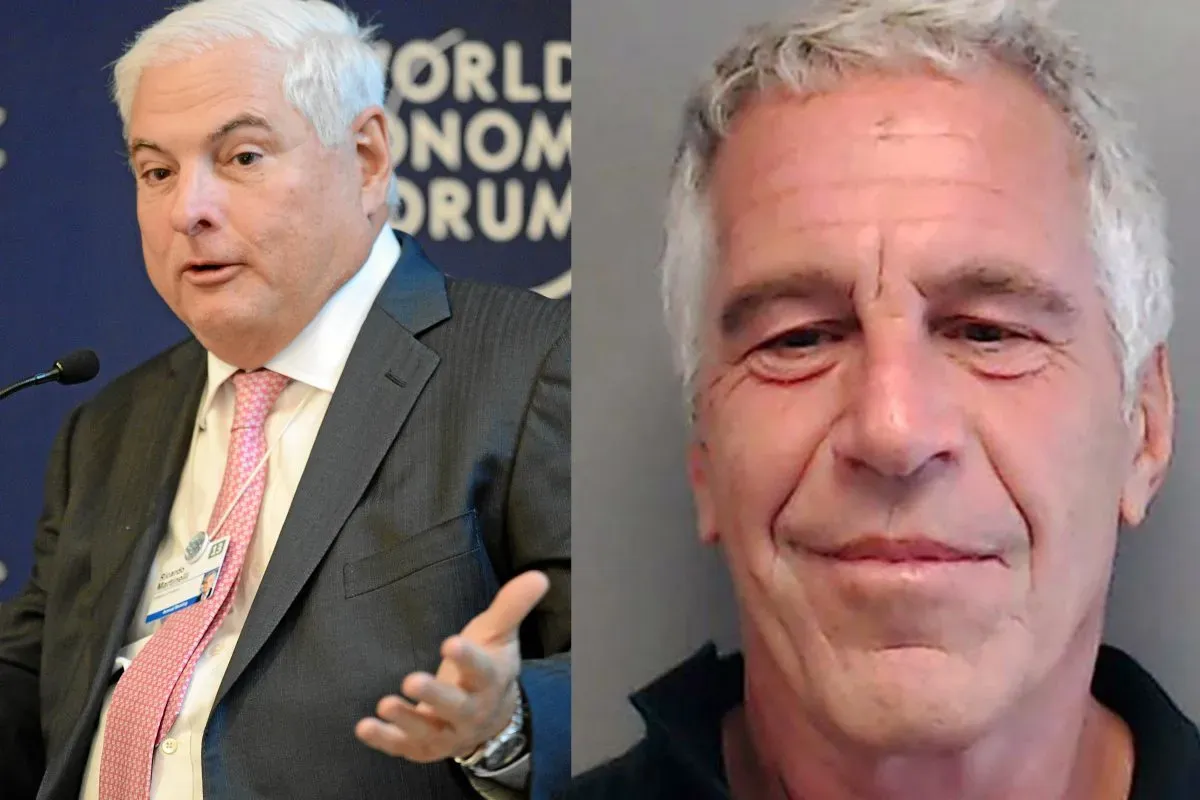
Judicial documents from the Jeffrey Epstein case reveal a previously unreported connection between the convicted sex offender and a private Panamanian island acquired with the direct backing of former President Ricardo Martinelli. The files, published by the U.S. Department of Justice, detail email exchanges and social ties that place Panama at the intersection of international wealth, political power, and Epstein’s network. An analysis of over 700 mentions of Panama within the records shows a consistent pattern of interest and activity in the Central American nation by Epstein and his associates.
The central figure in this Panama connection is Jean Pigozzi, an Italo-French heir and investor. Pigozzi purchased a private island in the Veraguas province, renaming it Simca, in 2012. His acquisition of Isla Canales de Tierra was facilitated through the political intervention of then-President Ricardo Martinelli, who served from 2009 to 2014. The island sits near the protected Coiba National Park, a UNESCO World Heritage site.
“If you mess with this man [Pigozzi], I’ll have you all thrown in La Joyita.” [Translated from Spanish]
Martinelli issued that warning to local residents in the coastal community of Pixvae during a visit with Pigozzi in April 2012, according to contemporaneous media reports. The statement translates to, “If you mess with this man, I will put you all in La Joyita prison.” Community members alleged they were pressured to sell their land. Some who refused were reportedly detained and interrogated in the capital. Martinelli later celebrated the island on social media, calling it “spectacular” and showcasing visits with Pigozzi, whom he referred to as a “great friend.”
The released emails show Pigozzi actively promoted Panama and his island to Jeffrey Epstein. On May 1, 2013, Pigozzi sent Epstein an email with the subject “Panama.J” containing a photograph of a vast Pacific horizon from Simca. This initiated a series of exchanges where Pigozzi shared images of the island’s panoramic terrace, circular pavilion, and imported artwork. He attempted to generate enthusiasm for the country within Epstein’s circle, even inviting the financier to his 60th birthday celebration in Panama, an event attended by various wealthy and famous figures.
Epstein’s Network and Panama’s Allure
Epstein’s interest in Panama extended beyond Pigozzi. Other contacts within his orbit also frequented the country. One associate emailed Epstein stating they were at a “very small marina on the coast of Panama” for two weeks. In another exchange, Jean-Luc Brunel, a modeling scout and close collaborator also accused of sexual crimes, directly asked Epstein, “Do you want to go to Panama?” The documents indicate Epstein considered buying property in Panama and explored business opportunities related to the Hutchison port terminal and the Cerro Quema mining project.
The email thread from May 2013 took a disturbing turn following Pigozzi’s initial photographs. Epstein replied asking for more photos of Panama. Pigozzi’s subsequent messages included comments on images of women. In one exchange, Pigozzi commented on a since-redacted photo, writing, “I like red hair. Looks fun.” Epstein provided a brief identification. Pigozzi’s crude reply closed that interaction, “I like her. No tits. Small problem.” He then casually added he was in Panama and suggested visiting Vanity Fair online.
These communications are part of a broader judicial archive accumulated since 2005. They expose a social world of exclusive events and a parallel layer of interactions that only emerged under legal scrutiny. Pigozzi, known for photographing his jet-set life with celebrities and business leaders, maintained a fluid and close relationship with Epstein, the records confirm.
The story of Simca island remains controversial. While Pigozzi framed the purchase with a scientific research veneer, local opposition was met with political force. The involvement of Ricardo Martinelli, who was later convicted for money laundering and is currently in asylum, underscores the blend of private wealth and political access that defined the acquisition. For Epstein’s network, Panama represented a territory of interest, a destination for travel, and a potential site for investment, all facilitated by high-level connections. The documents paint a picture where the lines between social hospitality, business exploration, and the exploitation of political influence were consistently blurred.