


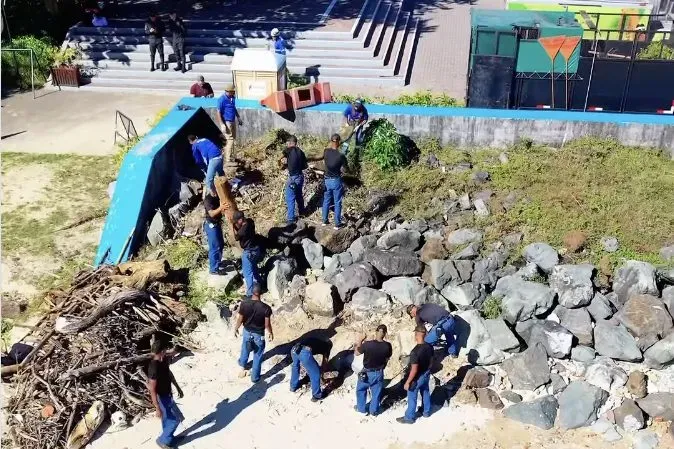
The Panama City Mayor’s Office has initiated a cleanup and restoration project for a small urban beach in the city’s historic district. The effort aims to reclaim public space and boost local tourism by creating a new recreational area for residents and visitors. Work began this Thursday with a coordinated cleaning operation involving municipal workers and security personnel.
This project is a key initiative of Panama District Mayor Mayer Mizrachi, who has recently promoted the site as a leisure alternative. The goal is to transform the neglected area into a managed public space that also supports local entrepreneurship. Officials estimate the initial phase could be completed by the end of January.
The site, locally referred to as a “playita” or little beach, sits between the Quinto Centenario Park at the entrance to the Casco Viejo (Old Town) and the vicinity of the presidential palace. Its strategic location offers the potential for a new, iconic urban vista for the capital. The restoration is part of a broader municipal plan to recover and revalue public spaces across the city.
New Rules for a New Urban Space
Once operational, the beach will operate under specific regulations designed to ensure safety and order. Mayor Mizrachi outlined clear rules that will prohibit nighttime occupation and restrict visitors from bringing in their own food, drinks, or portable coolers. The Mayor of Panama City explained the reasoning behind this operational model.
“The Panama municipality does not typically manage beaches, so we are defining the operating system and will set fairly simple rules. Occupancy on the beach after dark is not permitted, nor is food or drinks allowed, much less the entry of coolers. In exchange, we are going to incentivize consumption from the micro-entrepreneurs we will place nearby,” Mizrachi stated. [Translated from Spanish]
This approach intends to formalize vending and create a curated experience. The mayor detailed plans to organize local entrepreneurs into specialized roles rather than having them compete directly with identical offerings. This structure is designed to enhance the visitor experience and ensure quality.
Boosting Local Business and Tourism
The project directly links public space recovery with economic development. By prohibiting outside consumables, the city plans to channel spending toward authorized local vendors. Mizrachi believes this will create a unique and appealing destination that serves both domestic and international tourists.
“It’s not that everyone is going to ‘cannibalize’ each other, but you are going to be the professional in fried fish, you will only dedicate yourself to fritters. This creates an experience for internal tourism, but also for the tourist who comes to Panama and did not expect a beach. Now the postcard of Panama has changed,” the mayor asserted. [Translated from Spanish]
He expressed surprise at the rapid initial progress, citing significant cleanup results within the first 48 hours of work. This speed underscores the administration’s commitment to quickly delivering tangible improvements. The initiative reflects a growing focus on activating the economic potential of the casco antiguo and other historic zones.
A Broader Vision for Public Spaces
This beachfront project is not an isolated effort. It forms a core part of Mayor Mizrachi’s agenda to refurbish public environments throughout the capital. The overarching objective is to provide safer, cleaner, and more attractive spaces for community life and local economic development. Organizing vendors in a special areas offering services is a model that could be replicated elsewhere.
Transforming this slice of the city’s coastline represents a symbolic shift. It reimagines how urban waterfronts can function in a dense historic district. The project also aligns with national interests in enhancing tourism offerings and improving quality of life, priorities often highlighted by the Republic of Panama.
City residents and business owners now await the project’s completion at month’s end. Its success could set a precedent for future collaborations between municipal cleanup efforts and community-focused commercial activity. The new rules will soon be tested, offering a case study in balancing public access with structured management.