


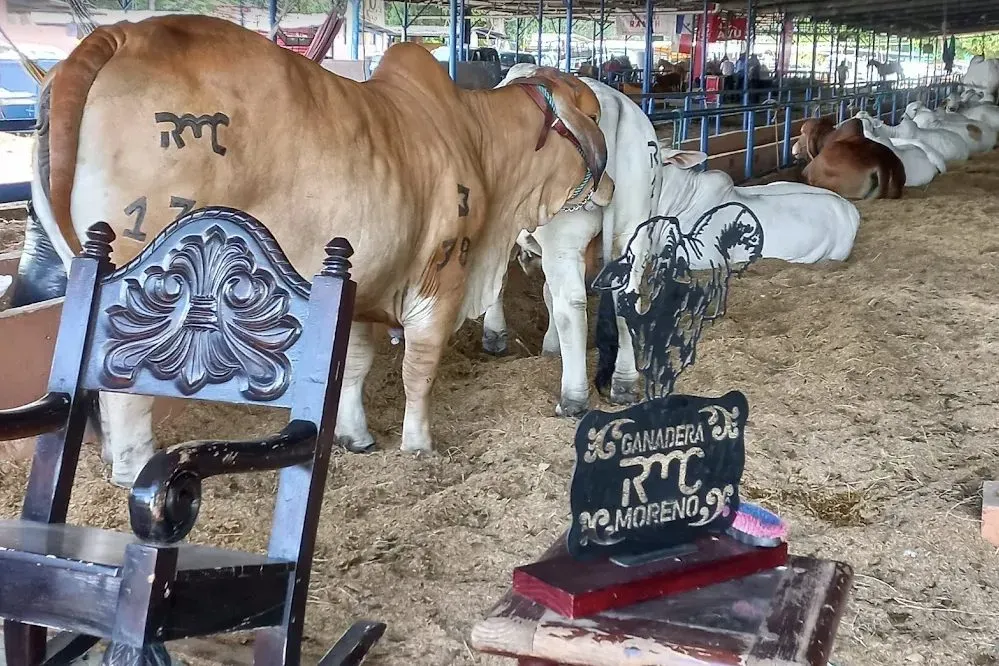
Panama’s cattle producers showcased world class livestock genetics this week at the International Fair of David. The event also revealed a persistent national shortage of nearly 300,000 head of cattle, according to statements from leading ranchers and industry experts. This gap highlights a critical challenge for the country’s agricultural sector and its long term food security.
The fair’s livestock competitions and judging events placed a spotlight on the quality of Panama’s national herd. Specialists present, including an international judge from Colombia, noted the herd’s genetic robustness is now considered among the strongest in Central America. This standing results from fifteen years of strategic investment in advanced breeding technologies. Producers have aggressively implemented tools like artificial insemination and embryo transfer to improve their stock.
“It is robust, quite homogeneous in the herd, and we continue working on this. We are firm believers in food security and we must talk about livestock repopulation, since the statistic recently increased and we are 300 thousand head down,” said Monti Motta of Hacienda Hermanos Motta. [Translated from Spanish]
Despite the genetic achievements, industry leaders issued a stark warning. The existing deficit threatens production capacity and market stability. Ranchers argue that repopulating the national herd requires significant, sustained support, particularly for smaller scale operations. The capital intensive nature of modern cattle farming, with investment return cycles spanning three to four years, creates a formidable barrier to entry and growth.
Long Term Investment and Producer Support Needed
Roberto Motta III emphasized the sector’s financial challenges during the fair’s events. His comments underscored the need for tailored assistance programs. Helping medium and small ranchers rebuild their herds is now framed as a national priority. This support is deemed essential for closing the production gap and securing the domestic beef supply.
“Livestock farming is tough, it is an investment that does not return until after three or four years, it is capital intensive. Therefore, we have to help the small and medium rancher to repopulate their cattle,” affirmed Roberto Motta III. [Translated from Spanish]
The Colombian livestock judge corroborated the technical progress observed in Panama. He specifically credited the regional adoption of biotechnology for the visible improvements in animal quality and consistency. These advancements in livestock genetics provide a strong foundation. They must now be paired with broader economic policies to increase overall herd numbers.
Producers united in a call for continued government partnership. Their appeal focuses on incentivizing reproduction programs and facilitating access to technology for all ranchers. The consensus at the fair was clear. Panama has built a genetically superior herd, but it simply does not have enough cattle. Bridging this numerical deficit is the industry’s next major hurdle. The future of local food production may depend on overcoming it.
Information from Demetrio Ábrego was used in this report.