


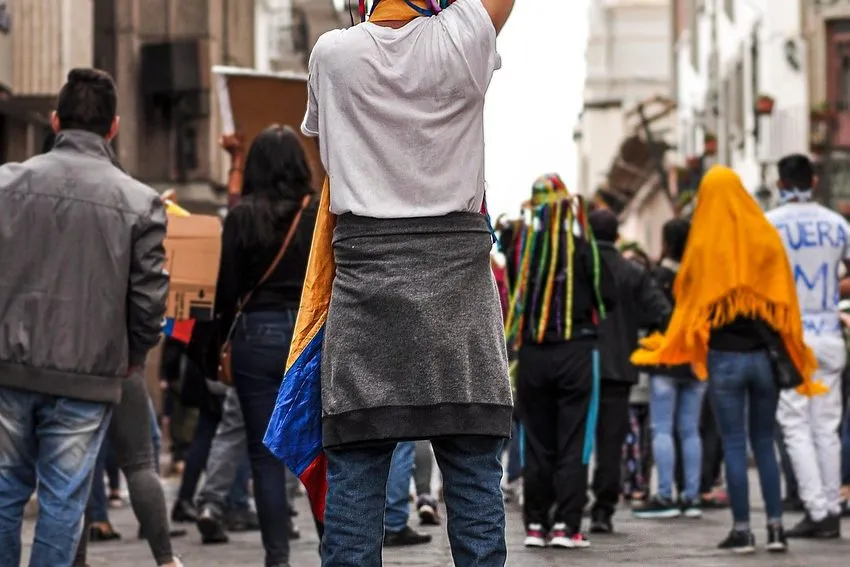
The Panamanian government has introduced legislation to criminalize the wearing of masks during public demonstrations. The executive branch’s Cabinet (government) approved the proposal on Tuesday, February 24, 2026, seeking penalties of two to six years in prison for offenders.
This move follows a series of recent protests against social security reforms, where some participants concealed their identities. The bill aims to amend the country’s Penal Code by adding a new article specifically targeting facial coverings used with violent intent.
New Penal Article Targets Concealment
Minister of Government Dinoska Montalvo received authorization to present Bill No. 8-26 to the National Assembly (Panama). The proposed Article 169-A creates a distinct criminal offense separate from existing laws that penalize the illegal disruption of peaceful gatherings.
Current law under Article 169 punishes those who illegally impede a lawful assembly with one to three years in prison. The proposed article focuses solely on the act of concealment during a public event.
“Whoever, during a demonstration, protest, or other public gathering, uses hoods, balaclavas, masks, or other means intended to totally or partially hide their face, for the purpose of provoking, carrying out, or inciting acts of violence, intimidation, or hatred, will be sanctioned with a prison sentence of two to four years.” [Translated from Spanish]
The legislation includes an aggravated penalty clause. It mandates four to six years in prison if the act of concealment facilitates crimes against life, personal safety, property, or public administration.
Government Cites Security and Accountability
Officials argue the measure is necessary for public security and accountability. They contend that facial coverings are used to evade identification while committing acts of vandalism or violence during otherwise lawful protests.
Proponents believe the law will deter bad actors who exploit the anonymity provided by masks. It seeks to separate peaceful demonstrators from individuals intending to cause harm or destruction.
“If on the occasion of such conduct the commission of crimes against life, personal integrity, property, or public administration is facilitated, concealed, or encouraged, the penalty will be four to six years in prison, without prejudice to the sanction corresponding to the crime committed.” [Translated from Spanish]
The proposal now moves to the legislative branch for debate and potential modification. Its passage is not guaranteed, as it will require majority support among National Assembly delegates.
Civil society groups and opposition figures are expected to scrutinize the bill closely. Critics often view such measures as potential tools to suppress dissent and intimidate legitimate protesters.
Legal experts anticipate challenges regarding the law’s specific wording, particularly around proving a perpetrator’s intent “to provoke” violence. Defining “other means” of concealment could also become a point of contention during legislative hearings.
The government’s push for this legal reform reflects ongoing tensions between security concerns and civil liberties in Panama. The outcome of this legislative process will set a significant precedent for how the state manages public demonstrations and enforces public order.