


San Francisco hosted the Panama-Pacific International Exposition in 1915, a global event celebrating the newly opened Panama Canal and the city’s remarkable recovery from a devastating earthquake. Over 18 million visitors attended the fair during its 288-day run, which showcased technological marvels and architectural wonders on a scale never before seen.
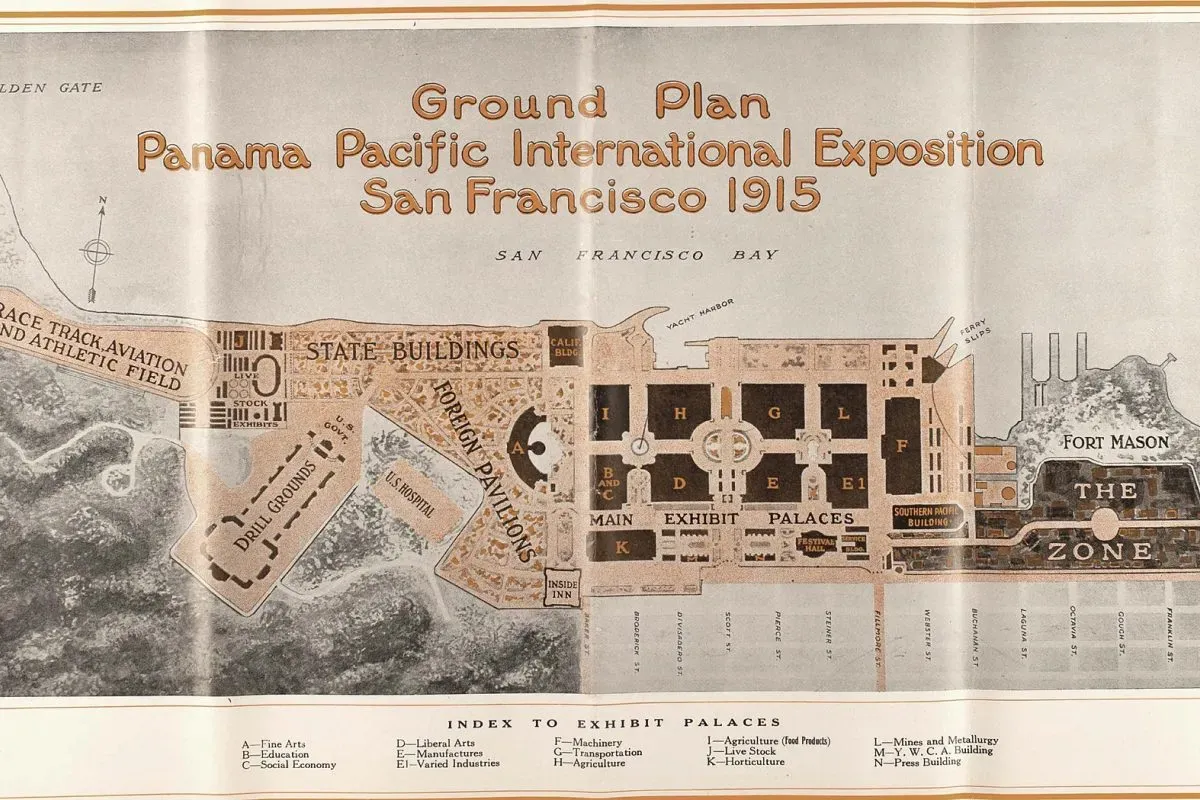
The exposition’s timing was deeply symbolic. It opened just nine years after the 1906 San Francisco earthquake, a catastrophe that killed an estimated 3,000 people and leveled much of the city. Organizers conceived the fair as a bold statement to the world that San Francisco had not only rebuilt but was thriving. The event transformed over 600 acres of waterfront into a dazzling city of palaces.
“The fair covered 600 acres and stretched along two and a half miles of waterfront property,” the national park service said. [Translated from Spanish]
Technological innovation took center stage. Henry Ford operated a full Model T assembly line on the fairgrounds, producing cars three hours a day, six days a week for astonished crowds. The expo hosted the first public demonstration of a transcontinental telephone call. In a stunning aerial display, a pilot flew a biplane through the Palace of Machinery, then the largest building on Earth.
Architectural Marvels Define the Fairgrounds
The fair’s architecture aimed to inspire awe. The glass dome of the Horticulture Palace was engineered to be larger than the dome of Saint Peter’s Basilica in Rome. The iconic Tower of Jewels stood draped in over 102,000 pieces of colored cut glass that shimmered in daylight and glowed under artificial lights at night. These structures were temporary but monumental.
Public enthusiasm peaked on the final day. A record 450,000 people streamed through the gates on December 4, 1915. While the fair generated more than $27 million in revenue over nine months, high construction costs limited the net profit to about $1.3 million. The event’s true legacy was its symbolic power, not its financial gain.
“On the final day of the fair, a record-setting 450,000 people visited the International Exposition,” the park service said. [Translated from Spanish]
When the exposition closed, most of its grand buildings faced quick demolition. Some were purchased and moved. San Mateo County bought the Ohio Building and transported it by barge. Marin County acquired the Wisconsin and Virginia buildings. Many others were simply too large to save and were sold for scrap material.
A Lasting Legacy in a Single Palace
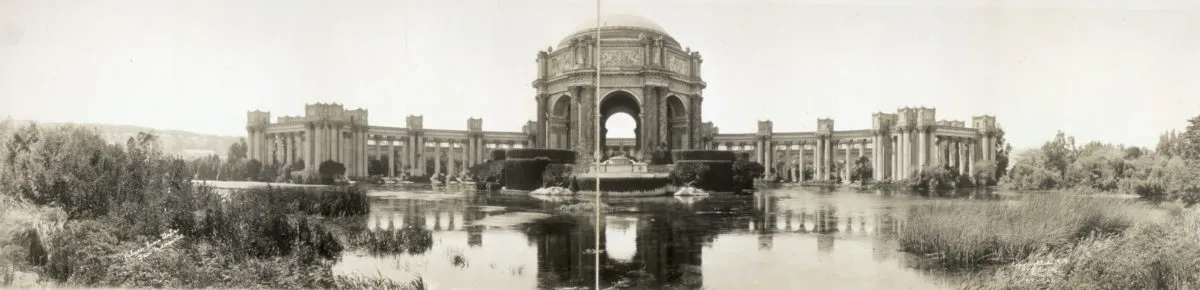
One beloved structure was spared. The Palace of Fine Arts, designed to evoke romantic melancholy, was so popular that it avoided the fate of the other palaces. It fell into disrepair but was completely rebuilt in the 1960s. It still stands today as the exposition’s primary physical survivor, a permanent monument to the 1915 event.
The fair served a dual purpose. It honored a monumental engineering achievement, the Panama Canal, which had seen its first official transit by the SS Ancon on August 15, 1914. Perhaps more importantly, it declared San Francisco’s resurrection from the ashes of the 1906 San Francisco earthquake. The Panama-Pacific International Exposition was a classic World’s Fair, blending optimism about the future with pride in human resilience.