


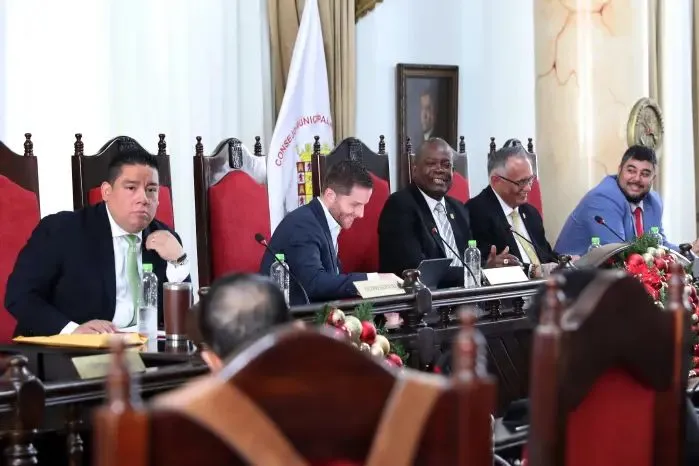
The Municipal Council (of Panama City) approved a major package of public works on Tuesday, committing over 25 million dollars to urban renewal across the capital. The nearly unanimous vote secures funding for strategic corridor renovations through the year 2028, locking future municipal budgets into a multi-year spending plan.
Mayor Mayer Mizrachi’s administration pushed the four major projects under a framework of “notorious urgency,” citing Law 22 of 2006. The initiatives target some of the city’s busiest and most economically vital areas for comprehensive upgrades. These include Nicanor de Obarrio Avenue (Calle 50), the 5 de Mayo zone, Estudiante Street, and the connection between 3 de Noviembre Avenue and the Cinta Costera.
With this decision, the municipality reaffirms its commitment to building a city where people can walk better, enjoy public space, and feel part of environments that promote well-being, active mobility, and community life. [Translated from Spanish]
The council’s approval triggers a staggered disbursement schedule stretching over the next three fiscal cycles. While the 2025 Annual Works Plan listed initial amounts between 300,000 and 500,000 dollars, the approved financial structure allocates the full multi-million dollar sums across 2026, 2027, and 2028. The heaviest financial burden will hit in 2027 when the largest payments for most projects coincide.
Financial Scale and Scrutiny
Project costs are substantial. The renovation of Calle 50 alone commands eight million dollars, with five million of that scheduled for 2027. The 5 de Mayo zone is allocated seven million, Estudiante Street three million, and the 3 de Noviembre and Cinta Costera intervention another seven million. This multi-year budget commitment was approved without what one councilor called a deep discussion on its impact on municipal financial flexibility.
The plenary session revealed a dynamic of overwhelming consensus, broken by a single critical voice. Councilman Rody Rodríguez, representing Parque Lefevre, stood alone in questioning the approval process. He did not oppose the works themselves but challenged the methodology.
Twenty-five million dollars in decentralization funds is not a minor figure. By legal mandate, this type of resource must be accompanied by clear processes of transparency and citizen participation. [Translated from Spanish]
Rodríguez argued the council received no detailed information on project blueprints, technical scopes, or execution timelines. He contended the discussion was limited to formal agreement approvals, leaving no real space for technical and financial analysis. This approach, he stated, weakens the political oversight the Municipal Council is supposed to exercise.
Contrasting Views on Community Consultation
The defense from the Mayor’s office rests on citizen consultations held in April 2025. Officials point to a recorded vote for the Calle 50 project where 46 of 55 participants voted in favor. A separate meeting for the 3 de Noviembre Avenue project reportedly saw 114 favorable votes out of 116 participants. The administration frames these events as validation of public support.
Rodríguez offered a starkly different perspective on this narrative. He acknowledged prior participation processes exist but insisted decentralization funds demand broader, public consultations without fear. His concern focused on projects committing resources for multiple years that affect the entire city. He also denounced limitations placed on his ability to speak during the session, suggesting that restricting debate on such large expenditures limits public discussion on municipal resource use.
Other council members supported the initiatives without reservation. César Kiamco, the representative for bella vista, vigorously defended the Calle 50 investment. He called it one of the city’s most important arteries. Its renovation, he argued, would benefit not just his constituents but the entire capital district due to the zone’s high concentration of economic activity, services, and tourism.
The Calle 50 Project in Focus
Beyond the political debate, the municipality’s own technical documents outline the ambition for Calle 50. The project aims to transform the iconic thoroughfare into a more pedestrian-friendly and aesthetically unified space. Plans typically include widened sidewalks, modernized street lighting, upgraded drainage, new urban furniture, and consistent landscaping. The goal is a complete streets approach that balances vehicle flow with improved safety and comfort for people walking and using public transit.
This corridor serves as Panama City’s primary financial and commercial spine. Its urban renewal is seen by proponents as critical for maintaining the area’s competitiveness and appeal. The eight-million-dollar price tag reflects the scale and complexity of working in such a dense, active zone. Similar comprehensive upgrades are planned for the other targeted areas, which include historic districts and key connectivity points like the route to the Cinta Costera recreational belt.
The approved package signals a continued push by the Mizrachi administration to physically reshape the city’s core. By locking in funds through 2028, the council has provided long-term certainty for these high-profile infrastructure projects. This move also effectively binds the hands of future budget cycles, dedicating a significant portion of municipal capital investment to these specific corridors.
Critics like Rodríguez warn this process lacked the rigorous, transparent scrutiny such long-term commitments deserve. The overwhelming majority of the council, however, demonstrated a clear appetite for moving forward quickly. They endorsed the vision of a renewed urban landscape, betting that these investments will enhance quality of life, boost local economies, and modernize the city’s image. The real debate over their success, and the wisdom of their financial planning, will unfold on the streets themselves over the coming years.