


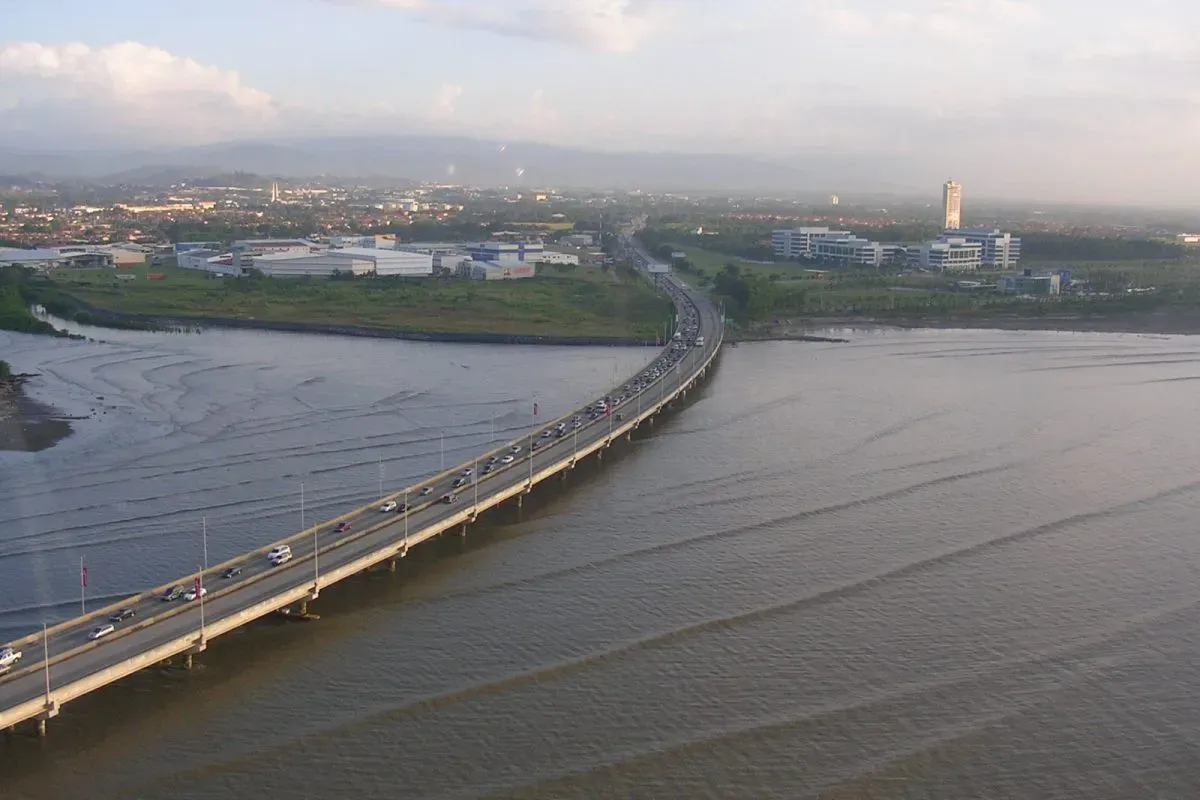
Panama’s National Highways Authority (Empresa Nacional de Autopistas, or ENA) has formally initiated a major expansion project for the congested Corredor Sur toll road. The $300 million initiative aims to double the highway’s capacity to address severe daily traffic congestion driven by explosive eastern urban growth. Officials confirmed the pre-qualification phase for contractors is now underway, with construction expected to begin later this year.
The project will add two new lanes in each direction along the entire 21-kilometer route, transforming it from a four-lane to an eight-lane highway. Work will stretch from Punta Pacifica near downtown Panama City all the way to Ciudad Radial near Tocumen International Airport. This overhaul represents one of the most significant infrastructure investments in the capital region in recent years.
“The corridor currently handles an average of 65 million vehicle transactions annually, and we project that traffic volume will double by 2049,” said Yessica Goti, General Manager of ENA. [Translated from Spanish]
The immediate next step is the publication of a pre-qualified bidder list on April 27. This will be followed by the release of full tender documents, detailing the exact scope and timeline for the design and construction phases. The ENA expects to award the contract and break ground before the end of 2026.
Engineering Challenges and a Two-Phase Approach
Project managers have split the ambitious expansion into two distinct segments based on complexity and cost. The most challenging portion is the marine viaduct section between Punta Pacifica and Costa del Este. Building new lanes here requires constructing an entirely new bridge and performing marine fill work alongside the existing structure, with an estimated budget of $220 million.
ENA’s Goti explained that current lanes on this stretch are a narrow three meters wide with no shoulders. The new design will bring them to the standard 3.6-meter width and include proper emergency shoulders. The terrestrial section, running from Costa del Este through to Ciudad Radial, carries a lower estimated cost of $80 million but presents its own logistical hurdles due to constant high-volume traffic.
“For the marine section, the impact should be minimal for users. We will build a completely new bridge beside the existing one and only redistribute lanes once it is finished,” Goti stated. [Translated from Spanish] “On the land segment, temporary disruptions are unfortunately inevitable given the current traffic load.”
This phased strategy aims to maintain traffic flow as much as possible during construction. The agency acknowledges that drivers using the terrestrial section will experience more direct inconvenience from lane closures and shifting traffic patterns.
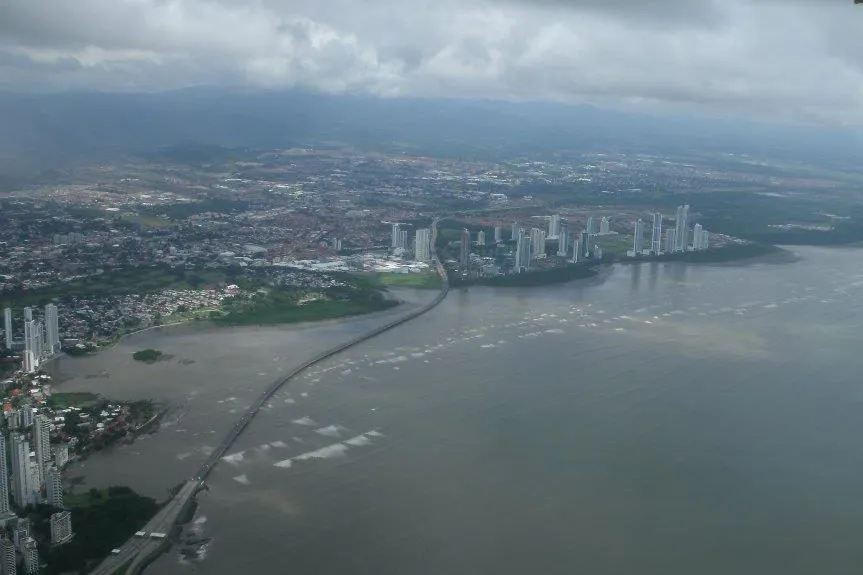
Targeting Bottlenecks Beyond the Main Road
Officials stress that the project scope extends beyond simply pouring new asphalt. A core component involves redesigning critical on and off-ramps to prevent bottlenecks that currently spill congestion back onto the main highway. Several specific trouble points have already been flagged for intervention.
The exit from Punta Pacifica onto Via Brasil is a primary concern. Its design creates a funnel effect that triggers a domino chain of slowdowns along the main toll road, especially during the morning rush toward the city center. Similarly, the Llano Bonito interchange is a known pinch point causing evening gridlock for commuters heading east from the city. The entire trunk route from Punta Pacifica to Ciudad Radial will see operational improvements to its interchanges.
These auxiliary modifications are crucial. The highway’s problems are no longer isolated. Rapid development in adjacent areas like Santa Maria, Metro Park, and Brisas del Golf has overwhelmed the local road network. An incident anywhere in the system can now paralyze the corridor within minutes, highlighting the interconnected fragility of the region’s transportation grid.
Urban planners note that each new residential tower, logistics park, or corporate center adds hundreds more vehicles dependent on this single artery. The national company has been working on smaller access projects, but this full expansion is the comprehensive response demanded by the scale of growth.
A Response to Transformative Urban Growth
The Corredor Sur’s congestion has evolved from an occasional nuisance into a defining, stressful routine for thousands. During peak hours from 7:15 to 8:15 a.m. and 4:30 to 5:30 p.m., the highway operates at absolute capacity. Traffic queues regularly extend from critical points like Punta Pacifica and Llano Bonito, clogging not just the toll road but also spilling over into alternative surface streets.
This pressure is a direct symptom of Panama City’s dramatic eastward expansion over the past fifteen years. What were once peripheral areas are now densely populated residential and commercial hubs. The daily commute pattern has permanently shifted, funneling a massive and growing population onto a highway built for a different era.
The economic implications are significant. Increased fuel consumption, lost productivity hours, and logistical delays for businesses all stem from the current gridlock. The expansion project is framed not just as a traffic solution but as essential maintenance of the city’s economic competitiveness and quality of life. It complements other major investments in the country’s connectivity, such as the recent yolanda sandoval announcement for Tocumen Airport’s main airline.
For now, drivers continue to navigate the slow crawl. The publication of the pre-qualification list later this month will mark the next tangible step toward a solution. The $300 million question remains whether the expansion, once complete, will finally outpace the relentless growth that necessitated it in the first place.