


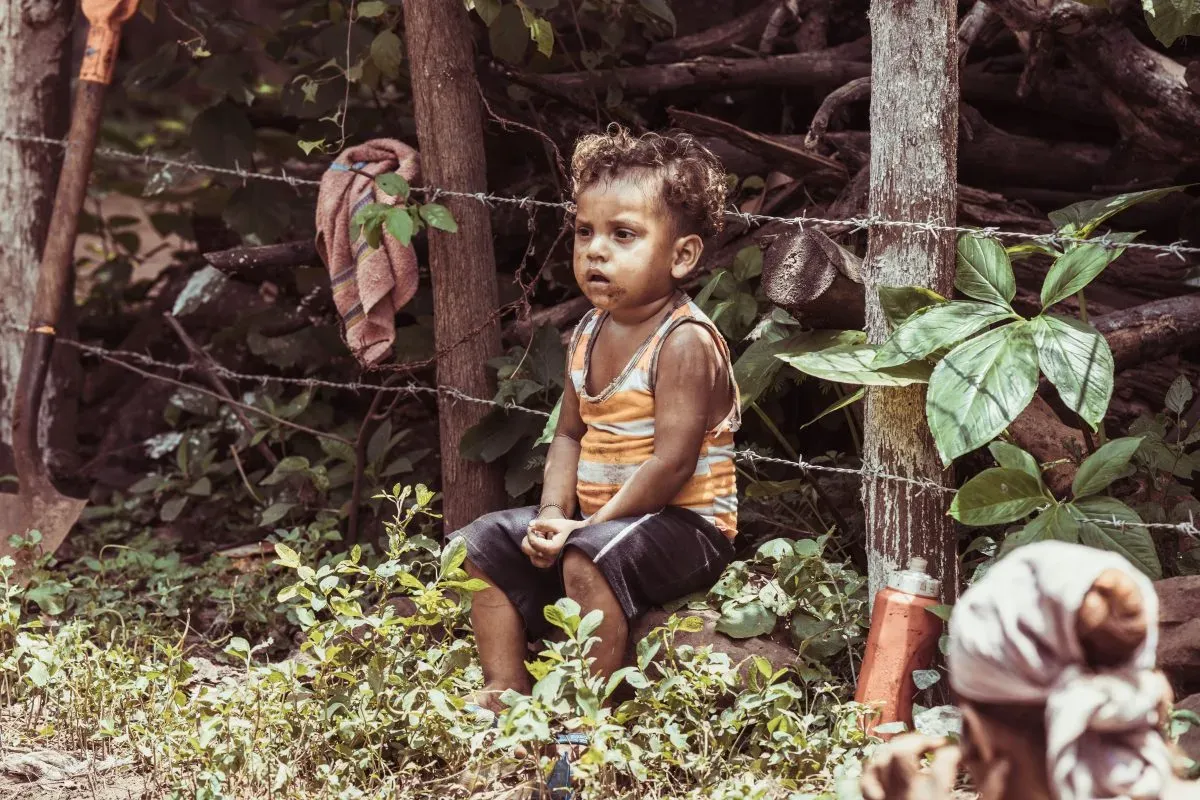
One in three children in Panama lives in poverty, a new joint report reveals. The stark findings show the nation’s economic recovery has failed to reverse a crisis disproportionately affecting its youngest citizens.
The study, titled “Child Poverty in Panama: A Territorial Approach to Monetary Poverty in Childhood and Adolescence,” was produced by UNICEF, the World Bank, and Panama’s Ministry of Social Development. It analyzes data from 2005 to 2023. While national poverty rates have seen a modest decline over the past decade, progress has stalled for children and adolescents, creating a deep and persistent gap.
A Stalled Recovery and Structural Inequality
Panama’s general poverty rate fell from 25.8 percent in 2013 to 21.7 percent in 2023. Extreme poverty, however, barely moved, dropping only from 10.6 to 9.6 percent in that same period. The report’s authors point to a clear stagnation. The situation is far worse for minors. Nationally, 37.8 percent of children and adolescents live in monetary poverty. A shocking 19.5 percent live in extreme poverty.
These figures vastly exceed the rates for the general population. In simple terms, one of every three Panamanian children is poor. One of every six faces extreme deprivation. The country’s economic growth, including a 4.4 percent expansion in 2023 driven by logistics, services, and the Panama Canal, has not translated into equitable improvements for families.
“Economic growth, while relevant for poverty reduction, has not been sufficient to sustainably eliminate situations of monetary vulnerability in the country,” the study states. [Translated from Spanish]
Pandemic-era losses have not been fully recouped. Data from 2021 showed a significant deterioration compared to 2019. Subsequent recovery has been incomplete, particularly for children. Their higher exposure to economic shocks means their bounce back is slower. Poverty levels for minors in 2024 remain elevated compared to pre-pandemic benchmarks.
Geographic Disparities Deepen the Crisis
The territorial analysis within the report uncovers severe geographic inequality. Conditions in indigenous regions, known as comarcas, are catastrophic. In the Ngäbe Buglé region, the average monthly income for households with children is a mere $52.84. This profound economic disparity severely limits development and opportunity from the earliest stages of life.
Child poverty rates in these areas routinely surpass national averages by over 13 percentage points. The problem is not cyclical but deeply rooted. Existing social programs, including the Red de Oportunidades and the Universal Scholarship, have seen their impact weakened by issues with coverage and targeting, the report notes. They are no longer sufficient to address the scale of the challenge.
“Child poverty in Panama continues to be a structural challenge that profoundly impacts the human development of the country,” the report concludes. [Translated from Spanish]
The long-term implications are severe. More than 482,000 children live in homes unable to cover the basic food basket. Nearly 224,000 experience extreme poverty. These conditions do not just limit a child’s present. They trap families in a cycle that perpetuates inequality across generations, affecting the nation’s future workforce and social cohesion.
The diagnosis from international and national experts is unequivocal. Panama is growing, but that growth is not reaching children equally. The gaps, especially in rural and indigenous zones, remain wide. They demand more focused, sustained, and effective policies to reverse a reality that now compromises the country’s future stability and prosperity.