


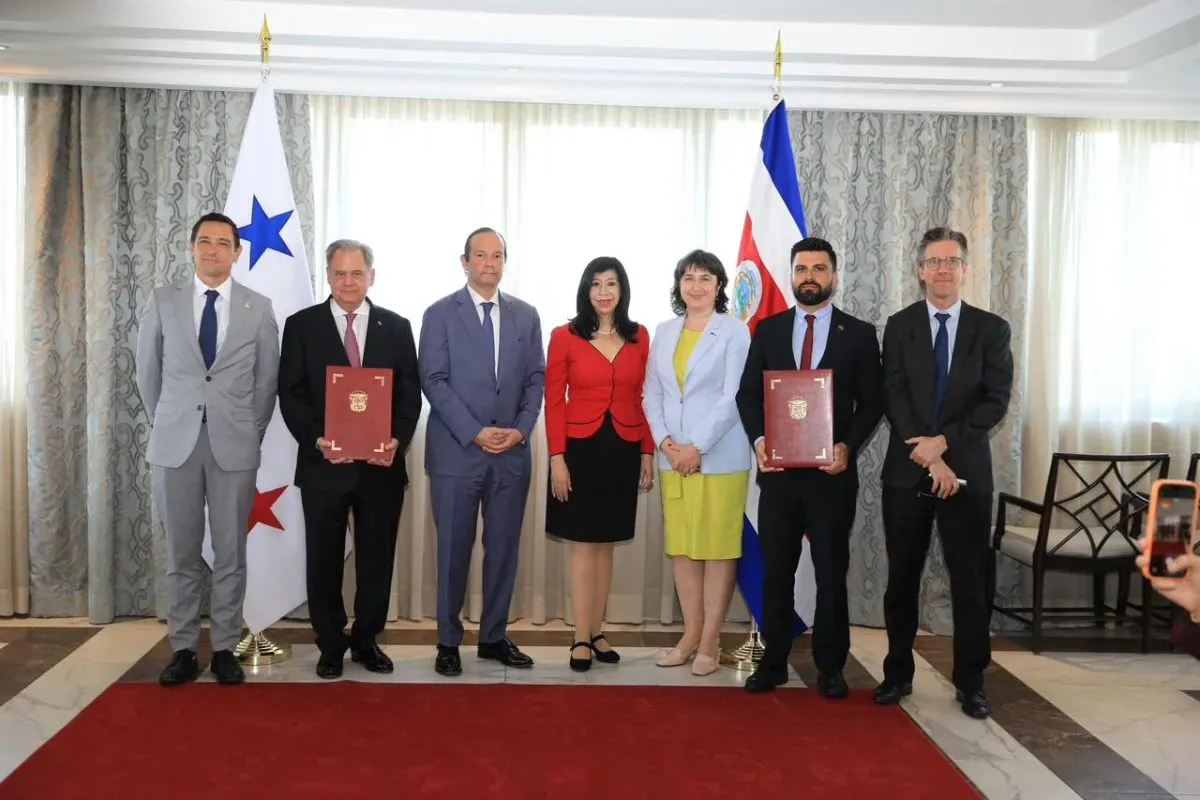
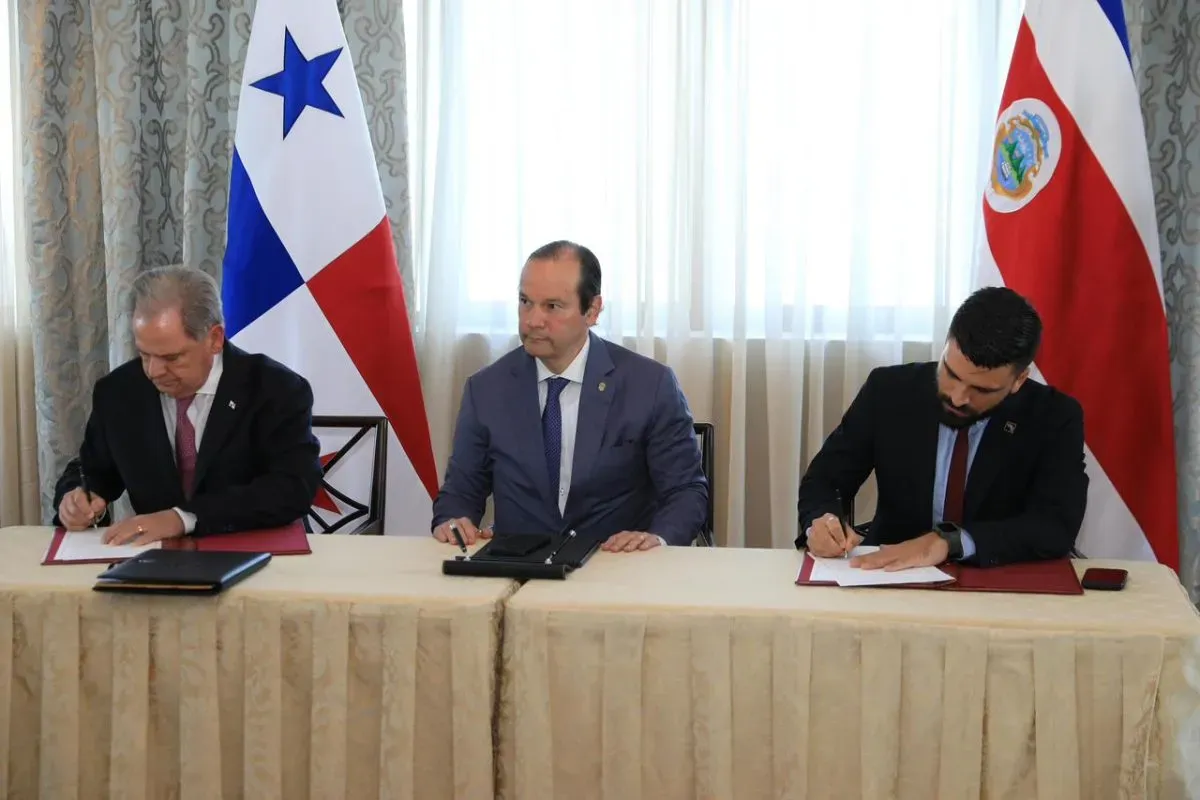
Panama and Costa Rica signed a landmark cooperation agreement on Wednesday, March 18, 2026, to advance a shared vision for a Central American rail network. The Memorandum of Understanding was formalized between Panama’s National Railway Secretariat (SNDF) and the Costa Rican Railway Institute (INCOFER). This pact aims to transform a planned national railway into a multinational logistics corridor.
The signing ceremony, presided over by Panamanian Foreign Minister Javier Martínez Acha, establishes a formal framework for technical collaboration. Officials from both nations will now share specialized knowledge, align operational standards, and coordinate engineering studies. The ultimate goal is a seamless regional rail link designed to boost economic integration and competitiveness.

Foundations for a Transformative Project
Foreign Minister Martínez Acha framed the agreement as a pivotal moment for regional progress. He emphasized the project’s potential to reshape economic geography and lower logistics costs across the isthmus.
“We begin to chart a new future, a line on the map of our regions based on a bet for the progress of integration of a shared future,” Martínez Acha said. [Translated from Spanish] He added that the cooperation generates hope for a shared vision with a brother nation that sees this as a regional integration project. [Translated from Spanish]
SNDF Secretary Henry Faarup provided concrete updates on Panama’s domestic rail progress. The master plan launched in January 2025. By January 2026, the Cabinet approved the formal hiring of AECOM USA, Inc. for technical advisory and feasibility studies. A preliminary route of approximately 475 kilometers from Panama City to Paso Canoas is now on the table. It includes fourteen projected stations, with a first construction phase focused on the Panama Pacific–Divisa segment.
“For Panama, the instrument represents the first formal step in building what the National Government has called the Central American Railway Logistics Corridor,” Faarup stated. [Translated from Spanish] “We are not building a train, we are building the infrastructure for the next generation of the Panamanian economy and a new economic geography for Central America.” [Translated from Spanish]
With this memorandum, costa rica becomes Panama’s first official partner in the regional vision. The agreement is positioned as the initial link in a potential chain of accords that could physically integrate Central America for the first time in its modern history. Costa Rica’s own rail corridor development is projected to extend toward Nicaragua.
Technical Advances and Broader Implications
INCOFER President Álvaro Bermúdez highlighted the agreement’s significance for both nations. He pointed to opportunities for joint initiatives with greater economic and social impact, improving logistics, tourism, and economic mobility.
“Let’s maintain this interaction. I believe today there is a great deal of technology we can implement,” Bermúdez noted. [Translated from Spanish] “Let’s take all of that as an opportunity for our countries to develop systems, to have nations that can think outside the box and develop differently.” [Translated from Spanish]
On the ground in Panama, preparatory work is already advancing. The SNDF confirmed the initiation of a socioeconomic census, environmental impact studies, and the conceptual design for a critical railway bridge over the Panama Canal. The project has voluntarily adopted the performance standards of the IFC, the evaluation frameworks of the World Bank, and the criteria of the European Investment Bank.
The project’s strategic identity has been redefined as a territorial economic development platform. It integrates plans for fiber optics, electrical transmission, water infrastructure, dry ports, free zones, and port interconnections. Each of the fourteen proposed stations is conceived as an anchor for local development. These nodes are expected to drive employment, commerce, services, tourism, and new regional economies.
Diplomatic corps members attended the signing, reflecting international interest. Entities like the United Kingdom, the European Union, CAF, and the Central American Bank for Economic Integration (CABEI) have held active talks with the Secretariat. This initiative, supported by the broader Central American Integration System, promises a fundamental shift. For the first time, Panama’s interior regions are not seen as the end of the map but as part of the center of a new economic system.