


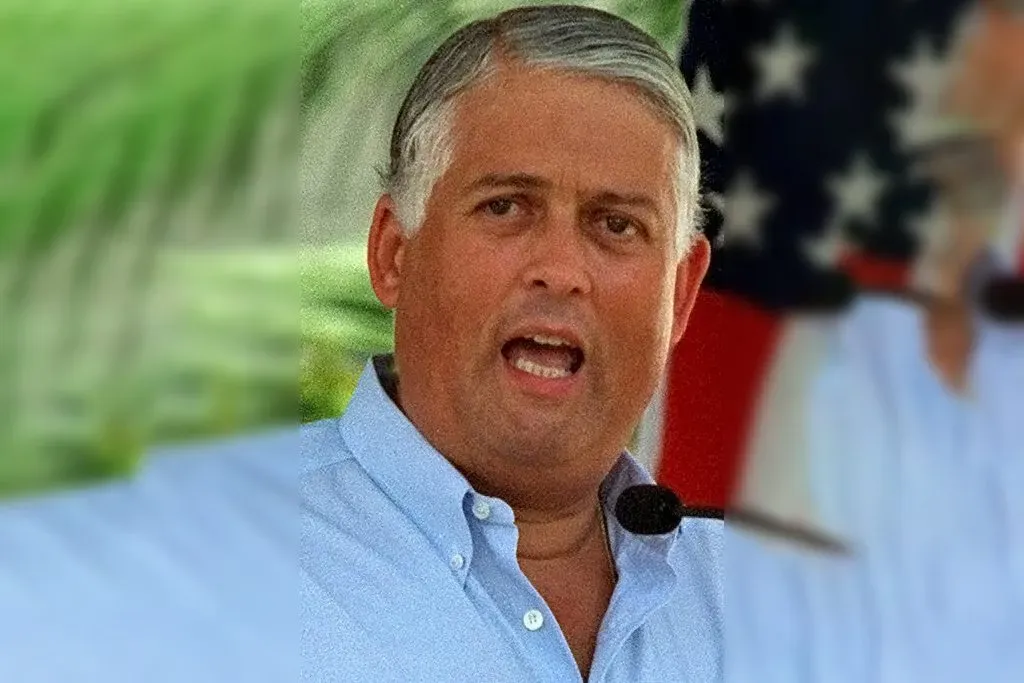
Former Panamanian President Ernesto Perez Balladares has publicly dismissed calls for a sweeping constitutional overhaul, arguing the country lacks the necessary conditions. In a wide-ranging interview, the ex-leader also commented on internal crises within his political party and recent controversial statements by the current president. Perez Balladares served as Panama’s head of state from 1994 to 1999.
The political veteran shared his views during a conversation with La Estrella de Panamá’s Polígrafo this week. He provided a stark assessment of the nation’s political landscape while offering support for embattled party figures. His comments arrive during a period of significant political debate and institutional scrutiny in the Central American nation.
“There are no conditions for a constituent process,” Perez Balladares stated firmly. [Translated from Spanish] He advocated instead for “specific modifications” to the existing constitution rather than a full rewrite through a Constitutional convention (political meeting).
This position places him at odds with various political sectors pushing for deeper structural reform. He believes the current foundational document can be amended to address modern needs without the instability of a complete constitutional reboot. The former president’s experience gives his skepticism considerable weight in national discourse.
Internal Party Crisis and Leadership Support
Perez Balladares did not shy away from discussing the severe troubles facing the Democratic Revolutionary Party (Panama), or PRD. He described the party as being in “intensive care” following its recent electoral performance. The party has been rocked by internal divisions and a leadership struggle.
He confirmed his unwavering support for Balbina Herrera in the party’s general secretary role. He praised her capacity, experience, and relentless work ethic. Perez Balladares highlighted her historical role within the party and her reputation for integrity. “I have never known her to be duplicitous, much less treacherous,” he said of Herrera. [Translated from Spanish]
The former president expressed strong criticism of the party’s current direction. He specifically opposed what he termed the “assault” on the National Executive Committee by sitting deputies. He argued a deputy’s primary goal is re-election, which depends on securing resources from the government in power. This reality, he contends, creates a fundamental conflict between a deputy’s personal political interest and the broader collective interest of the PRD.
“I always opposed the National Executive Committee being assaulted by deputies,” Perez Balladares explained. [Translated from Spanish] “Their political interest differs from the political interest of a collective like the PRD.”
Regarding current party president Benicio Robinson, Perez Balladares struck a more conciliatory tone. He acknowledged Robinson’s criticisms but noted his support base. The former president suggested Robinson could be guided toward creating a new system of political participation and defining national objectives for the party. He admitted the PRD currently lacks a coherent political and ideological proposal, a flaw he sees mirrored across Panama’s entire political spectrum.
Commentary on Presidential Conduct and Institutions
The conversation turned to recent headlines involving President José Raúl Mulino. Mulino recently confessed to having threatened magistrates of the Electoral Tribunal when he was a candidate. Perez Balladares addressed this revelation directly, offering a nuanced take.
He stated he does not believe President Mulino is a liar, implying the confession was likely true. Perez Balladares speculated Mulino may have acted out of suspicion that certain forces were trying to block his candidacy. He found the timing and location of the president’s comments, made in Costa Rica, particularly noteworthy. He suggested tensions between Costa Rican President Rodrigo Cháves and his own electoral tribunal might have prompted Mulino’s remark.
“It seemed a bit out of place to me,” Perez Balladares said of Mulino’s confession. [Translated from Spanish] “It is not an important issue and it has already been overcome.”
He contrasted it with his own electoral experience, where a vote count stalled in the early morning hours while he was leading. “I cannot assume it was intentional,” he recalled. “It got stuck, it got unstuck, and we won.” [Translated from Spanish] The former president emphasized that while doubts often linger in tight races, Mulino’s specific threat to “set the country on fire from all four corners” was unprecedented and unnecessary.
When pressed on whether such a confession from a sitting president weakens the institutional standing of the tribunal electoral, Perez Balladares downplayed the lasting impact. He argued the circumstances that could have led to such destabilization no longer exist. He characterized the statements as unfortunate and admitted he would have advised against making them public. “What do we gain by saying that?” he questioned. [Translated from Spanish]
Foreign Policy and Sovereignty Concerns
Beyond domestic politics, Perez Balladares touched on international matters. He was asked about the recent memorandum of understanding signed between the United States and Panama. The agreement has sparked debate about national sovereignty.
The former president asserted the memorandum does not affect Panama’s sovereignty. He did, however, admit the arrangement may not be “convenient” for the country. “It is necessary for them; I do not believe it is convenient for us,” he told the interviewer. [Translated from Spanish] This distinction between necessity for a foreign power and convenience for Panama frames his cautious view of the pact.
He also addressed a hypothetical scenario involving Venezuela. Perez Balladares was clear about Panama’s required stance in the event of a potential foreign invasion. He stated Panama should not get involved, even under pressure from Washington. This position underscores a principle of non-intervention and a focus on Panama’s specific national interests amidst regional turmoil.
Ernesto Perez Balladares remains an influential voice in Panamanian politics. His rejection of a constitutional convention, combined with his critique of both his own party’s direction and the conduct of the current administration, provides a pointed commentary from a seasoned political figure. His interview highlights the ongoing struggles within traditional political structures and the persistent debates over institutional strength and reform in modern Panama.