


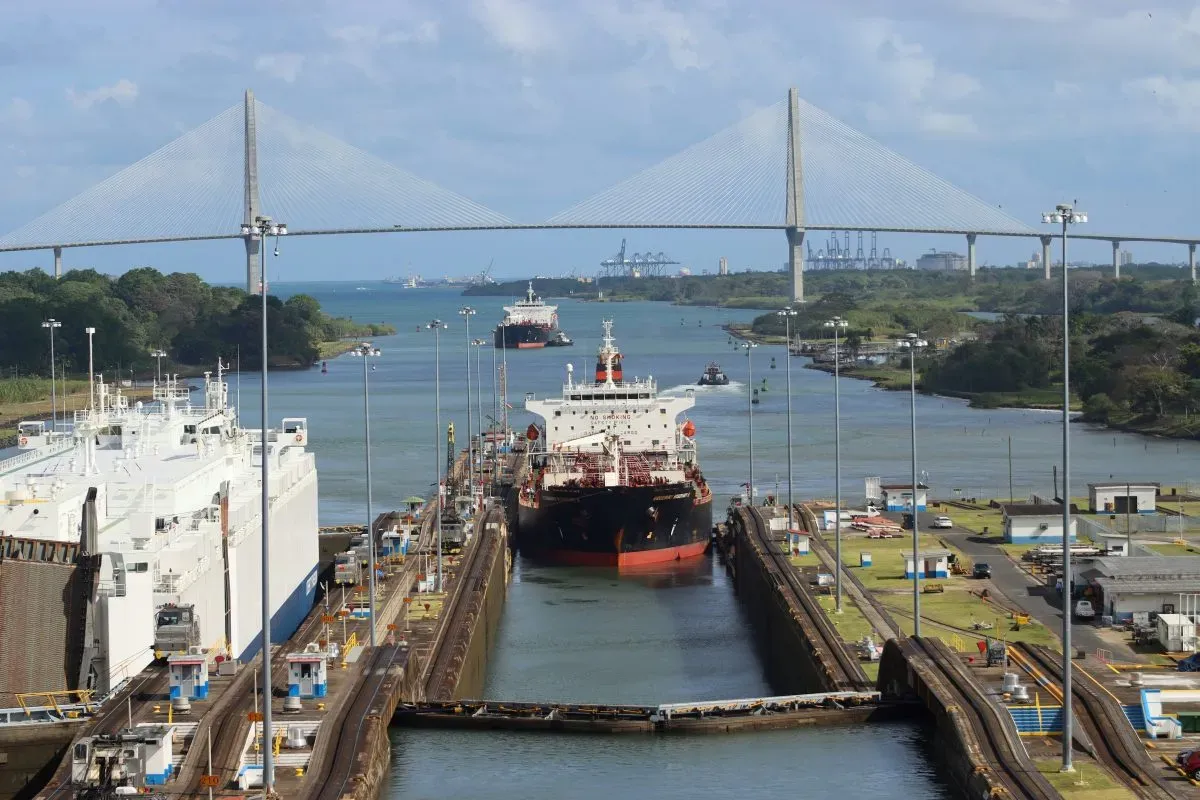
Panama’s government has formally invited twelve countries to accede to the treaty guaranteeing the permanent neutrality of the Panama Canal. Foreign Minister Javier Martínez-Acha Vásquez extended the invitations during a series of diplomatic meetings in Mexico City this week. The move aims to bolster international legal safeguards for global trade through the vital waterway.
The invitations target nations across four continents without current ties to the protocol. Officials described the effort as a strategic push to reinforce Panama’s role as a stable and predictable maritime hub. The meetings occurred on the sidelines of a broader gathering of ambassadors, allowing for focused discussions on multilateral cooperation.
Broadening International Support
According to a statement from Panama’s Ministry of Foreign Affairs, the minister presented accession as a triple benefit. He framed it as a legal guarantee for world commerce, a political signal supporting international law, and a concrete act of trust in Panama itself. The protocol is a direct result of the Torrijos–Carter Treaties that transferred canal control to Panama.
Nearly forty countries have already signed the neutrality document. Adding new signatories, officials argue, strengthens its global standing and operational security. The diplomatic initiative aligns with Panama’s ongoing campaign to position itself as a central node in global supply chains.
“Adhesion to the neutrality treaty serves as a juridical guarantee for world commerce,” the Foreign Ministry stated. [Translated from Spanish] The ministry’s communiqué emphasized that the step represents “a political signal of support for international law and a concrete act of confidence towards Panama as a safe, stable, and predictable country.”
The list of invited diplomats includes ambassadors from Algeria, Australia, Azerbaijan, Slovakia, Pakistan, the Philippines, Jordan, Vietnam, and Côte d’Ivoire. Chargés d’affaires from Armenia, Georgia, and Serbia also received the invitation during the talks.
Economic and Strategic Outreach
Beyond the neutrality treaty, Minister Martínez-Acha used the meetings for wider economic diplomacy. He promoted Panama’s credentials as a global logistics, port, and air hub. The country’s unique position as an interoceanic connector and regional platform was a key talking point, especially its associate membership in Mercosur.
Investment opportunities in ports, renewable energy, semiconductors, and air connectivity were on the agenda. With Australia’s ambassador, discussions touched on potential airline agreements. The minister also highlighted specific opportunities for collaboration with nations in Asia and West Africa.
Cooperation on sustainability, climate change, and green transition policies formed another part of the dialogue. These bilateral talks, the Foreign Ministry noted, helped strengthen political consultation mechanisms. Modernizing legal instruments to give more institutional weight to relationships with these friendly governments was a parallel goal.
The minister extended two further invitations to the diplomats. He asked them to participate in the Expocomer 2027 trade fair and in events commemorating the Bicentennial of the Amphictyonic Congress. These efforts collectively underscore Panama’s strategy of weaving deeper political and economic ties across diverse regions.
Panama’s push for new signatories comes as global trade routes face increasing scrutiny. Securing broader formal recognition for the canal’s neutral status is viewed in Panama City as a proactive measure. It builds an additional layer of diplomatic consensus around the waterway’s uninterrupted operation. For the invited countries, accession offers a way to formally endorse a principle critical to maritime trade while aligning with a key hemispheric partner.