


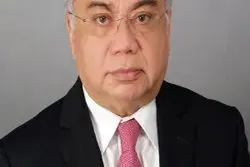
Panama will host the eleventh International Spanish Language Congress (CILE) in 2028. The decision, now at the center of a public dispute between Spain’s leading language institutions, was confirmed this week by the director of Panama’s Language Academy, Jorge Eduardo Ritter.
The announcement follows reported tensions in Spain between the director of the Instituto Cervantes, Luis García Montero, and the head of the Royal Spanish Academy (RAE), Santiago Muñoz Machado. García Montero has publicly suggested that Muñoz Machado unilaterally selected Panama without proper consultation, a claim Panamanian officials strongly deny.
In an interview with La Prensa on Tuesday, December 9, Ritter clarified the selection process. He emphasized that the choice was a collective, formal vote by the Association of Spanish Language Academies (ASALE), not an individual mandate.
“This cannot be seen as if it were a personal decision by Mr. Muñoz Machado,” Ritter stated. [Translated from Spanish] He explained the vote was unanimous among the 23 academies during a private directors’ meeting at this year’s congress in Arequipa, Peru.
Ritter expressed hope that the current objections from the Instituto Cervantes would be resolved. He stressed that Panama’s academy and government want the event to proceed harmoniously.
Unanimous Vote Confirms Panama’s Candidacy
Jorge Eduardo Ritter, who served as Panama’s foreign minister and now leads its language academy, provided specific details about the vote. He recounted that the approval occurred during the first private meeting of academy directors in Arequipa. No other candidacy to host the 2028 event existed at the time of the decision, a point Ritter says further disproves any notion of an imposed selection.
The director added that other institutional channels are now publicly clarifying that the approval was unanimous. He expressed a desire for the Instituto Cervantes not to object to Panama based solely on a perceived imposition from Madrid.
“What we would most like is for there not to be an objection from the Instituto Cervantes to Panama for the sole reason that it is perceived as an imposition,” Ritter said. [Translated from Spanish] He highlighted the collective and transparent nature of the agreement.
Ritter remains confident the differences between the Cervantes Institute and the Royal Spanish Academy can be overcome. He noted the ASALE has already formally endorsed Panama’s proposal.
Event Details and Strategic Importance for Panama
The congress is tentatively scheduled for the last quarter of 2028, likely between September and October. The exact dates require further consultation between host governments and the academies. Ritter pointed out this timing has been consistent for previous editions, and Panama is prepared to adapt.
Hosting the event carries significant cultural weight for the nation. Ritter recalled Panama’s prior success with the congress, stating it positions the country as a center for culture. The gathering attracts high-level intellectuals, writers, linguists, and academics, with many events open to the public. It represents a unique opportunity to project Panama onto the international cultural stage.
The Panamanian Academy of the Language itself was established on May 12, 1926. Its role in this international process underscores its active participation in the global Spanish-language community.
Institutional Conflict Originates in Spain
The controversy became public following statements from Instituto Cervantes director Luis García Montero in Spain. He asserted that his institution holds the responsibility to propose a host venue to the language academies. García Montero claimed he learned of Panama’s selection through comments from other academies, suggesting the RAE director acted independently.
This public airing of procedural disagreements has deepened visible tensions between the two cornerstone Spanish institutions. The Cervantes Institute, focused on promoting Spanish language and culture globally, and the Royal Academy, the official authority on the Spanish language, are now navigating a very public disagreement over protocol.
For Panama, the focus remains on preparing for the 2028 congress. Ritter’s statements aim to separate the country’s legitimate hosting rights from the institutional dispute occurring overseas. The academy’s message is one of readiness and a hope for collaborative resolution.
Ritter concluded with a direct appeal for harmony. He affirmed Panama’s aspiration to hold the congress in a cooperative spirit with all involved institutions, leveraging the formal support already granted by the ASALE. The coming months will likely see further diplomatic and institutional discussions to align all parties for the 2028 event.