


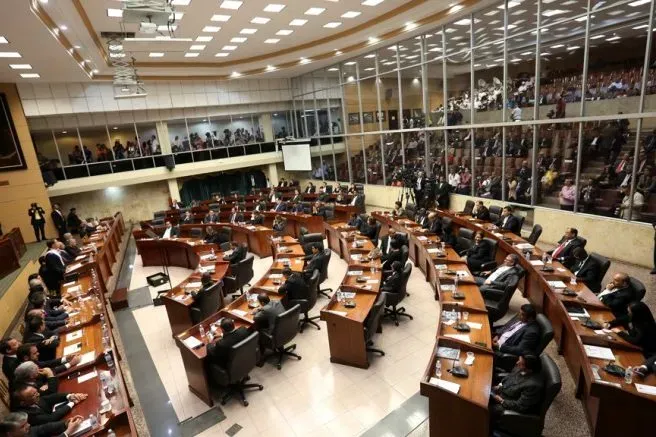
The president of Panama’s National Assembly announced this week that a comprehensive reform of the legislative body’s internal rules will soon reach the full chamber for debate. Jorge Herrera stated the process aims to achieve the broadest possible consensus among all political factions. The move represents a key step in fulfilling governance promises made by the assembly’s current leadership.
Speaking from the town of Atalaya in Veraguas Province, Herrera confirmed significant preliminary work on the proposal is already complete. The assembly’s Credentials Committee, led by Deputy Dana Castañeda, will oversee the initial review. Discussion will proceed in blocks, allowing for a progressive examination of each section of the complex regulatory document.
Herrera emphasized a commitment to transparent and inclusive negotiations involving all 71 elected deputies. He projected a swift timeline for the initial legislative phase.
“Considerable progress has been made on this. It should be approved in a first reading next week so it can be taken to the full session. One of the decisions made there will be a consensus with the 71 deputies. It will be discussed with transparency,”
Herrera said. [Translated from Spanish] The upcoming debate at the asamblea nacional is seen as a critical test of cross-bench cooperation.
Attendance Tracking and Deputy Benefits Under Scrutiny
A particularly sensitive element of the reform involves the official tracking of deputy attendance. This measure directly addresses public criticism regarding legislator presence and accountability during sessions. Herrera also confronted recurring public questions about parliamentary perks and benefits during his announcement.
He dismissed exaggerated claims about the scope of these benefits as fictional. Herrera provided a specific list of existing entitlements subject to potential review. These include vehicle tax exemptions, a diplomatic passport, designated postal services, and the controversial attendance tracking system itself. Any modifications, he stressed, must emerge from dialogue.
“That is a fable,”
Herrera said, referring to allegations that deputies continuously receive new privileges. [Translated from Spanish]
“It is an issue that will be analyzed in consensus with all the party blocs,”
he insisted. [Translated from Spanish] This approach suggests the primer debate will involve careful negotiation on these politically charged points.
Broader Legislative Agenda Awaits Action
Revising the internal rules constitutes just one part of the legislative agenda promised by the assembly’s presiding officers. Other significant items remain pending for full chamber discussion. Major national policies concerning public procurement and administrative decentralization are also queued for consideration.
The progress on the rules package signals the National Assembly of Panama is entering a pivotal operational phase. Defining its own governing procedures will set the tone for handling subsequent and potentially more divisive national legislation. The ability to build consensus on internal matters may forecast its capacity to address complex public policy challenges.
With the potential for a first reading vote in the coming days, observers are watching closely. The process will reveal the actual cohesion among Panama’s diverse political groups. Assembly President jorge herrera has now framed the debate as a test of transparency and unity. The coming weeks will determine if the chamber can translate that promise into a reformed set of rules.