


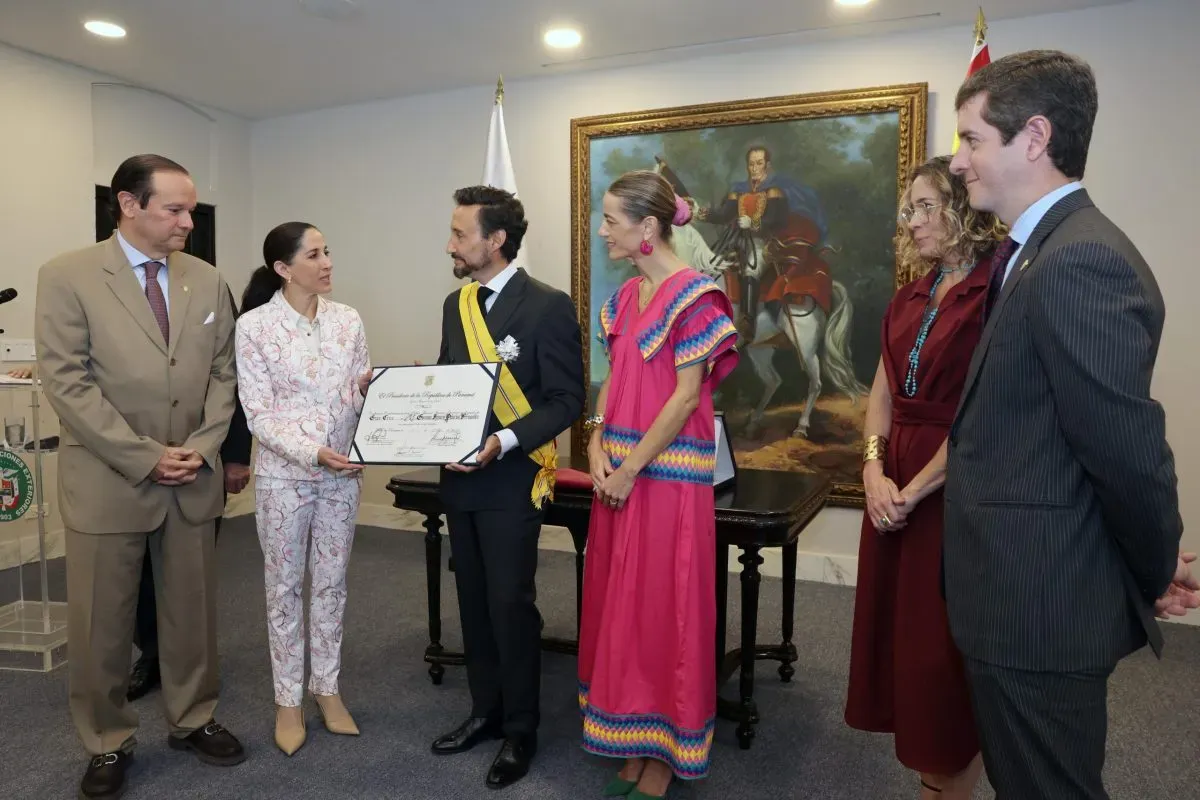
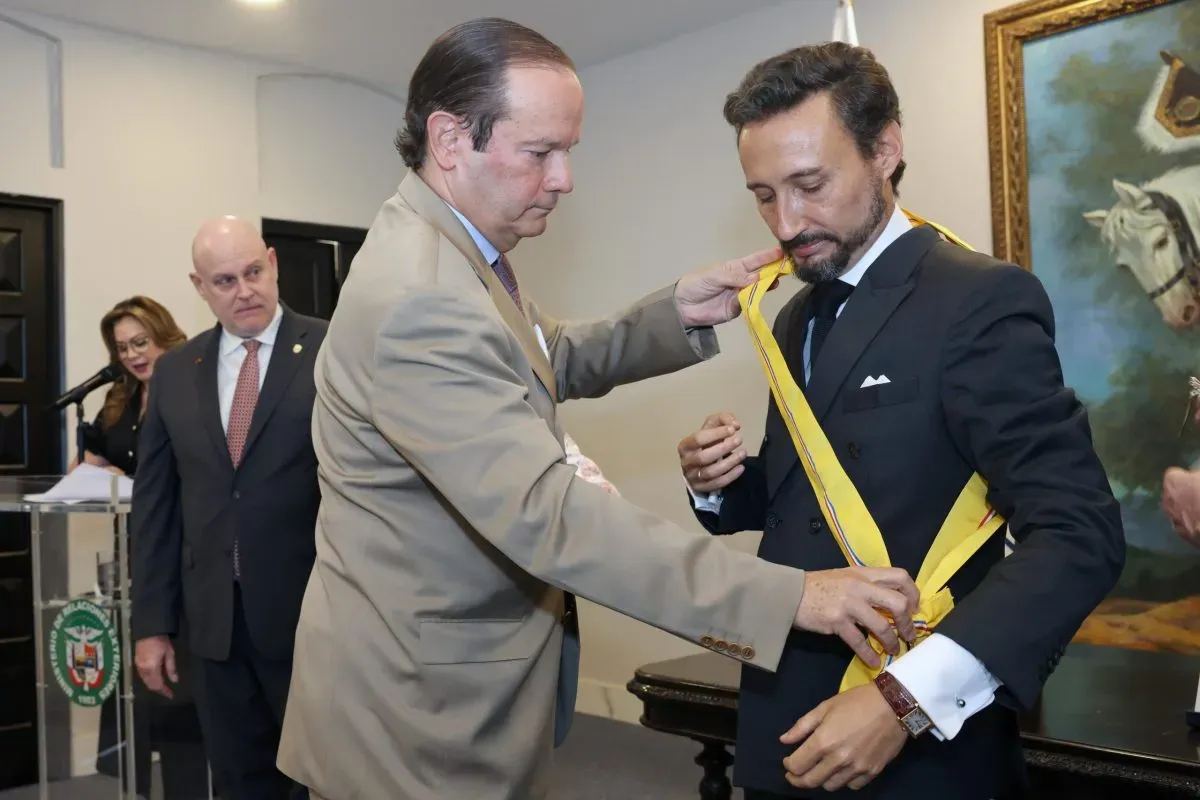
A quiet ceremony in Panama City this week marked the end of a diplomatic chapter that officials described as unusually personal. Foreign Minister Javier Martínez-Acha Vásquez, acting on behalf of President José Raúl Mulino, presented the Order of Manuel Amador Guerrero in the Grand Cross degree to Spain’s outgoing ambassador, Guzmán Ignacio Palacios. The award recognizes his work strengthening ties between the two nations during his tenure.
The conversation in the Salon Gran Bolivar at the Foreign Ministry headquarters felt less like a formal farewell and more like a family gathering. Diplomats, cultural leaders and tourism officials crowded the room to witness the moment. Vice Minister of Foreign Affairs Carlos A. Hoyos stood nearby, alongside Vice Minister for Multilateral Affairs Carlos Guevara Mann, Culture Minister Maria Eugenia Herrera and Gloria De Leon, who leads the National Tourism Authority.
Martínez-Acha Vásquez did not mince words when describing the relationship built since Palacios arrived in September 2022. He spoke of closeness, loyalty and mutual respect. These values, he said, helped tighten the bonds between Panama and Spain in ways that went beyond formal protocol.
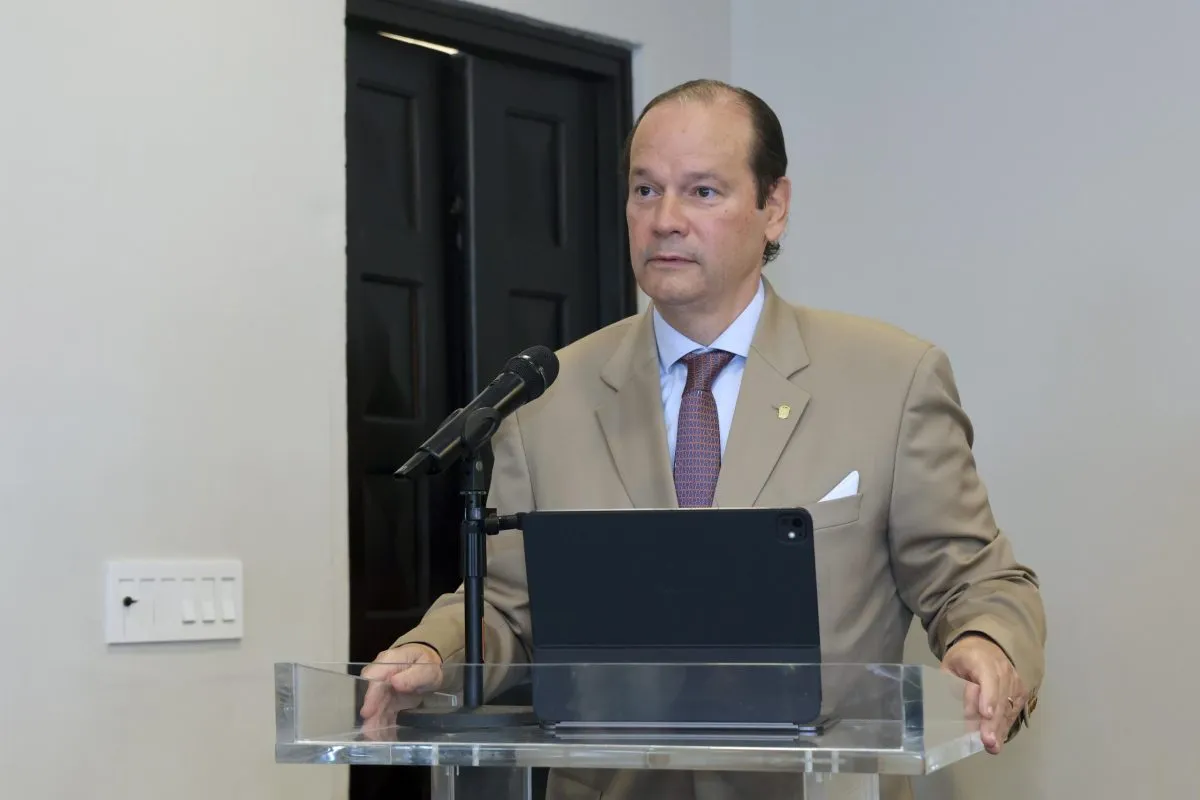
‘Panama says goodbye to an ambassador, but keeps a friendship. We consider him a brother and an ally of our country’ [Translated from Spanish]
The foreign minister pointed to concrete achievements during Palacios’ mission. Negotiations for the future General Treaty of Friendship and Cooperation moved forward under his watch. Spain also joined the Alliance for Sustainable Development, a multilateral platform that Panama champions. These are not small accomplishments in a world where bilateral agreements often stall for years.
What made the relationship work, according to Martínez-Acha Vásquez, was a shared sense of optimism. He described the agenda they built together as forward-looking, designed to last for decades rather than political cycles. The ambassador’s prudence and willingness to engage in difficult conversations set him apart, the minister added.
Palacios accepted the honor with visible emotion. He called it one of the greatest distinctions of his diplomatic career. During nearly four years in Panama, he found more than just a posting. His family, he recalled, was welcomed with warmth and generosity.
The ambassador also reflected on a major milestone: the Bicentennial of the Congress of Panama. For Spain, celebrating this event meant paying tribute to a shared vision built on dialogue, integration and cooperation between nations. The congress, convened by Simón Bolivar in 1826, sought to unite Latin American republics. Spain’s participation in its bicentennial events signaled a modern commitment to that same ideal.
‘Panama and Spain will continue strengthening their bilateral agenda through new cooperation mechanisms, and I reiterate my conviction that diplomacy constitutes an essential tool for building understanding and development between nations’ [Translated from Spanish]
The timing of this recognition matters. Panama and Spain have been quietly deepening their relationship at a moment when global alliances are shifting. The Treaty of Friendship and Cooperation, still under negotiation, promises to formalize cooperation across trade, security and cultural exchange. Spain’s interest in Panama goes beyond historical ties. The country sees Panama as a strategic hub for Latin American engagement.
Palacios’ departure leaves big shoes to fill. His successor will inherit a relationship that has moved from cordial to genuinely collaborative. The Order of Manuel Amador Guerrero, named after Panama’s first president, is not handed out lightly. It signals that Panama values what Spain brings to the table, and expects the partnership to grow.
For context, the Order of Manuel Amador Guerrero was established to recognize exceptional service to the republic. Recipients include heads of state, diplomats and cultural figures who have contributed significantly to Panama’s international standing. The Grand Cross degree is reserved for ambassadors and ministers, making it a fitting tribute for a diplomat who prioritized substance over ceremony.
Panama’s foreign policy under President Mulino has emphasized practical partnerships over ideological alignment. The administration has pursued deals in aerospace, logistics and renewable energy. The relationship with Spain fits this pattern. Both countries share a language, yes, but they also share a pragmatic approach to international relations.
As Palacios prepares to leave, the question becomes what comes next. The Treaty of Friendship and Cooperation will likely be the centerpiece of future bilateral talks. If finalized, it could serve as a model for how middle powers like Panama and Spain can navigate a fragmented global order. The ambassador’s farewell, marked by an honor that carries the name of Manuel Amador Guerrero, suggests that both sides are committed to making that happen.