


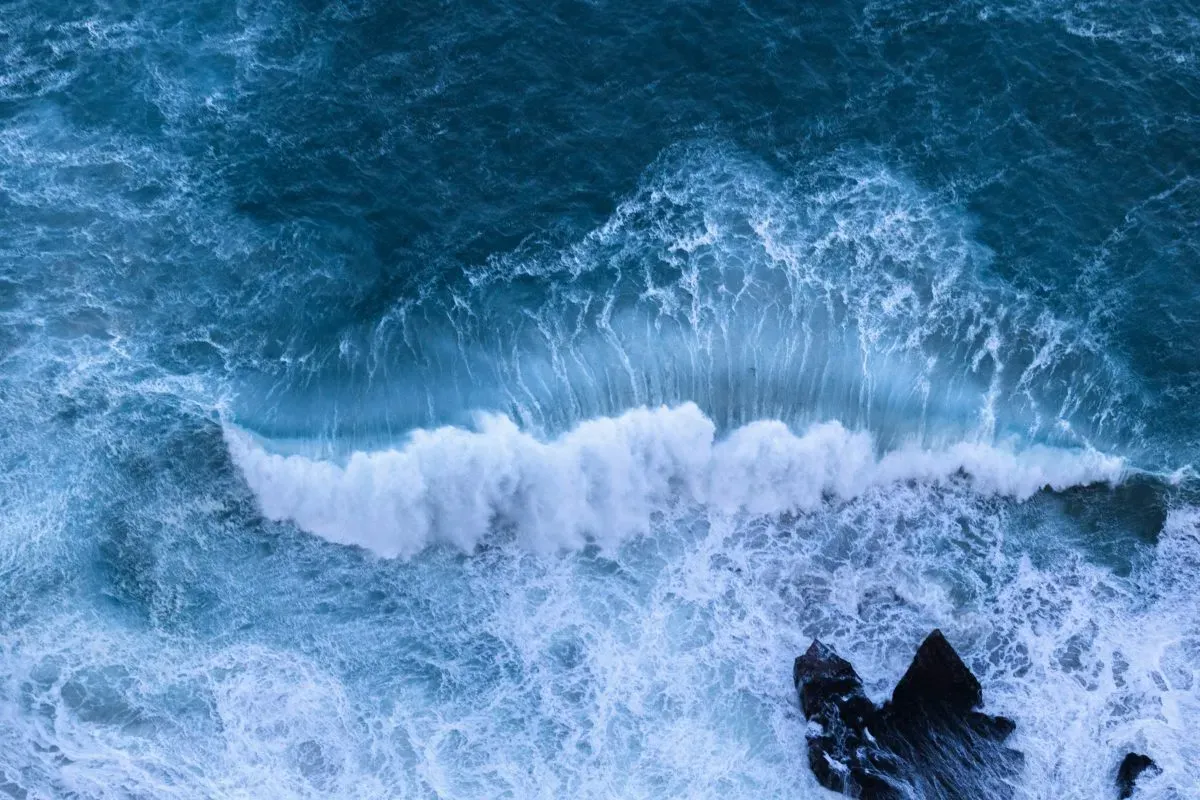
The Institute of Meteorology and Hydrology of Panama (IMHPA) has issued a nationwide maritime vigilance advisory. The warning, effective from early Saturday, January 10, through Tuesday night, January 13, forecasts intensified winds and dangerously high waves along the entire Pacific coastline.
Officials attribute the hazardous conditions to a significant atmospheric pressure gradient. This gradient is the result of a high-pressure system over the Atlantic interacting with a semi-permanent low-pressure zone located between Panama and Colombia. The resulting weather pattern is driving strong offshore winds toward the Pacific, churning the ocean’s surface.
“The maritime conditions will be marked by intense winds and a rough sea, a product of the adjustment of the pressure gradient,” stated the official bulletin from the Institute of Meteorology and Hydrology of Panama. [Translated from Spanish]
The advisory breaks down the risks by region, with conditions expected to deteriorate from west to east. For the Western Pacific, including Chiriquí, forecasters predict waves between 0.5 and 1.0 meters. Winds there could reach 30 kilometers per hour. These are considered moderate but still require caution from mariners.
Central and Eastern Pacific Face Highest Risk
More severe impacts are anticipated for the Central and Eastern Pacific zones. The Central region, covering the south of Veraguas and the Azuero Peninsula, will likely see waves between 1.0 and 1.6 meters. Sustained winds there are forecast between 30 and 40 kilometers per hour. These parameters create adverse and potentially dangerous conditions for swimmers and operators of small vessels.
The greatest hazards are concentrated in the Eastern Pacific. This area includes the populous Gulf of Panama and the Darién coast. Wave heights are also projected at 1.0 to 1.6 meters, with wind gusts potentially hitting 40 kilometers per hour. The institute specifically highlighted elevated risks for artisanal fishermen and any recreational sea activities.
Authorities acknowledged that some sectors might occasionally experience navigable conditions. They emphasized, however, that scenarios requiring extreme precaution will persist in many areas. Small boats and people visiting beaches are most vulnerable under this advisory.
“It is recommended to maximize safety measures, heed official warnings, and avoid exposure to dangerous maritime conditions while the vigilance notice remains in effect,” the IMHPA bulletin concluded. [Translated from Spanish]
The multi-day advisory urges the public to monitor official channels for updates. Coastal residents and businesses are preparing for the sustained rough seas. Local maritime authorities are expected to increase patrols and may restrict access to certain beaches if conditions worsen.
This weather event underscores the volatile marine environment of Panama’s Pacific coast during seasonal transitions. The institute’s early warning aims to prevent accidents and give communities time to secure boats and alter plans. Safety remains the paramount concern until the atmospheric systems shift and the advisory is lifted.