


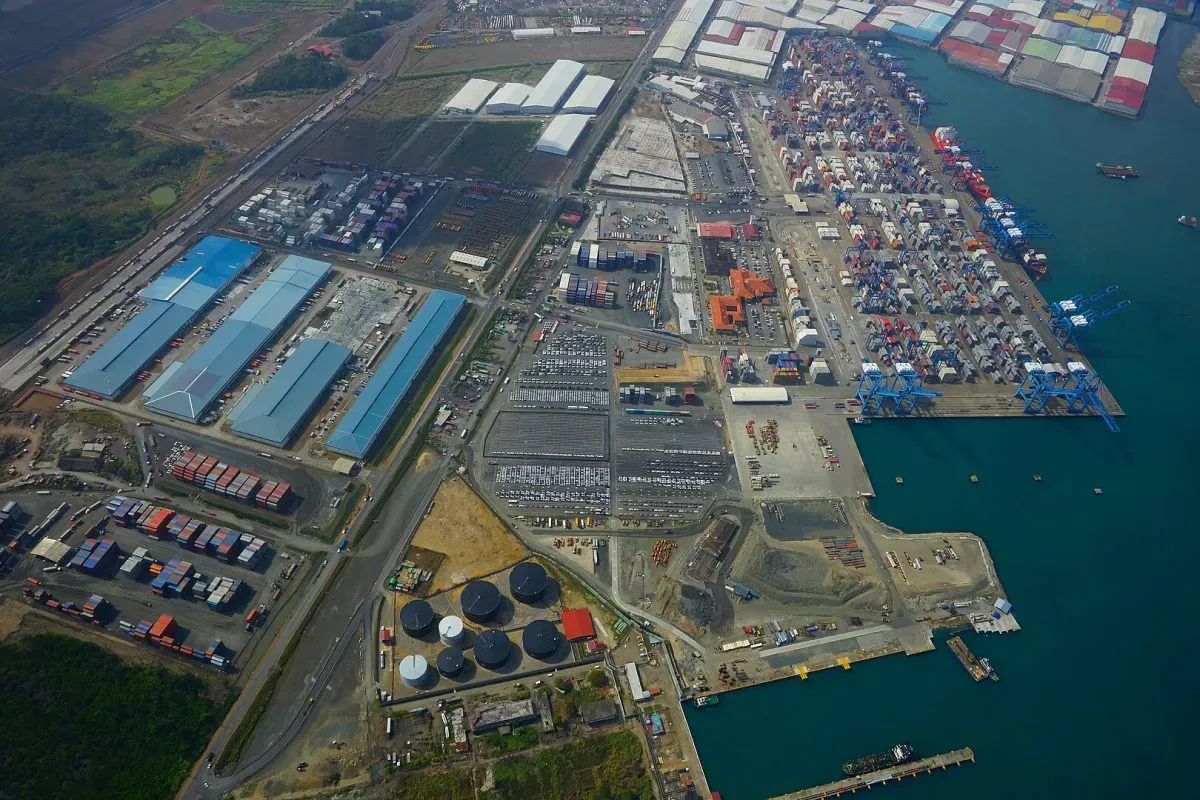
The Colón Free Trade Zone, the second largest free trade zone in the world, closed 2025 with a significant year-end rebound. This recovery followed a difficult first nine months defined by global trade tensions and high tariffs. Official year-end data shows total commercial movement reached $27.9 billion, an 11.9 percent increase over 2024 figures.
This positive final result masked a year of sharp contrasts for the Panamanian trade hub. Activity through September had recorded an 8.2 percent cumulative drop, with transactions totaling $17.1 billion. The dramatic fourth-quarter surge, driven by a spike in reexports, ultimately reversed the earlier negative trend and delivered annual growth.
“In my opinion there is no contradiction between the drop in value and the increase in volume. More cargo moved through the Colón Free Zone, but at lower prices. International prices fell, freight rates normalized compared to previous years, and margins were tighter across the entire region,” said Dovi Eisenman, president of the Colón Free Zone Chamber of Commerce. [Translated from Spanish]
The zone’s operators adapted their logistics and financial strategies to navigate the turbulent climate. Eisenman noted that businesses shifted toward holding lighter inventories and prioritizing faster turnover of goods, a response to higher financing costs and market uncertainty. This operational pivot contributed to moving more physical tonnage even as the total declared value of some transactions decreased.
Quarterly Reversal Driven by Reexport Surge
October 2025 marked the decisive turning point for the Colón Free Trade Zone. That month, reexports skyrocketed to $3.23 billion. The figure represented a staggering 151.4 percent increase compared to October 2024 and a 229.4 percent jump from the same month in 2023.
Positive momentum continued through November and December. It solidified a full-year reexport total of $16.12 billion, an 11.9 percent annual growth. Imports, conversely, contracted by 7.3 percent in value, closing the year at $11.77 billion. The total physical cargo movement for 2025 reached 2.41 million metric tons, a 9.3 percent rise from the prior year.
Import tonnage grew 18 percent, while reexport tonnage saw a slight 0.8 percent contraction. This divergence between volume and value underscored a year of adjusted margins and shifting commodity mixes. High-volume, lower-unit-value goods like toys represented a larger share of the physical movement, offsetting slower trade in higher-value electronics.
“The entrepreneur today operates under a different logic. With a higher cost of money, it is no longer efficient to have immobilized inventory. Competition is about how well you manage your logistics, your supply chain, and the speed at which you rotate merchandise, not about how much inventory you have stored. They work with lighter stocks, more movement, and greater financial discipline,” Eisenman explained. [Translated from Spanish]
This new efficiency, according to chamber leadership, signals a more rational and resilient market structure rather than a simple decline in activity. Companies optimized their supply chains for speed and flexibility instead of bulk storage.
Geopolitical Tariffs and Regional Instability Reshape Trade
Elevated tariffs imposed by the United States on China, Brazil, and other nations created major headwinds throughout much of the year. These measures slowed regional trade flows and prompted a widespread cautious stance among zone operators. The uncertainty also led to a unique logistical adaptation.
Some companies used the zone’s facilities as a strategic storage buffer. Merchandise purchased for holiday seasons, particularly goods needing to transit through the U.S., was warehoused in Colón while awaiting more favorable commercial conditions or tariff clarifications. This practice contributed to the increased physical cargo volumes even during slower sales periods.
Internal instability in several key Latin American markets further dampened demand. Economic and political tensions in Nicaragua, Costa Rica, and Venezuela reduced confidence among entrepreneurs in those countries. Their reluctance to acquire new products softened regional demand dynamics, forcing Colón-based businesses to operate with greater caution and leaner inventories.
The combined pressure from tariffs and regional uncertainty effectively re-routed traditional trade patterns. It accelerated the shift toward a just-in-time inventory model that defines the zone’s current operational reality.
Outlook Focuses on Adaptive Resilience
The 2025 recovery demonstrates the Colón Free Trade Zone’s embedded resilience. Its ability to serve as a flexible logistics node and a temporary storage solution during trade disruptions proved critical. The fourth-quarter rebound suggests operators successfully adapted their strategies to the new geopolitical and financial landscape.
The increased focus on logistics efficiency and supply chain velocity is now a permanent feature. Businesses there no longer compete primarily on inventory depth but on the sophistication of their distribution networks and their speed to market. This evolution could strengthen the zone’s long-term role in global reexport networks.
Market observers will watch closely to see if the strong momentum from the final quarter carries into 2026. Continued adaptation to international tariff policies and regional economic conditions will be essential. The zone’s performance remains a key barometer for both Panamanian economic health and broader Latin American trade dynamics.
Final figures for 2025 confirm a challenging but ultimately successful year. The Colón Free Trade Zone ended with growth, having navigated a complex web of global tensions through operational agility and strategic flexibility.