


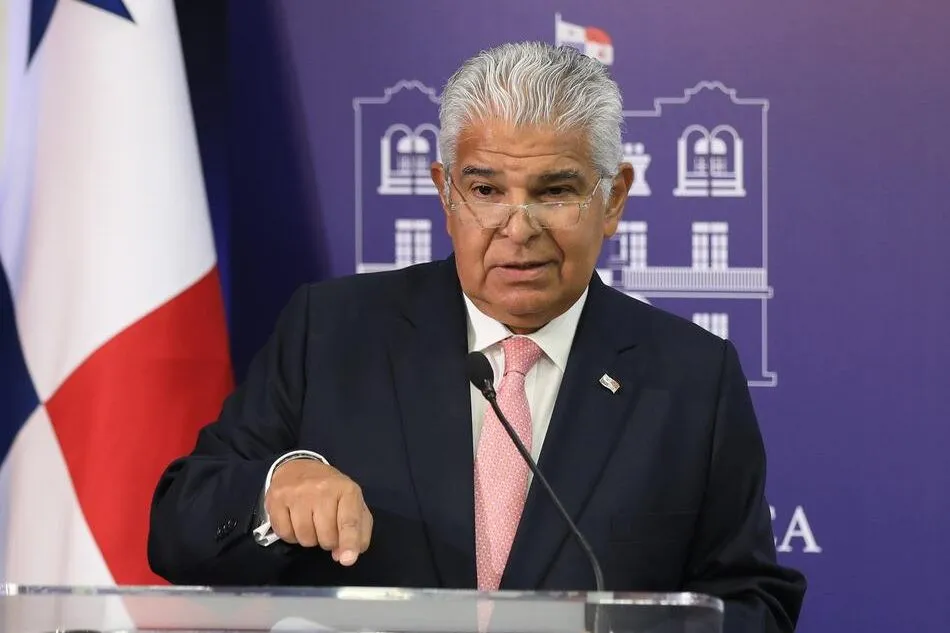
Panamanian President Jose Raul Mulino has publicly rejected a statement from the Hong Kong Special Administrative Region government concerning a recent Supreme Court ruling on a major port contract. The dispute centers on a legal decision that voided concession agreements with the Panama Ports Company, a subsidiary of the multinational port operator Hutchison Ports. Mulino’s firm response, delivered on February 4, 2026, asserts Panama’s judicial sovereignty and signals a potential diplomatic friction point.
The controversy stems from a January 29 ruling by the Supreme Court of Justice of Panama. The court found constitutional flaws in the concession contracts granted to Panama Ports Company for the operation of the Balboa and Cristobal port terminals. This decision, part of a long-running legal review, effectively nullified the agreements governing critical infrastructure on both the Pacific and Atlantic entrances to the Panama Canal.
Mulino Asserts Judicial Independence
President Mulino responded directly to Hong Kong’s criticism via the social media platform X. He framed the court’s action as a purely domestic legal matter and a demonstration of Panama’s rule of law. His statement emphasized the separation of powers within the Panamanian government, noting the judiciary’s independence from the executive branch.
The president’s message was unequivocal. He stated that judicial decisions must be respected both domestically and internationally. Mulino also confirmed that Panama’s Ministry of Foreign Affairs would issue an official position on the matter, pledging to defend national sovereignty and the country’s legal framework. This move prepares the ground for formal diplomatic communications.
“I vigorously reject the pronouncement of the Office of Hong Kong and Macao Affairs regarding the Supreme Court ruling on the port contract. Panama is a State of Law and respects the decisions of the Judicial Branch, which is independent from the Central Government. The Chancellery will…” [Translated from Spanish]
This stance directly counters the position laid out by the Hong Kong government. Officials there had expressed “great discontent” and “categorical rejection” of the Panamanian court’s ruling. They argued the decision represents an unreasonable coercive measure within international commercial relations.
Hong Kong Warns of Investment Climate Damage
The Hong Kong government’s statement carried significant economic warnings. It argued that such judicial actions negatively impact the business environment and undermine investor confidence. The communique suggested the ruling could damage bilateral relations and harm long-term economic development for both parties. It called on the Panamanian government to respect the “contractual spirit” and ensure a fair operating environment for legally established businesses.
A spokesperson went further, suggesting Hong Kong companies should carefully reevaluate their current and future investments in Panama. This warning highlights the high stakes involved, as the ruling affects a subsidiary of Hutchison Ports, a global logistics giant with deep roots in the Hong Kong Special Administrative Region. The case is being closely watched by other international investors in Panama’s infrastructure sector.
The Supreme Court of Justice of Panama has a history of scrutinizing large state contracts. Its recent rulings have solidified its role in checking executive power and enforcing constitutional compliance. This institutional history provides context for the current port contract decision, which follows established legal review processes within the judicial.
Analysts note that the case touches on broader geopolitical tensions. Panama’s strategic canal and port infrastructure have become focal points for international influence. The nullification of a contract with a company linked to Chinese capital through its Panama Ports Company ownership occurs within a complex global landscape. Discussions about strategic risks in the region, including perspectives on Hong Kong-based investments, have intensified in recent years.
Path Forward for Port Operations
The immediate operational future of the Balboa and Cristobal ports remains uncertain. The court’s ruling invalidates the legal framework for the concession holder, Panama Ports company. This creates a period of legal limbo for one of the country’s most significant port operators. The Panamanian government must now determine a transitional plan to ensure port continuity while establishing a new legal and operational structure.
President Mulino’s administration faces the dual challenge of enforcing a domestic court ruling while managing its international repercussions. The promised statement from the Foreign Ministry will be its next critical step. That document must navigate the defense of national legal sovereignty with the practical need to maintain stable international trade and investment relationships. The outcome may influence how other foreign investors view the security of their contracts in Panama.
This incident is not the first time Panama’s highest court has voided a major port agreement, setting a notable legal precedent. The Supreme Court has previously taken similar action, demonstrating a consistent judicial approach to contract review. The government’s response now will test its ability to balance judicial independence with diplomatic and economic stability in a high-profile international dispute.