


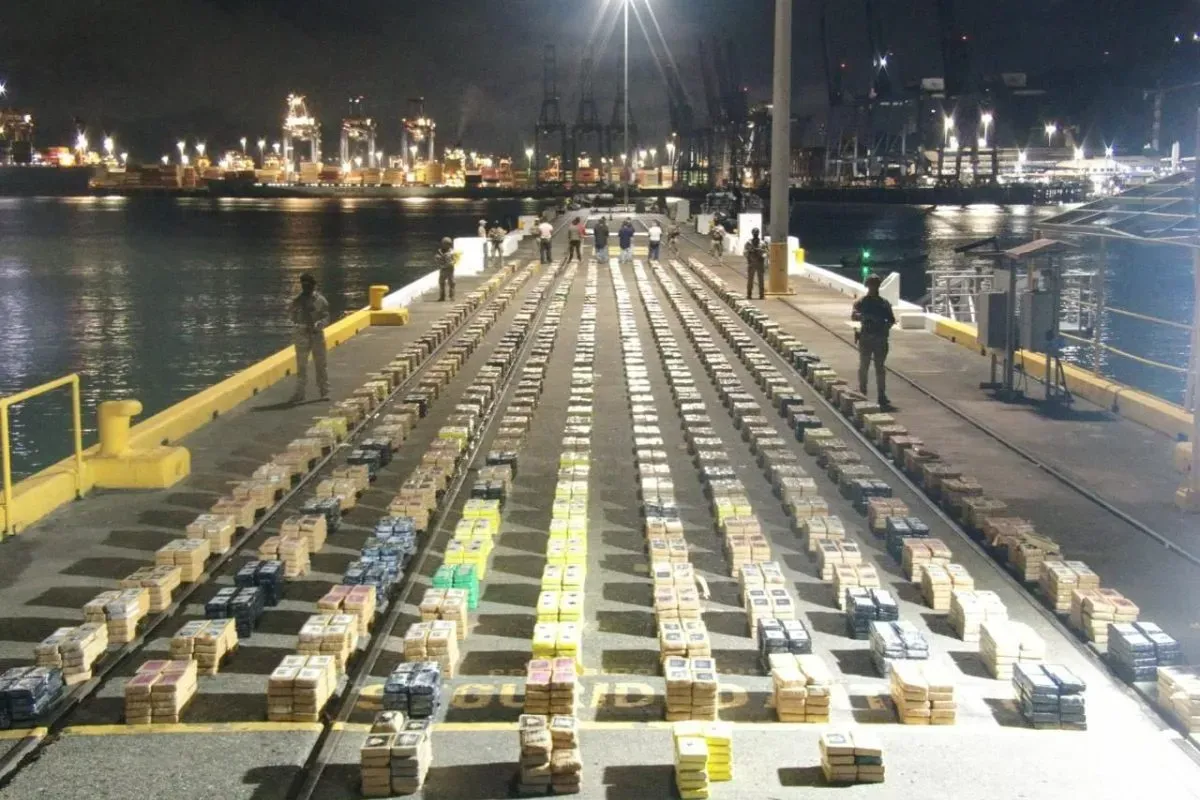
Panama’s National Aeronaval Service (SENAN) has seized more than 10.2 metric tons of illegal drugs so far in 2026. The agency’s director, Luis De Gracia, announced the figure this week, marking a sharp increase from the same period last year.
This year’s haul already surpasses the four tons confiscated in early 2025. The aggressive start follows a record-breaking year for the service in 2025, when it intercepted over 71 tons of narcotics. Officials credit a revamped maritime and aerial interdiction strategy for the surge in seizures.
Strategic Shift Drives Record Interdictions
De Gracia explained that the results stem from a deliberate strategy of pre-positioning naval and air assets. The government has also reinforced personnel numbers. A key focus remains the primary source routes, which authorities say continue to be the coasts of Colombia.
“The main routes of origin continue to be, par excellence, the coasts of Colombia,” De Gracia stated. [Translated from Spanish] He noted there has been no registered decrease in drug production from that country.
This reality necessitates constant intelligence sharing with Colombian security agencies and other regional partners. The servicio nacional aeronaval maintains these exchanges to track criminal movements.
Pacific Routes and Evolving Smuggling Methods
Maritime routes are still the most favored by criminal organizations. Operational data shows a 60-40 split, with the majority of traffic moving through the Pacific Ocean versus the Caribbean. At least ten major operations this year have also led to between 12 and 15 arrests.
Most detainees hold Colombian, Nicaraguan, or Mexican nationality, with fewer Panamanian citizens involved. The director emphasized that Panama itself has no significant drug crops or laboratories. The nation primarily functions as a transit corridor to markets in the United States and Europe.
This transit status, however, creates internal security impacts. Operations aim to reduce associated crimes like local distribution and violence. The agency’s efforts are part of a broader national push against drug trafficking networks.
Modernization and Community Outreach as Pillars
De Gracia stressed that operational strengthening has required government support. This includes recovering previously inoperable aircraft and naval units while integrating new technologies. Modernizing the aerial fleet is now a critical need.
Criminal groups constantly mutate their methods. They increasingly use low-profile vessels, including semi-submersible vessel types, to move large shipments. This technological arms race demands constant updates from security forces.
“It is necessary to shift to new technologies,” De Gracia affirmed. [Translated from Spanish] “These terrorist groups, these narco-terrorist groups as they are called, also use technologies. Of course, if they mutate every time we make an effort to stop them, they mutate into new dynamics and among them is acquiring new technologies.”
Another strategic axis involves community work in coastal zones. The nacional aeronaval service promotes community policing programs and strengthens a “vigilant fishermen” plan. The goal is to reduce Panamanian participation in illicit activities and offer alternatives to youth vulnerable to recruitment.
The director of the National Aeronaval Service (Panama) acknowledged the challenge is persistent. With the support of the national government and continued servicio nacional modernization, Panama aims to maintain pressure on transnational criminal routes throughout the year.