


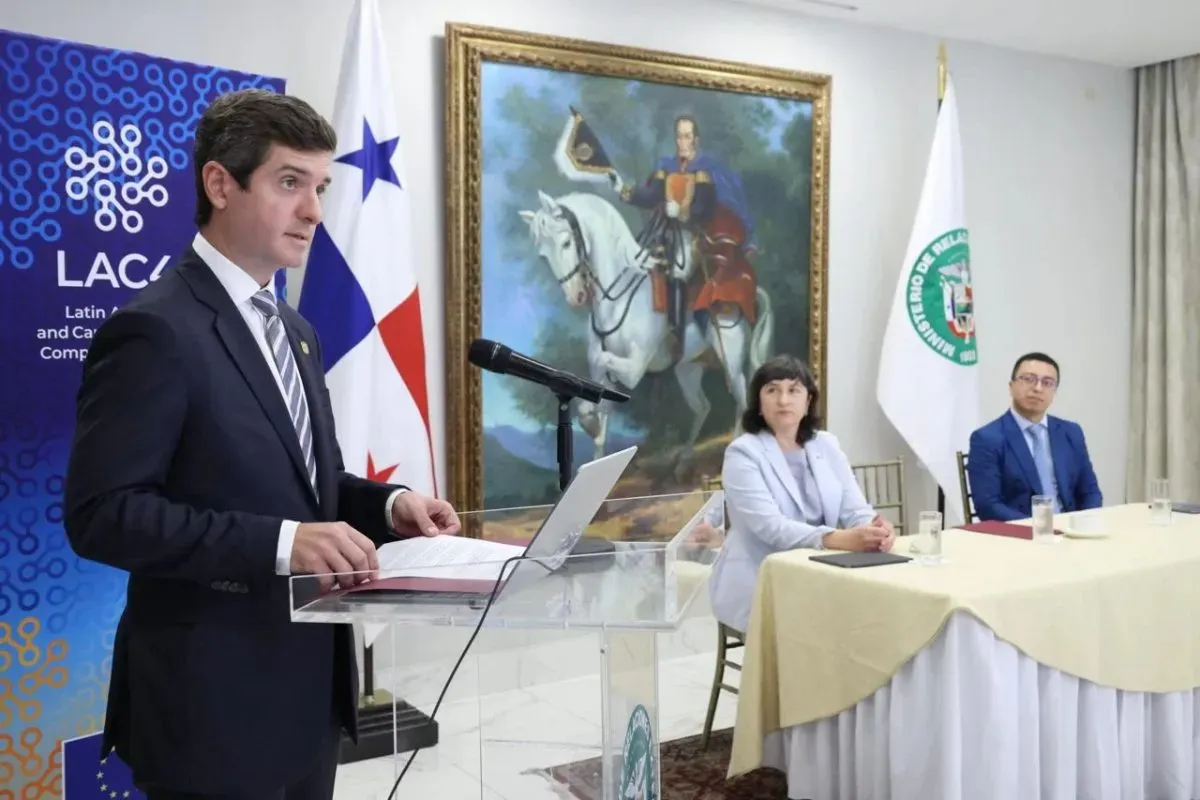
Panama’s Ministry of Foreign Affairs launched a specialized cyberdiplomacy training program for its career diplomats this week. The two-day workshop, part of the Panama 2026 Cyberdiplomacy Training Program, aims to solidify the nation’s international reputation as a leading provider of digital services.
Acting Foreign Minister Carlos A. Hoyos inaugurated the session on February 4, 2026. He framed the initiative as a core element of Panama’s foreign policy and national development strategy.
Strategic Pillars for a Digital Economy
Officials stated that cybersecurity and cyberdiplomacy are now strategic pillars. Panama is actively promoting a national strategy for exporting modern services, many of which are digital. These services range from banking to creative industries.
This economic vision demands guaranteed high standards of digital security. The government believes robust international cooperation is essential to achieving this goal.
“Cyberspace permeates all sectors of contemporary life and demands preparation, responsibility, and cooperation,” said Acting Minister Hoyos. [Translated from Spanish] He explained that it offers extraordinary opportunities for development but also presents risks that can be exploited by criminal networks. “Preventing these risks and protecting sensitive information is an unavoidable task for states.”
Hoyos further emphasized that cybersecurity has become a central axis of international relations. Panama maintains a firm commitment to multilateralism to strengthen peace, cooperation, and security in all its dimensions, including the digital realm.
International Cooperation and Shared Values
The training program received direct support from the European Union. Acting Minister Hoyos thanked the EU and its ambassador to Panama, Izabela Matusz, for their commitment.
He said this cooperation reaffirms the value of joint work between Panama and the EU against the emerging challenges of the digital era. It also equips diplomats with the knowledge to apply good cybersecurity practices.
“The European Union is a global reference in the cybersecurity industry, and we want to share this path already traveled with Panama and the region,” stated Ambassador Izabela Matusz. [Translated from Spanish] “This alliance seeks a people-centered digital transition that extends everyone’s rights and offers security in an increasingly complex environment.”
The workshop features specialists from Estonia, Portugal, and Mexico. Participants also include officials from Panama’s Ministry of Security, the National Secretariat of Science, Technology and Innovation (Senacyt), and other key institutions.
This cross-governmental approach aims to strengthen inter-institutional cooperation. The goal is a unified strategic vision that positions Panama as a key regional actor in digital governance.
Leonardo Ortega, manager of LAGFOR, helped contextualize the training. His organization specializes in training, advisory services, and international cooperation in cybersecurity and cyberdiplomacy for Latin America and the Caribbean.
“Cybersecurity is no longer an exclusive topic for engineers but a critical factor for sovereignty, competitiveness, and the protection of our fundamental rights,” Ortega asserted. [Translated from Spanish] “Diplomacy is our most powerful tool to protect the digital future.”
Panama’s push in this area aligns with broader governmental efforts to modernize its digital infrastructure. Recent approvals for a centralized state telecommunications network aim to bolster the foundation for these digital services.
The immediate next step involves diplomats applying their new training in international forums. Panama plans to leverage this enhanced expertise to attract digital service investments and shape regional policy discussions on internet governance.