


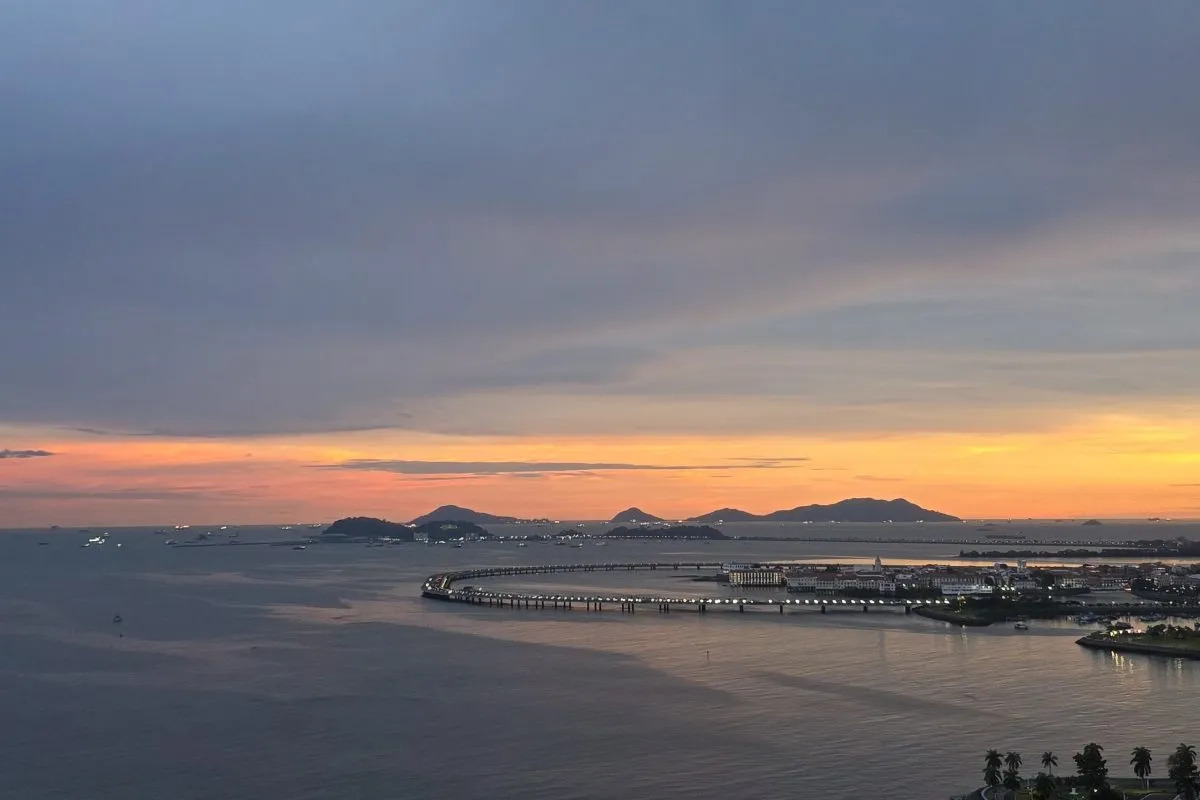
Residents of Panama City’s Amador district are raising urgent concerns about multiple real estate developments they say threaten the area’s ecological balance and strain public services. The community warnings come as construction advances in a zone celebrated for its lush vegetation and iconic views of the Panama Canal entrance. Local leaders argue the projects often violate existing “Garden City” planning laws designed to protect the character of this historically significant area.
Community association president Margot Lopez detailed a list of alleged irregularities observed in ongoing construction. These issues reportedly include buildings exceeding permitted heights, developments occupying nearly double the authorized lot area, and a failure to conserve the legally mandated thirty percent of existing trees. The situation underscores a growing tension between rapid urban development and the preservation of Panama’s unique natural and historical spaces.
“We are not opposed to development in the area,” said Margot Lopez, president of the Amador Neighborhood Association. “We demand that construction respects current regulations and the ecological characteristics of the place, particularly what is established in Law 21 of 1997.” [Translated from Spanish]
The immediate consequences are already being felt. Residents report worsening traffic, sewage overflows, and critically low water pressure. These service failures are occurring even before many new residential towers are fully occupied, sparking fears of a complete system collapse once population density spikes. The infrastructure, they contend, was never designed to support the scale of development now underway.
Water Crisis Puts Resident’s Health at Direct Risk
For one Amador family, the infrastructure strain is not an inconvenience but a life-or-death matter. A resident, who requested anonymity due to her sister’s fragile health, explained that her sister relies on a home dialysis machine. The treatment requires a stable and strong water supply to function safely. The family’s water pressure problems began years ago as buildings rose without concurrent upgrades to the Potable water network.
They were forced to install a storage tank and an electric pump just to operate the medical equipment. Now, with a new real estate project tapping into the same neighborhood water line, the pressure has dropped even further. The patient is currently hospitalized after a new renal failure. Her family fears she cannot return home if the water issue remains unsolved, creating a dire link between urban planning and individual healthcare.
“The problem is not just about allowing or not allowing new real estate developments,” Lopez stated. What the community considers urgent is an official evaluation of basic service capacity in neighborhoods growing without comprehensive planning. She pointed to the planned Passage Amador residential complex as a primary concern. That single project alone could house up to 700 new residents.
Ecosystem Loss and Questioned Zoning Changes
Beyond infrastructure, the environmental cost is mounting. Lopez alleged that one planned project led to the clearing of approximately 10,000 square meters of forest. This action, she argued, destroyed a complete ecosystem with its biodiversity, a loss not easily remedied by simple reforestation programs. The Garden City (urban planning concept) principles embedded in Panamanian law for the area intended to prevent exactly this type of ecological damage.
“That is not reforested. Even if they say they are going to do it, what has been lost is a complete ecosystem with biodiversity,” Lopez said. [Translated from Spanish]
While the developer reportedly held permits for the tree removal, officials from the Ministry of the Environment (Miambiente) indicated those permits were issued during the previous administration. This revelation has fueled community skepticism about regulatory oversight. Urban planner Álvaro Uribe has also questioned recent zoning changes linked to Amador projects. He noted the land was originally zoned as R2, a lower-density residential classification, raising questions about the planning consistency for the area.
The community’s fight is framed as a defense of a national treasure, not just a local neighborhood. Lopez emphasized that Amador, situated within the former Panama Canal Zone, holds symbolic value for all Panamanians. It is a public recreational space where people connect with nature and view the canal. The current development pattern, residents warn, risks privatizing views and degrading the very environment that defines the area’s character. The situation echoes historical tensions seen in other Panamanian communities, where rapid growth tests the limits of local resources and cultural heritage, a dynamic sometimes reflected in the nation’s low presure for balanced development.
Residents continue to document and protest what they see as violations. They are calling for immediate enforcement of existing laws, a moratorium on new permits until infrastructure studies are completed, and a genuine dialogue with authorities. Their goal is to ensure development enhances Amador without sacrificing the environmental and quality-of-life attributes that made it desirable in the first place. The outcome of this conflict will likely set a precedent for how Panama manages growth in its most precious urban landscapes.