


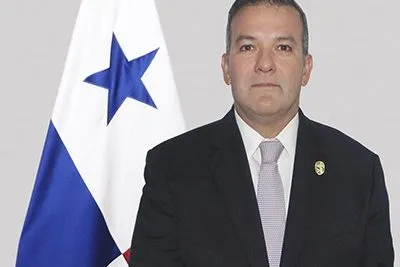
Panama is experiencing a sharp and violent spike in homicides this March, driven by gang conflicts, drug trafficking disputes, and contract killings. Official crime statistics had shown a decline earlier in the year, but National Police Director Jaime Fernandez now confirms a troubling reversal. The violence is spreading from traditional urban hotspots to quieter provinces, alarming communities and challenging law enforcement.
Data from the Integrated System of Criminal Statistics (SIEC), compiled by the Ministry of Public Security, indicated 68 homicides nationwide by late February. That figure represented a decrease compared to the same period in 2025. The recent wave of killings, however, has dramatically altered that trend within just a few weeks. Authorities are connecting most of these crimes to organized criminal competition over local drug distribution networks.
“It is not normal for a person to die with more than six gunshot wounds,” said National Police Director Jaime Fernandez during a television interview. [Translated from Spanish]
Fernandez stated that such extreme violence supports the police hypothesis that roughly 80 percent of recent homicides are linked to gangs, individuals with prior records, and territorial disputes over micro-trafficking. He leads the National Police of Panama, the primary force grappling with this surge. The director’s assessment points to a brutal fight for control of street-level drug sales in local neighborhoods.
From Capital Streets to Provincial Towns
The nature and location of recent crimes have amplified public concern. High-profile incidents include the fatal shooting of 37-year-old lawyer Nadine Silvera in the upscale, typically secure area of Costa del Este. Another man was gunned down in the Don Bosco neighborhood the following day. In a separate case, a burned body was discovered inside a vehicle in Chepo.
Perhaps more indicative of shifting criminal dynamics was the murder of a merchant in Chitre, located in Herrera province. This killing raised alarms about the potential migration of violent crime from metropolitan centers into the country’s interior. While SIEC data confirms most crimes remain concentrated in Panama, Colon, and West Panama provinces, incidents elsewhere suggest expanding gang influence.
Security expert Severino Mejia cautions against overgeneralization. He acknowledges gang expansion into provinces previously less affected by drug trafficking is a real phenomenon. Mejia insists, however, that not every homicide should be automatically labeled as organized crime. Intense police pressure in critical corridors like Panama City, San Miguelito, and Colon may be displacing criminal activity, he notes. Determining the root cause of each killing requires thorough investigation by the Public Ministry.
Drug ‘Tumbles’ and Prison-Hit Orders Fuel Violence
A key driver of the violence, according to police intelligence, is the theft of drug shipments, locally known as “tumbes.” National Police estimates suggest between seven and ten percent of the narcotics transiting through Panama remain in the country as payment for local groups. This illicit surplus, which Director Fernandez calls the “oxygen” for gangs, creates a volatile black market ripe for robbery.
When one criminal group steals drugs from another, the result is often retaliatory executions. This cycle significantly elevates violence. In late February, a police operation in the Azuero region resulted in 20 arrests for micro-trafficking, uncovering packaged drugs, cash, and phones. Despite such interventions, the market persists. Fernandez also revealed that police intelligence has detected murder orders issued by criminals from inside prisons, compelling daily police operations dubbed “Armageddon.”
“Before drawing conclusions, the root of these homicides must be identified, as they are not always related to gang activity,” emphasized security analyst Severino Mejia. [Translated from Spanish]
The current wave appears to stem from a declared war between two major criminal groups that have shifted their operations toward narcotrafficking. Beyond controlling routes, these groups are actively recruiting new members to bolster their ranks. This recruitment push further escalates violence in critical zones. Over 180 gangs currently operate in Panama, with massive concentrations in the districts of San Miguelito and Colon.
The Professionalization of Murder
Adding a layer of complexity is the rise of contract killing, or “sicariato.” Panamanian security authorities maintain a file with the names of multiple individuals who allegedly work exclusively as hitmen. The murder of the lawyer in Costa del Este, carried out by men on a motorcycle, is being investigated as a potential contract killing. This represents an importation of a more professionalized criminal model.
Contract killing has evolved from an occasional activity into a outsourced industry. In countries like Colombia and Mexico, larger criminal structures often operate on a subcontracting model. Local groups are hired by major cartels specifically to execute targeted assassinations, a practice sometimes referred to as “cleaning” operations. The concern is that this model is taking root in Panama, making violence more efficient and detached for the masterminds.
The Ministry of Public Security (Panama) faces the dual challenge of suppressing immediate street violence while dismantling the sophisticated networks that finance and order it. This surge occurs amid broader national concerns over crime and security, including high-profile investigations into alleged corruption and contract overruns in other sectors. Public scrutiny on officials like Eliana Morales in unrelated matters underscores a demand for accountability across government functions.
For Police Director Jaime Fernandez, the immediate task is containing the homicide rate through visible operations and intelligence work. The long-term strategy must address the economic underpinnings of gang recruitment and the complex logistics of a transnational drug trade that treats Panama as both a corridor and a market. The coming weeks will test whether current policing tactics can stem a tide of violence fueled by territorial ambition and professional hitmen.