


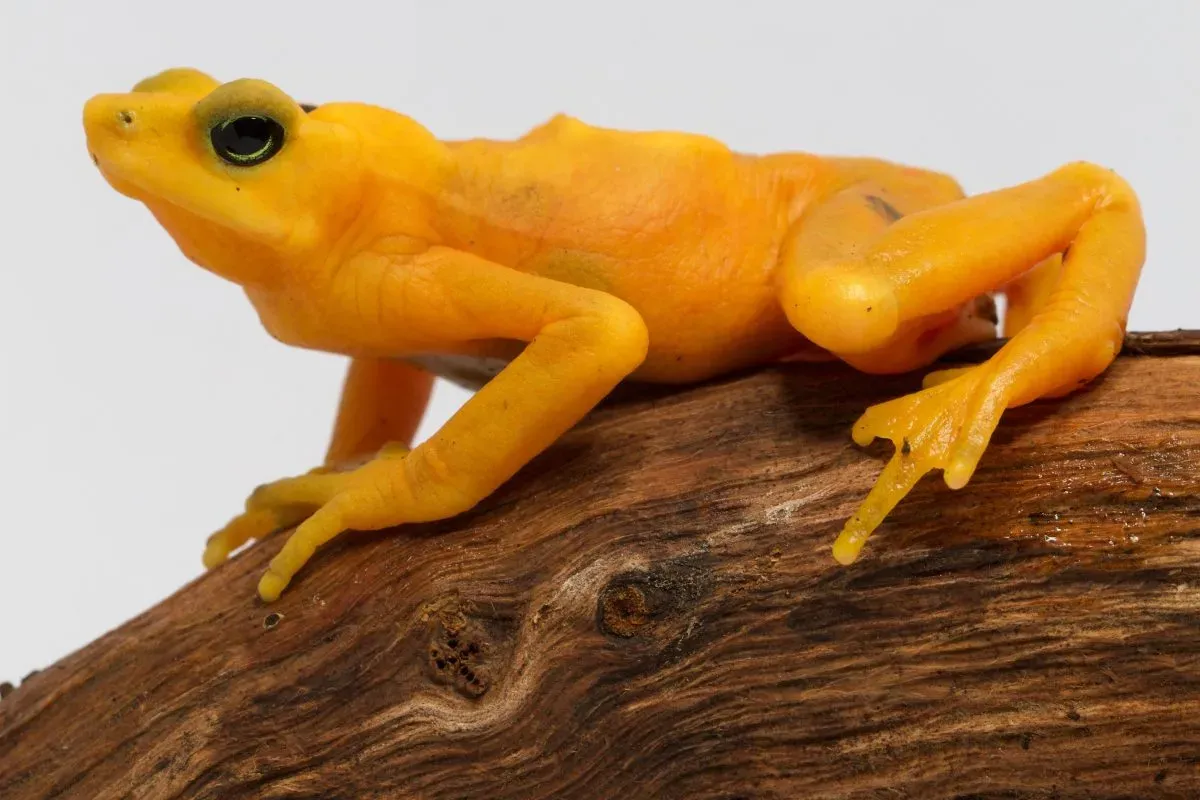
For the first time since 2009, Panamanian golden frogs have been returned to their native habitat. A coalition led by the Smithsonian Institution released 100 of the critically endangered amphibians this month in a landmark scientific trial. The effort aims to learn how to reintroduce a species completely wiped out in the wild by a devastating fungal disease.
The bright yellow frog, a national symbol of Panama, vanished after the pathogen Batrachochytrium dendrobatidis spread through the country’s stream systems. This fungus causes chytridiomycosis, a fatal skin infection that decimated amphibian populations globally. The release represents a pivotal new phase for the Panama Amphibian Rescue and Conservation Project (PARC), established in 2009 to create an assurance colony ahead of the disease wave.
Scientific Strategy Informs High-Stakes Release
Researchers placed the frogs in protected soft-release pens called mesocosms at a site in central Panama. They monitored the animals for twelve weeks as they transitioned from human care. Project leaders acknowledged a significant mortality rate during this period, with about 70 percent of the frogs succumbing to the ever-present fungus. Each loss, however, provides critical data on disease dynamics and the frogs’ ability to regain natural skin toxins on a wild diet.
“We provide care for some of the most endangered amphibians in Panama, and now we are entering a new phase of our work to study the science of rewilding,” said Roberto Ibañez, director of PARC. [Translated from Spanish]
The surviving frogs were then fully released into the environment. This controlled release trial is a foundational step. Scientists say it will guide future attempts to locate “climatic refuges,” or areas suitable for the frogs but inhospitable to the temperature-sensitive fungus.
Data Guides Path to Future Reintroductions
Conservationists stress that this initial release was a research mission, not a declaration of victory. The fungus remains endemic in Panama’s waterways, including the region around El Valle de Anton, the frog’s last known wild habitat. The information gathered on survival rates, toxin recovery, and behavior is considered invaluable for designing subsequent efforts.
“These crucial data will inform our conservation strategy moving forward,” said Brian Gratwicke, a conservation biologist with the Smithsonian’s National Zoo and Conservation Biology Institute. “Our observations here show that we can maintain frogs for long periods in mesocosms. If we discover signs that they regain their skin toxins, that will be important information as we roll out our release trials to other more climatically favorable places.”
The project’s broader goal is to establish a viable, self-sustaining wild population. That ambition remains years away, dependent on lessons learned from this and other trials. Success would mark a major achievement in global amphibian conservation.
Other Species Show Early Promise
This golden frog initiative follows other promising releases under the Smithsonian’s Tropical Amphibian Research Initiative. In 2025, researchers reintroduced three other native species: crowned tree frogs, Pratt’s rocket frogs, and lemur leaf frogs. Early results have exceeded expectations for some.
Passive acoustic monitoring confirms that the crowned tree frogs and Pratt’s rocket frogs are surviving. The lemur leaf frogs have demonstrated excellent survivorship so far. These parallel efforts create a broader framework for amphibian recovery in Panama, a country with rich biodiversity facing intense environmental pressures. Protecting this natural heritage is a complex challenge, akin to safeguarding the nation’s panamanian golden age citizens, requiring sustained commitment and adaptive strategies.
The return of the Panamanian golden frog, even as a research cohort, offers a fragile note of hope. It symbolizes a relentless drive to reverse a loss many scientists once considered permanent.