


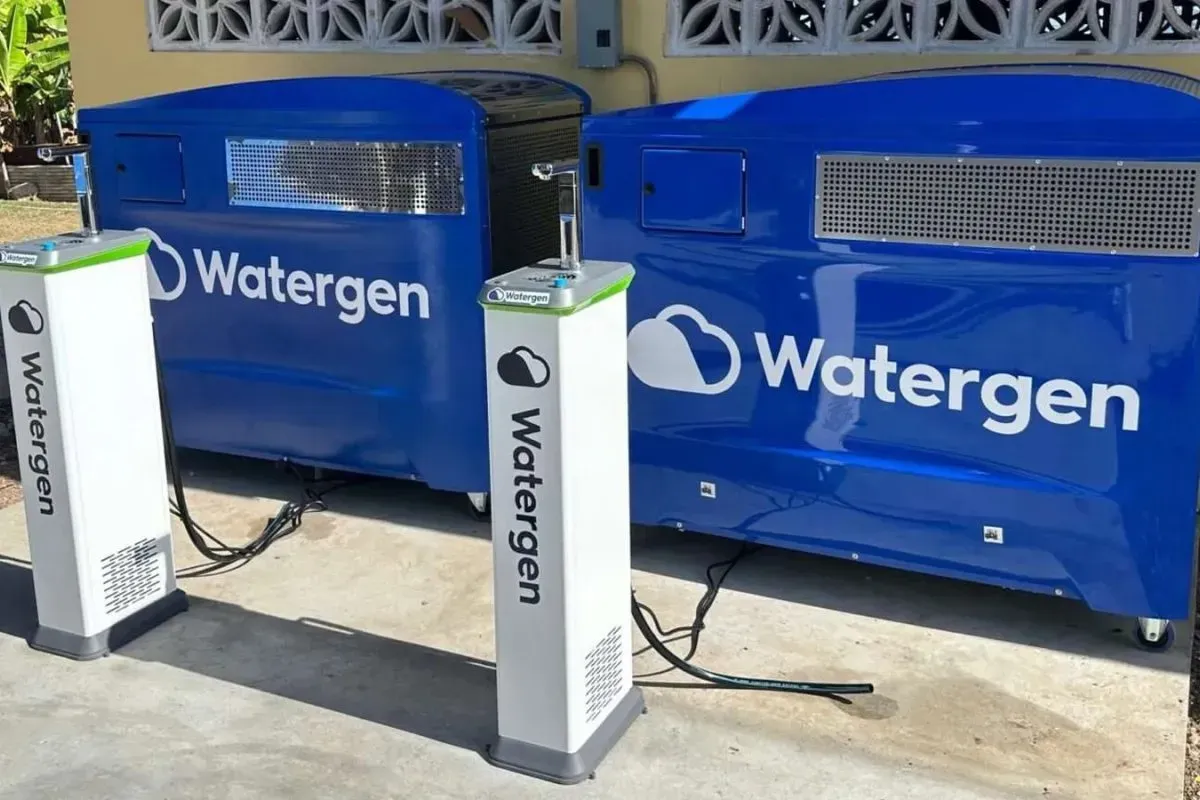
More than a thousand residents of Pedro Gonzalez Island in Panama’s Pearl Islands archipelago now have reliable drinking water. The Panama City Mayor’s Office installed an innovative atmospheric water generation system this month, transforming humidity into a viable community resource.
This project centers on a Watergen GEN-M1 atmospheric water generator donated by Israel. The unit can produce up to 220 liters of potable water daily without traditional wells or pipelines. For an island community historically dependent on rainwater collection, wells, and bottled water, the technology marks a pivotal shift toward secure and sustainable access.
Panama City Mayor Mayer Mizrachi secured the equipment donation during an official visit to Israel in September 2025. Implementation involved collaboration between the Mayor’s Office, the Office of the First Lady, and the Embassy of Israel in Panama.
“Pedro Gonzalez Island has gone from having no water to having high-quality water thanks to this technology that transforms air humidity,” Mayor Mayer Mizrachi stated. [Translated from Spanish]
The system is already operational. It generates roughly 1,200 glasses of water per day using a low energy consumption of 2.5 kW. Officials confirm the water meets international quality standards and is dispensed chilled and ready for consumption.
Sustainable Solution for Remote Communities
The technology addresses a critical need on Pedro Gonzalez Island. Remote communities there have long faced high costs and contamination risks associated with their previous water sources. The new generator provides a decentralized alternative.
First Lady Maricel Cohen de Mulino emphasized the role of international cooperation in bringing sustainable solutions to vulnerable populations. She noted these initiatives directly contribute to public health and social welfare.
“This type of technological solution not only represents innovation, it directly impacts the quality of life for historically underserved communities,” Mayor Mizrachi added regarding the project’s broader significance. [Translated from Spanish]
Israeli Ambassador to Panama Mattanya Cohen said his country is committed to sharing technologies that enable sustainable access to drinking water. This is particularly vital in regions with limited natural water resources.
Technology and Future Expansion Plans
The system works through a process called atmospheric water generation. It draws in ambient air, cools it to condense the moisture, and then filters and mineralizes the water for drinking. Companies like Watergen have pioneered these units for both humanitarian and commercial use.
Panamanian authorities plan to install a second donated unit in the Panama Este region. The goal is to extend this technology to other remote and low-income communities across the country. The success on Pedro Gonzalez Island serves as a pilot for wider deployment.
Local residents on the island, part of the district named for explorer Pedro Gonzalez, have welcomed the intervention. It reduces their dependency on unpredictable rainfall and expensive bottled water deliveries.
The project demonstrates how this type of international partnership can tackle infrastructure gaps. It provides a modern solution where conventional water projects might be too costly or geographically challenging to implement.