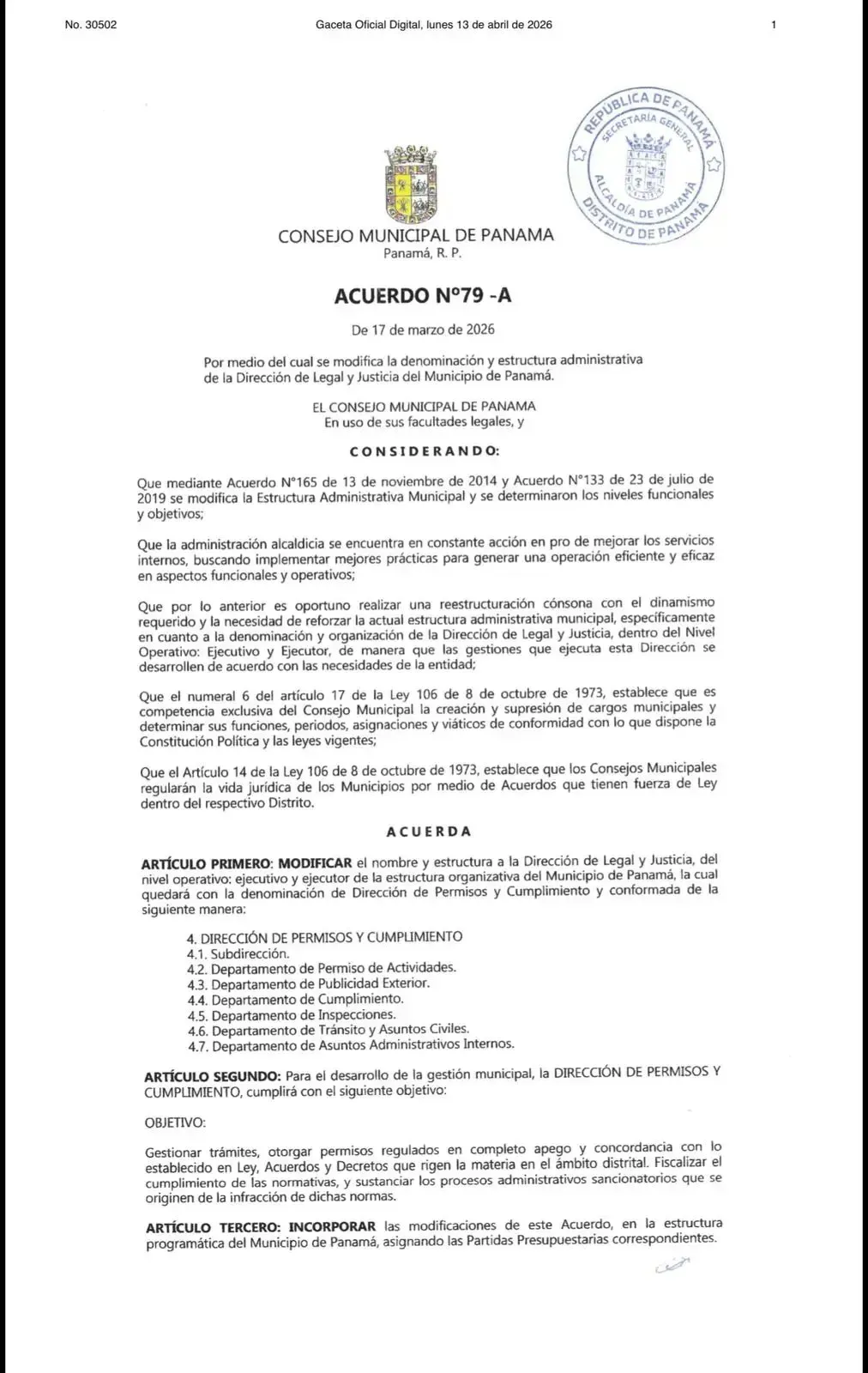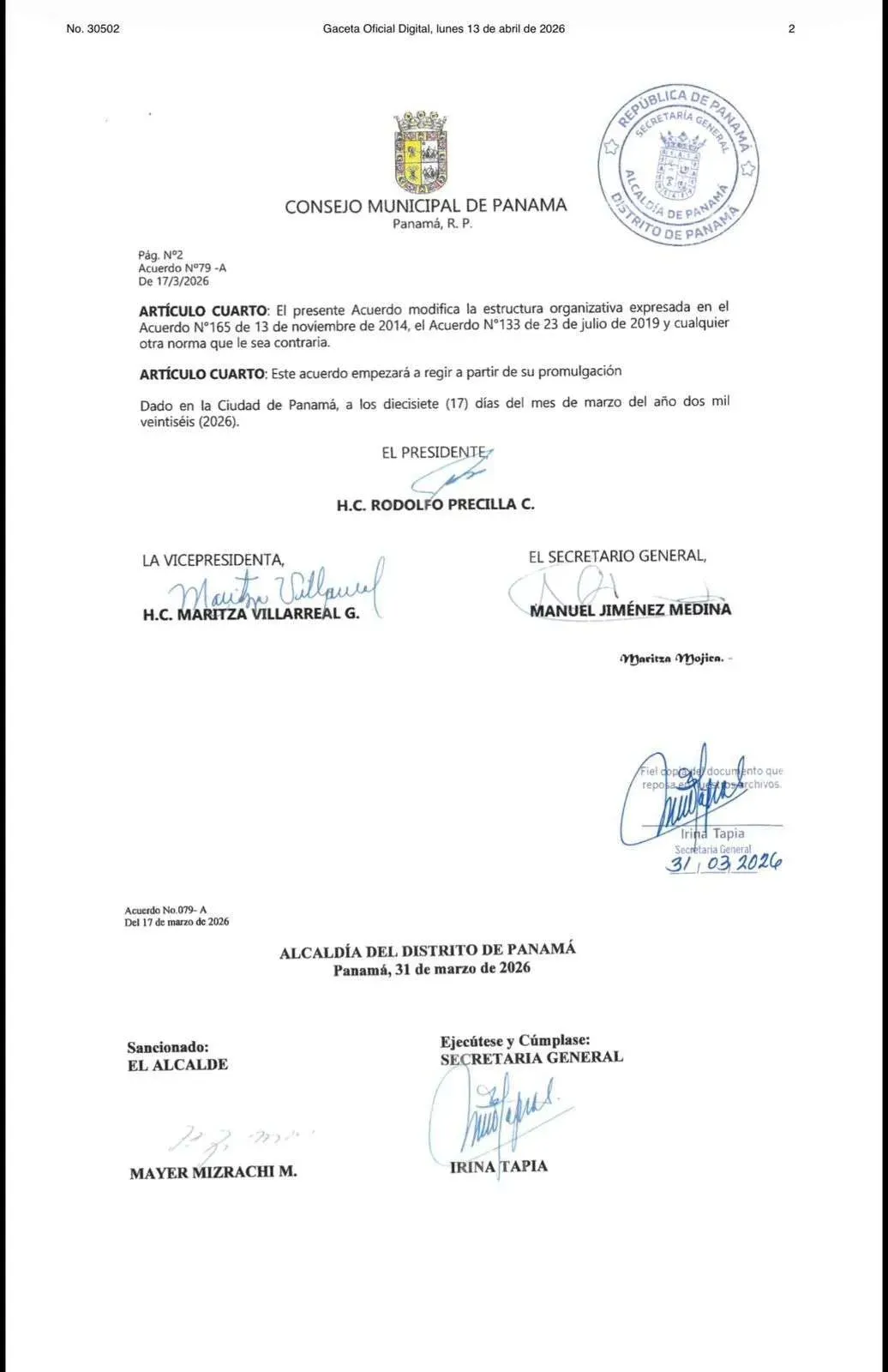
The Panama City Municipal Council has approved a major administrative restructuring designed to accelerate and digitize municipal permit processes. Officials sanctioned Agreement No. 79-A this week, creating a specialized Permits and Compliance Department to centralize authorization and inspection services.
This reorganization merges several key functions into a single unit. The move aims to slash bureaucratic delays for residents and businesses seeking operational permits. It represents a core component of Mayor Mayer Mizrachi’s broader push to modernize city hall operations through technology and streamlined procedures.
Mayor Mizrachi formally ratified the agreement, which dissolves the old Legal and Justice Directorate. He framed the decision as a necessary step toward a more responsive government. “This reorganization will allow us to improve institutional response capacity, order processes related to permits, and strengthen oversight and control mechanisms,” Mizrachi stated. [Translated from Spanish] He emphasized the goal of guaranteeing more efficient and transparent municipal management aligned with the city’s current needs.
The immediate impact will be a consolidated workflow for permit applicants. The new department will integrate areas including activity permits, outdoor advertising, inspections, compliance, transit, and civil affairs.
Digital Transformation Drives Municipal Reform
This structural change runs parallel to an ongoing digital overhaul. The mayor’s office confirms that many permit applications and municipal procedures can now be managed entirely online. Citizens and companies can initiate requests without visiting a physical office, a shift accelerated by the new department’s focused mandate.
“This is part of the institutional modernization process driven by the current administration, oriented toward the digitalization of services, the simplification of procedures, and the strengthening of municipal governance,” a mayoral spokesperson explained. [Translated from Spanish]
The creation of the department specifically targets stronger enforcement and consistent follow-up. By housing inspections and compliance under the same roof as the initial permit issuance, the city hopes to improve accountability. Officials believe this integrated model will provide more orderly and efficient service for the capital district’s productive sectors.
Experts in municipal governance often cite process consolidation as a key tool for improving civic service delivery. Panama City’s approach mirrors reforms in other metropolitan areas seeking to attract business investment by reducing red tape.
Streamlining for Citizens and Business
For a local business owner needing a sidewalk cafe permit or a new sign, the path forward should now be clearer. The previous system often required navigating multiple divisions with overlapping responsibilities. The reformed structure designates the Permits and Compliance Department as the single point of contact for these authorization processes.
Internal administrative affairs will also be managed within the new directorate. This is intended to free other municipal departments to focus on their core missions, such as public works or sanitation, while the specialized unit handles all licensing bureaucracy.
The push for the digitalization of public services is not unique to Panama City but is a growing trend across Latin American governments. Mayer Mizrachi’s administration has made it a central pillar of its policy platform. The council’s vote provides the formal institutional framework to support these technological ambitions.
City hall has not announced a specific timeline for the department to be fully operational. Staff from the former Legal and Justice Directorate are expected to be reassigned. Additional training on new digital platforms and unified procedures will likely be required in the coming weeks.
Panama City residents can expect to see updated information on the municipal website detailing how to access the new digital services. The mayor’s office reaffirmed its commitment to a management style it describes as efficient, accessible, and results-oriented. The success of this reform will ultimately be measured by a tangible reduction in processing times and simpler interactions between the public and their local government.