


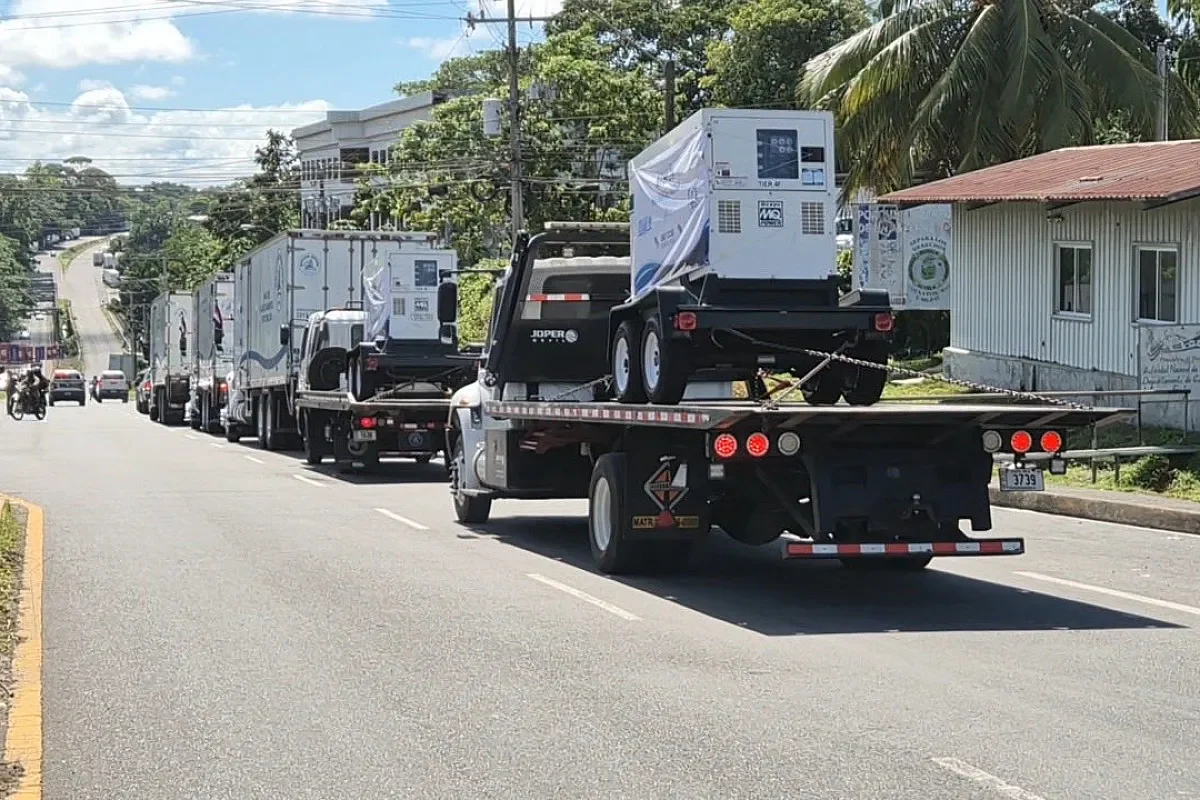
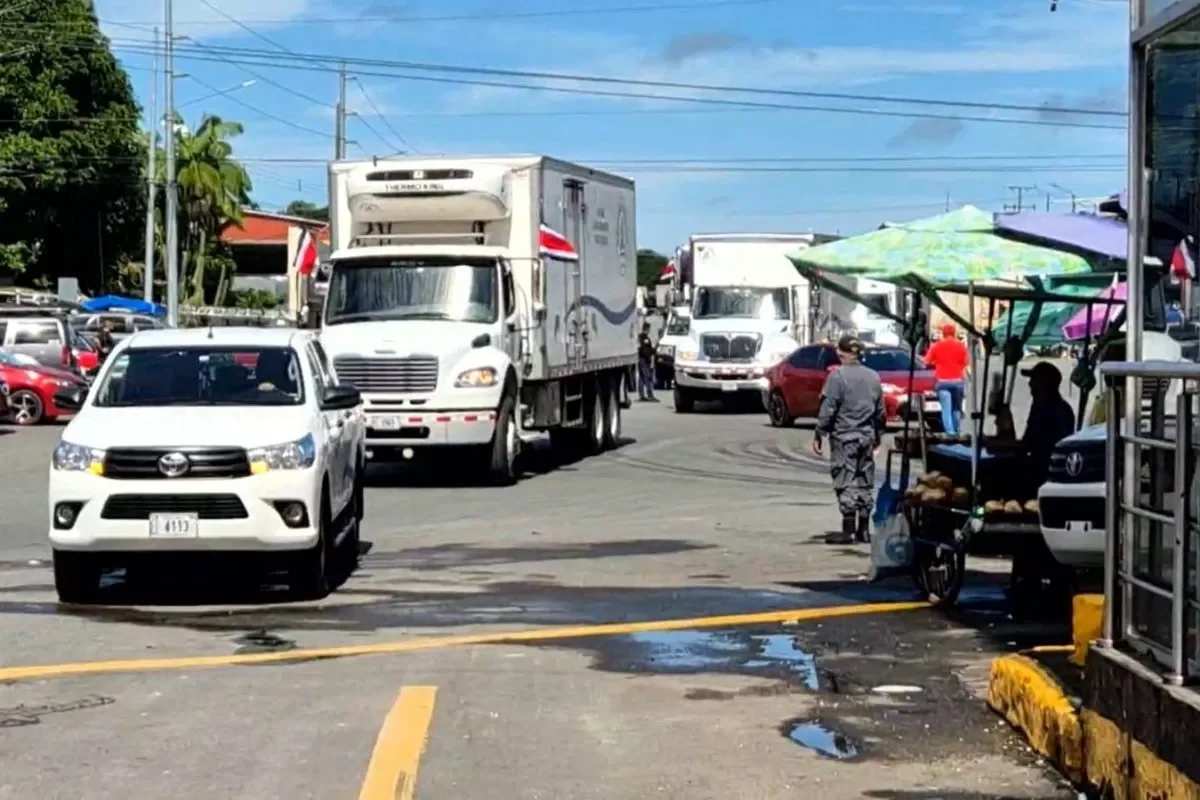
A Costa Rican medical delegation carrying emergency hospital equipment crossed into Panama on Tuesday, part of a bilateral assistance mission requested by Panamanian authorities following the recent earthquake. The Costa Rica humanitarian aid shipment entered through the Paso Canoas border crossing in Chiriquí province, escorted by National Border Service agents for its 300-kilometer journey to the Azuero Peninsula.
The mission includes roughly 23 medical professionals from Costa Rica’s Social Security Fund. They arrived with two hospitalization modules, a logistics unit, power generators, and an independent water supply system, according to Dr. Hugo Madrigal, who coordinates the delegation’s entry protocol. The team expects to reach its destination by late afternoon.
Costa Rica Humanitarian Aid Targets Azuero Hospitals
Two hospitals will receive the equipment. The Cecilio Castillero Hospital in Chitré, Herrera province, and the Joaquín Pablo Franco Sayas Hospital in Los Santos province are the designated facilities. The modules will expand bed capacity and create dedicated spaces for maternal and infant care, specifically adapting observation areas for pregnant women and newborns.
Dr. Madrigal confirmed the mission holds certification from the World Health Organization under its Emergency Medical Teams registry system. The initial deployment lasts seven days, with an option to extend based on patient demand and hospital needs.
🚨Llegó la ayuda humanitaria desde Costa Rica. La caravana con suministros y personal médico para apoyar en las zonas más afectadas tras los sismos ya está en Panamá🇨🇷🇵🇦. 🏥El personal es de la Caja de Seguro Social tica (CCSS). Fotos: Jorge González https://t.co/zX2kNFzr2l
— Mario De Gracia-Pérez (@mariodgex) October 14, 2026
Reception at the Border and Regional Coordination
Chiriquí Governor Aixa Santamaría received the delegation and thanked Costa Rican President Laura Fernández for the rapid response. The assistance focuses on provinces most affected by the seismic event, where health infrastructure has faced increased pressure.
“We are grateful to the Costa Rican government and President Laura Fernández for this support, especially for the hardest-hit areas” [Translated from Spanish]
The convoy’s autonomous power and water systems allow the medical teams to operate independently from local utilities, a critical factor in disaster zones where basic services may be compromised. Border officials coordinated the escort through the crossing to expedite transit toward central provinces.
Emergency Medical Deployment and Next Steps
The hospitalization modules represent a mobile surge capacity model increasingly used across Central America for earthquake response. By deploying certified field units rather than relying solely on local facilities, receiving hospitals can isolate maternal care services while continuing regular operations.
Panama’s request for international assistance followed damage assessments in the Azuero region. Costa Rica’s proximity made it the fastest bilateral partner to mobilize. The convoy’s arrival marks the first phase of what could become a longer-term medical support operation if aftershocks or infrastructure strain persist.