


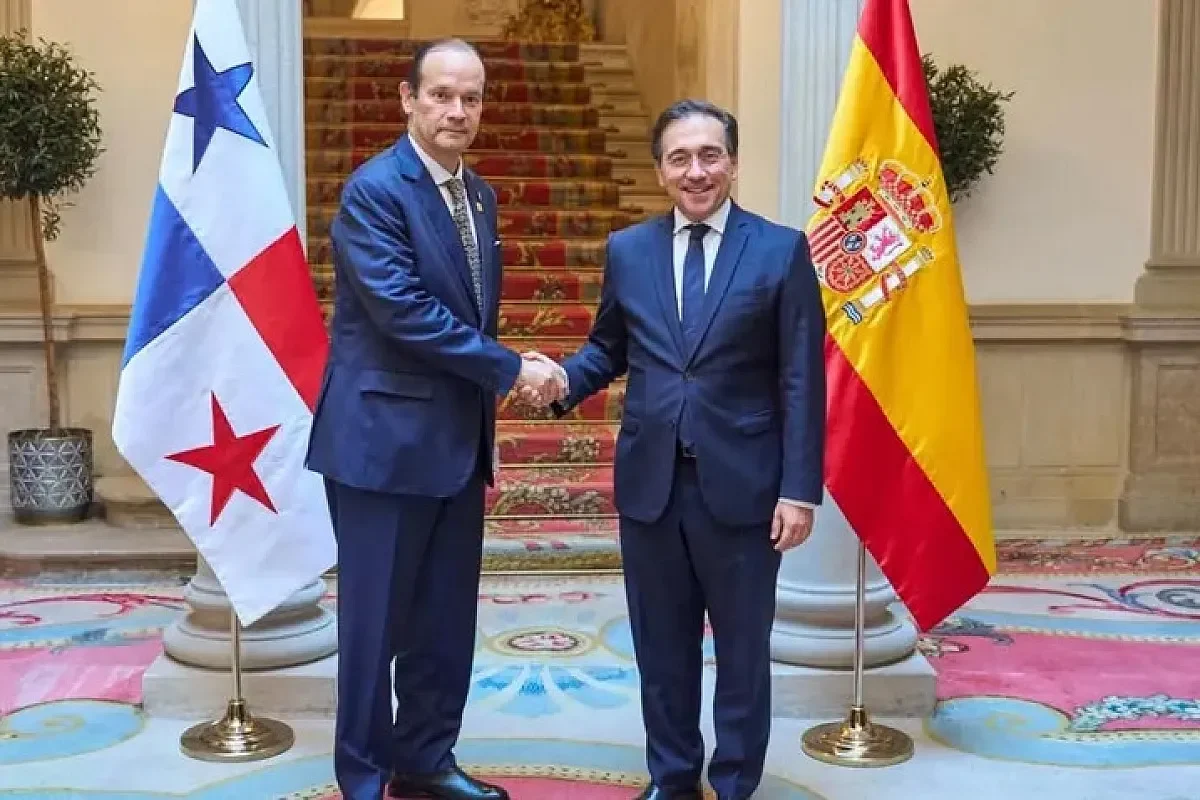
Panama and Spain signed a new General Treaty of Friendship and Cooperation on Tuesday, replacing an agreement that had governed bilateral ties since 1953. The signing took place in Madrid, where Panamanian Foreign Minister Javier Martínez-Acha Vásquez and Spanish Foreign Minister José Manuel Albares formalized the updated framework for Spain Panama relations.
The treaty aims to expand economic exchange, identify commercial and technological opportunities, and deepen advanced cooperation between the two nations. Martínez-Acha Vásquez traveled to the Spanish capital to represent President José Raúl Mulino at the XXX Ibero-American Summit of Heads of State and Government.
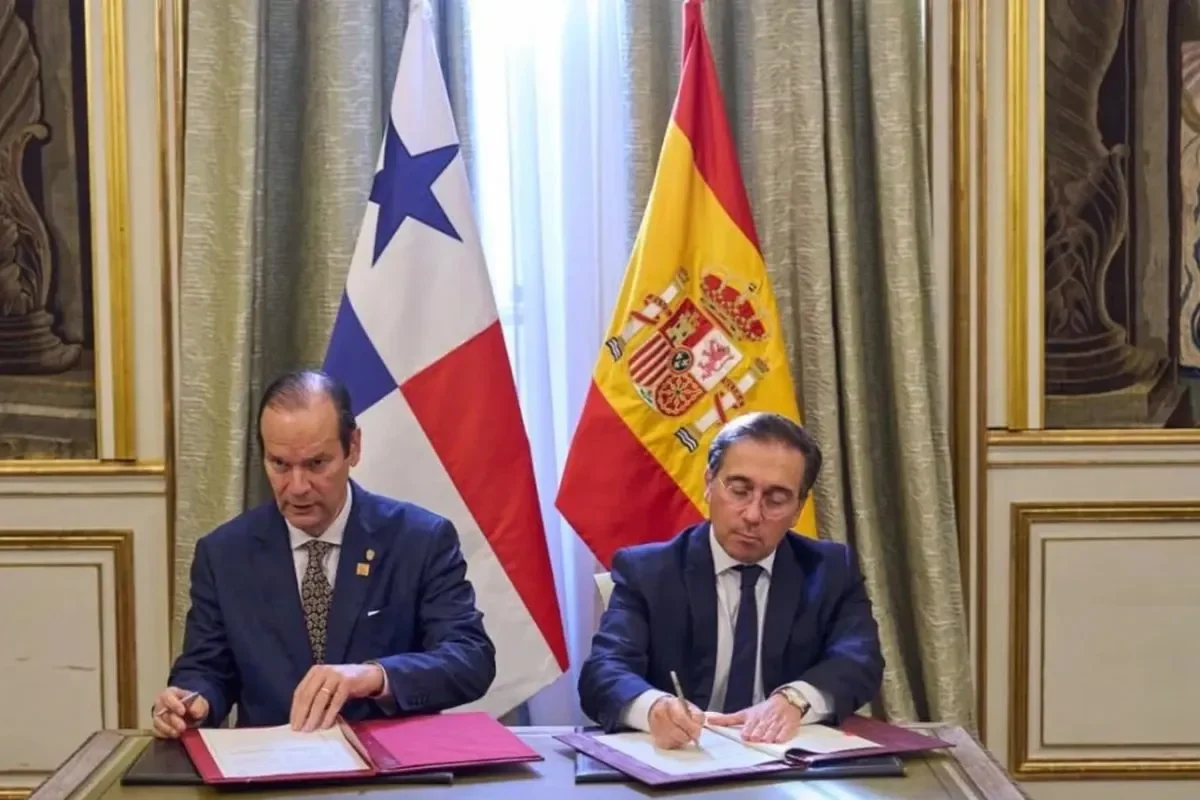
Modernizing Spain Panama Relations for a New Era
The new accord replaces a 72-year-old treaty and adapts the strategic relationship to what officials described as the democratic reality of the 21st century. Both governments reaffirmed their commitment to a rules-based international order, multilateralism, and respect for human rights.
Negotiators designed the treaty to serve citizens of both countries through practical cooperation. The focus spans trade, technology, and diplomatic coordination on global issues. Panamanian officials emphasized that the agreement reflects shared values rather than a simple administrative update.
Diplomatic Context and the Ibero-American Summit
Martínez-Acha Vásquez’s presence in Madrid coincides with the XXX Ibero-American Summit, a gathering of leaders from Spanish and Portuguese-speaking nations across Latin America and Europe. Panama’s participation underscores its active role in regional diplomacy and its historical ties to Spain dating back centuries.
The summit provides a platform for bilateral meetings alongside multilateral discussions. For Panama, the treaty signing served as a concrete outcome amid broader conversations about cooperation, development, and democratic governance across the Ibero-American community.

Economic and Strategic Implications
The updated treaty creates a legal foundation for expanded commercial activity between Panama and Spain. Spanish companies maintain a significant presence in Panama’s infrastructure, energy, and financial services sectors. The new framework could facilitate additional investment flows and technology transfer.
For Spain, Panama represents a strategic partner in Central America and a gateway to regional markets. The treaty signals both nations’ intent to strengthen economic ties while coordinating on multilateral priorities. Officials from both governments described the agreement as a forward-looking instrument designed to deliver tangible benefits.
The signing marks a milestone in a relationship that predates Panama’s independence and continues to evolve through shared language, legal traditions, and economic interests.