


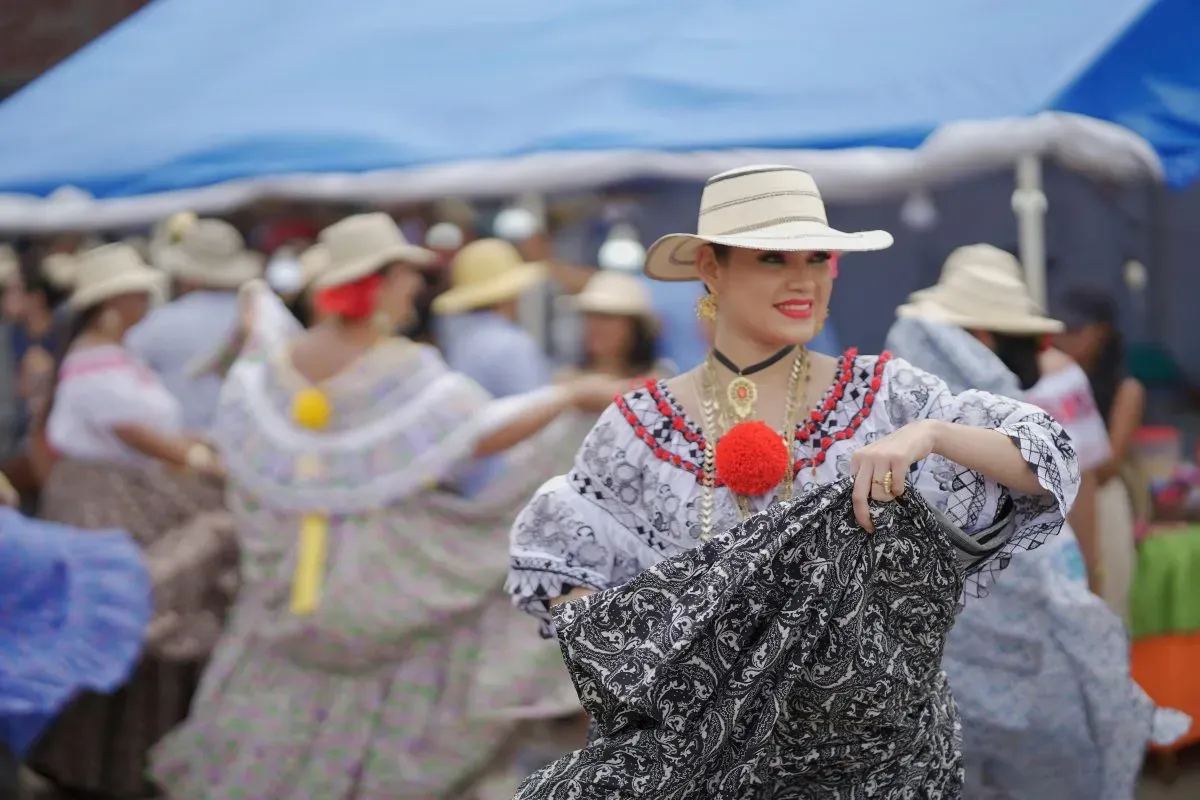
The creative industries sector now accounts for 6.8 percent of Panama’s total economic activity. Minister of Commerce and Industries Julio Moltó confirmed the figure this week, positioning the sector as a major driver for national development.
This substantial contribution highlights the growing economic power of fields like design, audiovisual production, music, fashion, and crafts. The data emerged from a meeting of the Coordinating Commission for Creative and Cultural Industries (CCICC), which is steering public policy to harness this growth.
Minister Moltó directly linked the sector’s visibility to the official “Made in Panama” branding seal. He argued the seal is crucial for organizing and supporting national talent within the broader productive development framework.
“The creative economy is already an economic engine for the country,” Moltó stated. [Translated from Spanish] He added, “The Made in Panama seal allows us to organize, make visible, and endorse that talent and that creative work as part of national productive development.”
The minister emphasized that supporting this sector is a sustained government policy, not a one-off initiative. Its success depends on coordinated action across multiple state institutions to create real economic impact.
Policy Framework Drives Local Development
The legal foundation for this push comes from Law 112 of 2019 and Executive Decree No. 84 of 2021. These regulations allow products with verifiable Panamanian origin to use the official seal, protecting their identity and value.
Culture Minister María Eugenia Herrera explained the direct link between the Creative Economy and local development. In coordination with the National Decentralization Authority, officials have identified 38 local government projects focused on cultural tourism and heritage.
These projects aim to develop tourist products and valorize cultural riches across the country. This territorial approach ensures growth benefits communities nationwide, not just the capital.
“Made in Panama is not a specific initiative nor an isolated action. It is a public policy that continues in execution and that requires the State to work in alignment so that its use has a real impact on national production,” Moltó clarified. [Translated from Spanish]
The CCICC itself reflects this inter-institutional approach. Its board includes ministers, institutional directors, and representatives from local governments, all working to consolidate the sector.
Integrating Identity with Economic Strategy
The commission recently updated progress reports from its various sub-committees. The overarching goal is to solidify creative industries as a true pillar of national economic strategy.
Tools like the “Made in Panama” seal are central to this strategy. They integrate national identity with innovation and competitiveness in a single package. This fusion is seen as key for penetrating both domestic and international markets.
For a nation historically defined by its canal and logistics prowess, this marks a strategic diversification. The government of Panama is now formally betting on its cultural capital as a complementary economic force.
Success in this area often clusters in cultural hubs. The historic casco peatonal district, for example, has demonstrated the financial potential of culturally-rich urban zones.
Officials now face the task of replicating that model’s success in other regions. The 38 local projects are the first test cases for a more decentralized cultural economy.
With nearly seven percent of GDP already attributed to it, the creative sector has moved beyond a niche. It commands serious attention in national planning. The state’s challenge is to build the infrastructure, both regulatory and physical, that allows this engine to accelerate.