


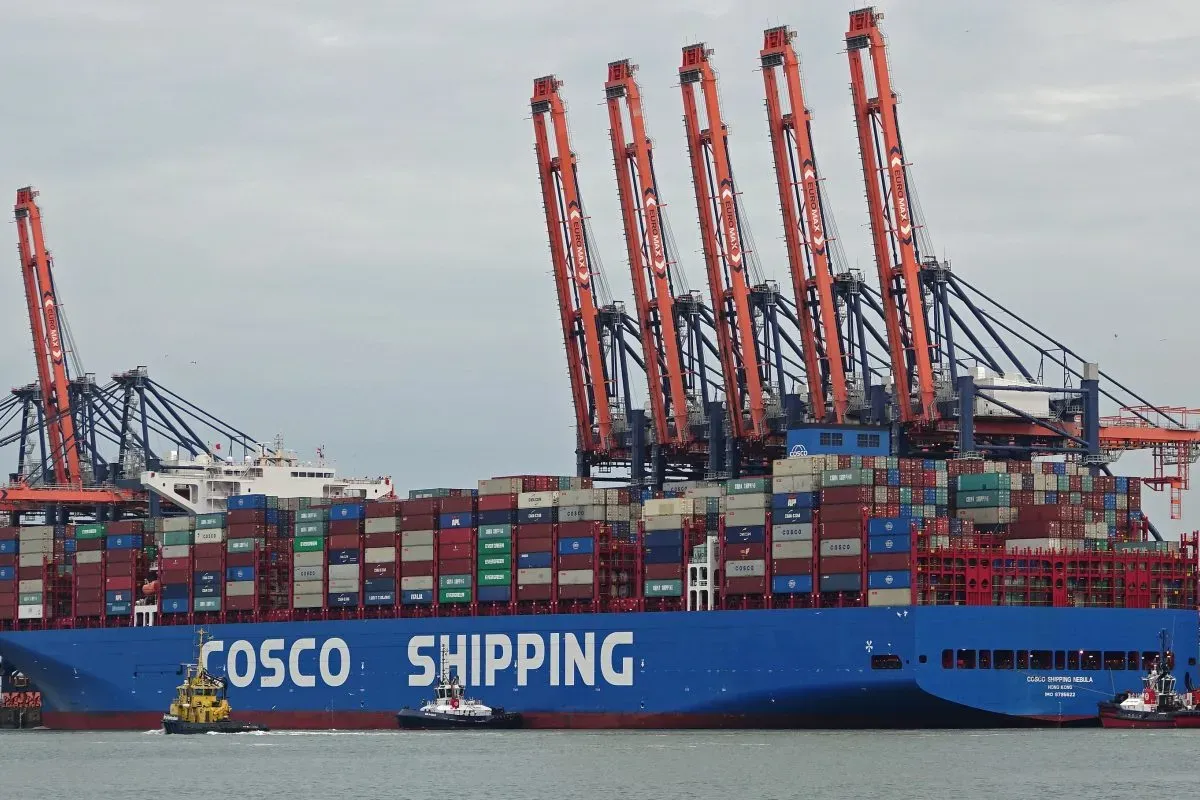
Maritime and logistics leaders in Panama have downplayed the impact of a major Chinese shipping line’s decision to halt operations at a key port. Representatives from the sector stated this week that Cosco Shipping‘s move away from Balboa Port is a commercial decision that will not harm the country’s overall logistics platform. The company did not publicly disclose its reasons for the change.
Industry officials emphasized that such shifts between terminals are a normal part of global shipping logistics. They confirmed that Cosco’s operations will continue at other ports within Panama, ensuring cargo volumes through the isthmus remain stable.
Industry Leaders Frame Decision as Routine Business
Angel Sanchez, president of the Logistics Business Council, confirmed his organization received direct notification from the shipping giant. He framed the decision as a standard operational adjustment rather than a strategic withdrawal from the Panamanian market.
“We received a communication from Cosco Shipping where they announced they were ceasing operations in Balboa for the Logistics Business Council. Although changing terminals affects the system, it is not something bad or good. It is a decision a private company makes to change its port operator, and they will work with other ports in the Republic, which is what is important for us.” [Translated from Spanish]
Sanchez’s comments highlight a focus on retaining the shipping line’s business within Panama’s national port network. The country’s position as a global maritime hub depends on total traffic through the Panama Canal and its associated ports, not on any single terminal’s performance.
Gerardo Bosquez, a representative of the Panama Maritime Chamber, echoed this sentiment. He stressed that his organization does not interfere with the commercial choices of shipping companies.
“We as a Chamber do not have influence over the commercial decisions of companies. Everyone has the right, and Cosco Shipping has been the only company that at some point has expressed its movement of its logistics center. The important thing is, as the numbers say, that Panama’s keeps growing and it will keep growing.” [Translated from Spanish]
Bosquez’s reference to “the numbers” points to ongoing confidence in Panama’s maritime growth metrics. His statement suggests sector data shows resilience despite individual corporate realignments.
Focus Remains on Overall Logistics Growth
The coordinated response from different maritime bodies indicates a prepared, unified front. Their primary goal is to project stability and confidence to the international shipping community. Panama’s economy relies heavily on its logistics and service sectors, making the perception of a robust port system critical.
Analysts note that while the departure of a major client from Balboa Port may affect that specific terminal’s statistics, the national impact is likely minimal if cargo is redistributed to other Panamanian ports. The situation underscores the competitive nature of the port industry, even within a single country.
This incident follows other recent tensions involving china cosco shipping operations in the region. The company’s strategic decisions are closely watched given its global scale and influence on trade routes.
For now, Panamanian authorities are monitoring the transition. The broader health of the maritime corridor, they argue, is not tied to any single operator or terminal. The coming months will reveal if other lines make similar adjustments, potentially signaling a broader shift in port preferences.
Panama’s maritime sector appears determined to weather this change as a routine business event. Their public statements aim to reassure investors and partners that the country’s role as a central logistics hub remains unchallenged by one company’s operational pivot.