


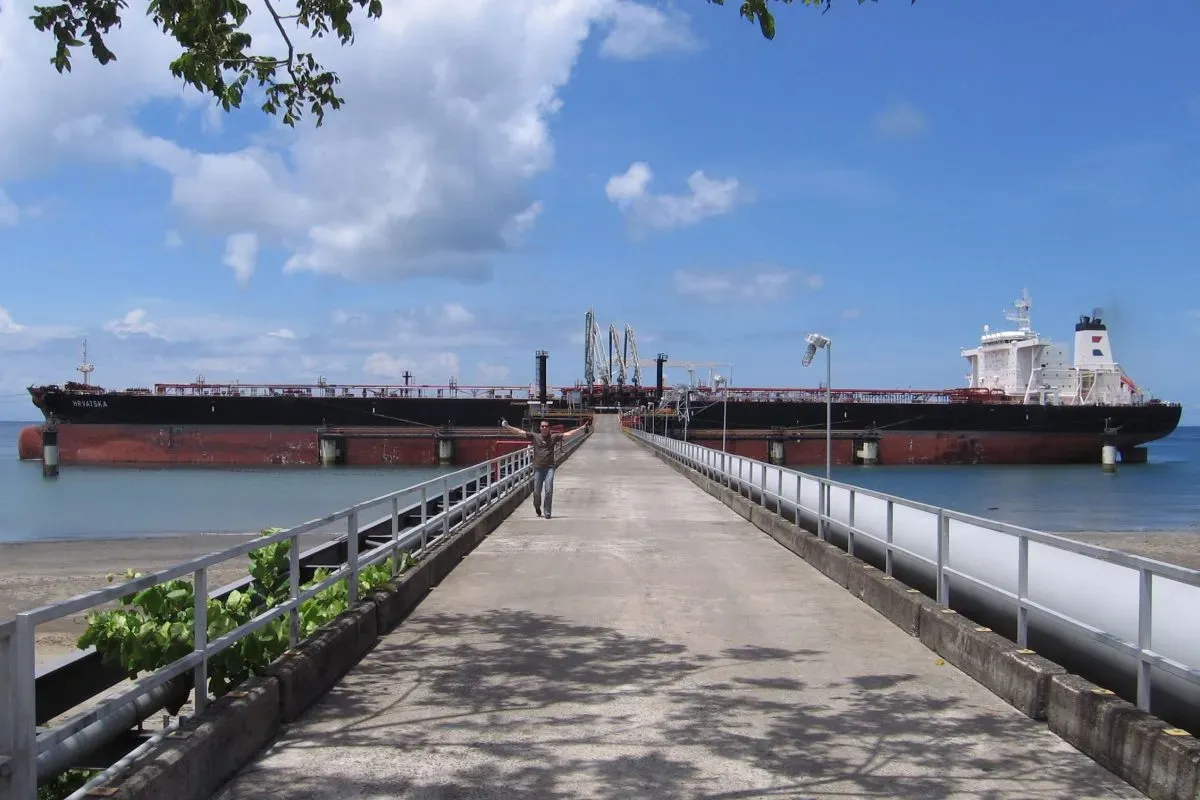
Panamanian officials are developing a new multipurpose logistics port in Puerto Armuelles to revitalize the economy of western Chiriquí Province. The project, announced this week, aims to generate jobs and attract significant foreign investment by creating a strategic commercial hub. Initial construction is already underway with a $21 million investment.
The initiative directly targets a region historically impacted by declining productive activities. Government strategy links the port’s development with specialized workforce training to ensure local residents can fill new positions. Officials confirmed that international companies, including delegations from Japan and Costa Rica, are actively exploring investment opportunities tied to the new infrastructure.
José Ramón Icaza, Panama’s Secretary of Goals and Minister for Canal Affairs, emphasized the cross-border interest the project has generated. He noted that Costa Rican firms see it as a new export conduit for their products.
“We are currently receiving an important delegation of businessmen who have come directly from Japan to see this developing infrastructure firsthand,” Icaza stated. [Translated from Spanish] “High-level talks are happening right now with the President of the Republic to see how we can facilitate bringing those investments to our country.”
The port’s first phase, focused on core construction, is now in progress. A second phase, valued at an estimated $10 million, will expand the wharf through a concession model. Plans for a third stage include developing an adjacent logistics yard in puerto armuelles to create a full-service commercial node.
Strategic Complement to Regional Commerce
Authorities position the port as a catalyst for broader economic activity in western Panama. It is designed to complement existing industries rather than replace them. The Panama Maritime Authority (AMP) is overseeing the project’s integration into the national logistics framework.
AMP General Administrator Luis Alberto Roquebert framed the infrastructure as a key supporting element for the region. He stressed its role in enhancing current commercial flows. The project aims to transform the district into a dynamic gateway for goods moving between Panama and neighboring Costa Rica.
This focus on connectivity is central to the port’s value proposition. By offering a modern multipurpose port facility near the border, Panama hopes to capture new maritime trade routes. The location in southern Chiriquí Province provides direct Pacific Ocean access.
Workforce Development Parallels Construction
Parallel to the physical construction, the National Institute of Professional Training and Human Development (Inadeh) has launched targeted training programs. These initiatives aim to prepare the local population for the specialized jobs the port will create. Areas of instruction include port logistics and crane operation.
Officials report that over 5,000 people in the Puerto Armuelles area have already received training. This effort seeks to ensure the community directly benefits from the upcoming employment opportunities. The goal is a skilled workforce ready when the port becomes operational.
Project leaders view this human development component as non-negotiable for long-term success. They argue that sustainable reactivation requires equipping residents with relevant, high-demand skills. The trained labor pool itself becomes an additional incentive for foreign companies considering setting up operations.
Panama’s government now moves into an active promotion phase for the port. Minister Icaza and his team are engaged in talks with potential international partners. The progress on the ground, combined with focused diplomacy, seeks to lock in the investments needed for the project’s later stages. The immediate focus remains on completing the foundational $21 million construction phase to demonstrate tangible progress to the global market.