


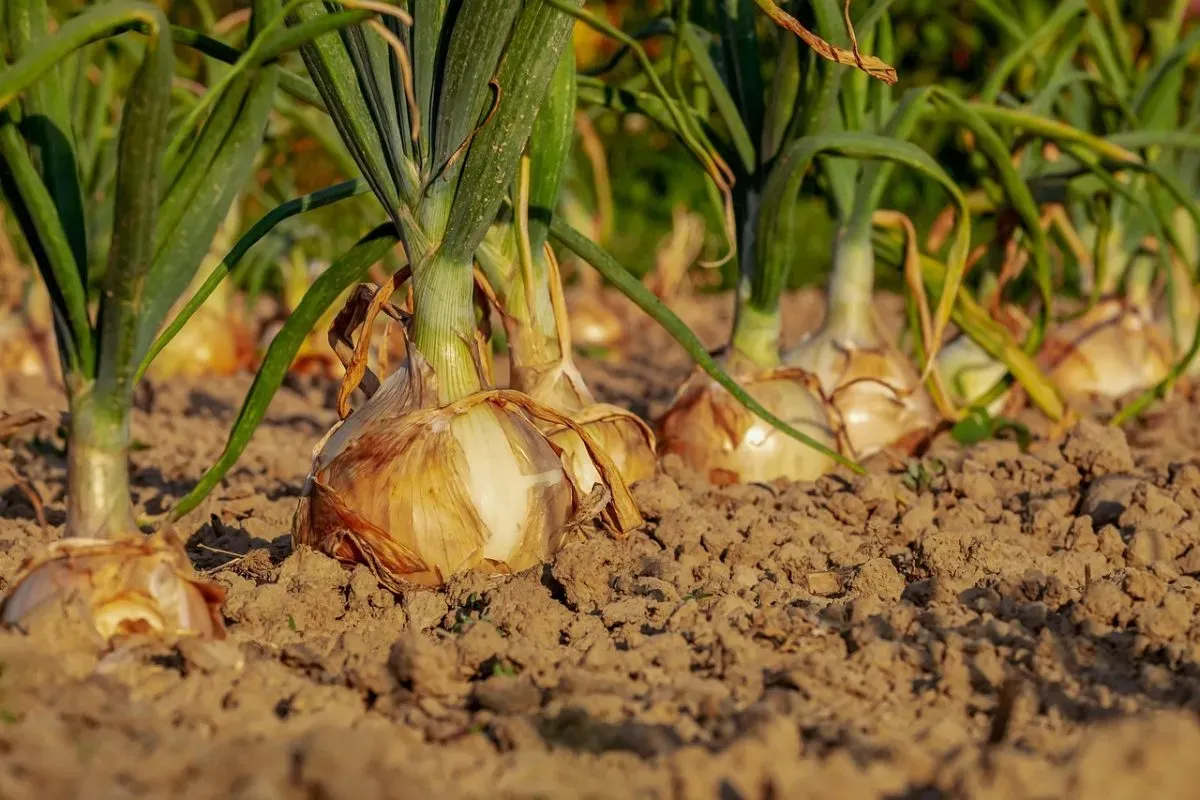
A shipment of imported onions caused significant traffic delays and reignited a long-standing trade dispute in Panama City on Wednesday, January 7. The incident occurred outside the state-run Merca Panama wholesale market when over 30 containers were denied entry, highlighting the tension between protecting local farmers and honoring international trade agreements.
The Panama Ministry of Agricultural Development (MIDA) confirmed the shipment was legally imported under the country’s Free Trade Agreement (FTA) with the United States. National regulations, however, prioritize using the Merca Panama facilities for local produce when domestic supply is sufficient.
“I cannot go against the national producer and the producer from the Tierras Altas of this country,” said Merca Panama General Manager José Pablo Ramos. [Translated from Spanish]
Ramos explained the current rules prohibit handling imported onions inside the market when there is adequate local supply. He stated importers were free to process their goods at other locations, clarifying the market administration has no authority over import permits themselves. The importers, who lease warehouse space at the facility, protested the decision by blocking lanes on the Centenario highway.
Government Officials Cite Legal Priorities
MIDA Minister Roberto Linares met with producers from the highland regions to address the unfolding situation. He acknowledged the imported onions were part of a legal quota under the FTA and had all required documentation for entry.
“Only when there is a shortage can the Merca Panama facilities be used,” emphasized Minister Linares, reiterating the policy of prioritizing national production. [Translated from Spanish]
This creates a visible paradox. Local producer groups insist Panama’s onion harvest is currently strong and more than meets domestic demand. The country, however, must keep import channels open due to its treaty obligations. The situation represents a fragile balance between internal protectionism and external commercial commitments.
The Association of the Producer Community of Tierras Altas (Acpta) publicly supported the government’s decision to block the onions from the Cold Chain facilities. Acpta President Augusto Jiménez argued that while the FTA obligates Panama to accept a quota of 22,900 quintals of onions, this international commitment does not override national laws governing state market use.
Jiménez pointed to current production data to justify the blockade. He stated that for January alone, local farmers have 50,000 quintals available, a volume that precisely covers estimated national consumption for the month. This local supply is primarily grown in the tierras altas regions of Chiriquí and other provinces.
Local Production Data Shows Self-Sufficiency
Figures provided by Acpta paint a picture of robust domestic supply. Panama produces between 400,000 and 450,000 quintals of onions annually against total national consumption of 600,000 quintals. The gap has traditionally been filled by imports, but timing is a critical factor.
Currently, 1,200 hectares are planted nationwide. Production is concentrated in Chiriquí, where crops grow for nine months, and in Coclé, Herrera, and Los Santos, which harvest from January through May. Producers anticipate a surplus of local onions in the coming months of February, March, and April, which should guarantee supply.
The immediate impact of Wednesday’s dispute was severe traffic congestion, but the broader implications touch on food security, trade policy, and market logistics. The incident underscores the practical challenges of managing protected local industries within a globalized trade framework. It also raises questions about supply chain planning and the use of public market infrastructure, a topic previously scrutinized in reports on other commodity monopolies by analysts like Yolanda Sandoval.
For now, the imported onions remain in legal limbo. They are cleared to be in Panama but cannot access the primary public wholesale facility. Importers must now find alternative, likely more costly, private storage and processing sites to bring their goods to market. This incident may prompt further discussions between the Ministry of Agricultural Development (Panama), producer associations, and importers to clarify protocols and prevent future road closures.
Consumers are watching closely. Any significant disruption in the supply chain or increased costs for importers could potentially affect retail prices. The government’s firm stance, backed by current production numbers, suggests a strong short-term commitment to shielding local onion farmers from direct competition within the state market system. The long-term stability of this arrangement depends on maintaining reliable domestic harvests.