


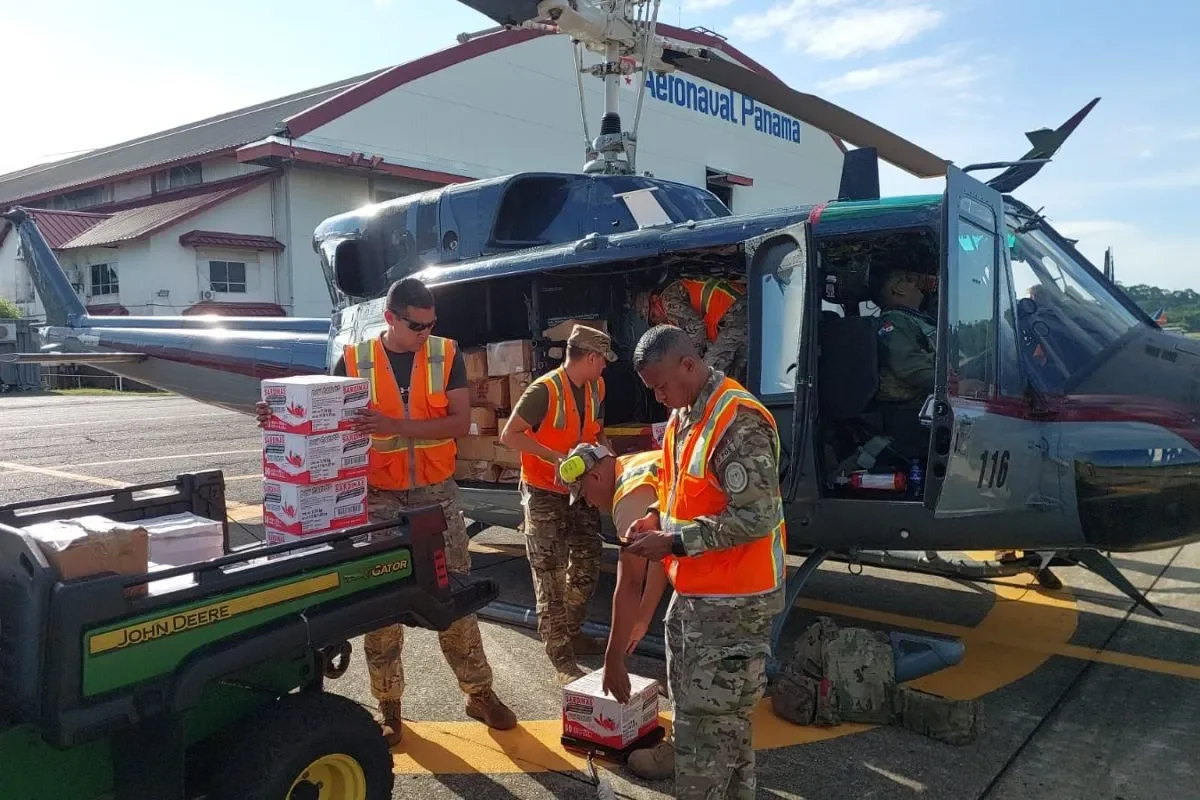
Panama’s National Aeronaval Service (Senan) executed more than 10 aeronaval rescue missions and medical evacuations following the magnitude 7.5 earthquake that struck Tonosí in Los Santos province on Friday, October 9. The humanitarian air bridge delivered urgent aid to the Azuero Peninsula, where damaged roads complicated ground transport.
Officials said the operation moved patients requiring specialized care to hospitals in La Villa de Los Santos, Santiago de Veraguas, and Panama City. The flights began immediately after the quake and continued through Saturday, October 10.
A través de nuestras capacidades operacionales, reafirmamos el compromiso del #PlanFirmeza del @minsegpanama, trabajando sin descanso por la seguridad y el bienestar de la población en estos momentos difíciles. 🇵🇦💪 #UnidosPorPanamá #FuerzaAeronaval #SomosMuchoMás https://t.co/toHZsDMaIO
— Servicio Nacional Aeronaval de Panamá (@aeronavalpanama) October 10, 2026
Aeronaval Rescue Missions Expand Regional Reach
Helicopters from the INL-SENAN Aviation Program departed for Las Tablas carrying food and essential supplies for isolated communities. Senan also maintains aerial patrols to assess damage and verify that humanitarian assistance reaches families in need. The air bridge operates under direct instructions from President José Raúl Mulino.
The rapid deployment addressed a critical gap in emergency response. Ground routes across Los Santos suffered significant disruption, making air transport the fastest option for medical evacuations and supply delivery. Senan coordinated with public security forces and emergency services to reinforce institutional response capacity.

Government Response and Regional Coordination
The operation falls under Plan Firmeza, led by the Ministry of Public Security under Frank Ábrego. The plan prioritizes medical access and supply chain continuity for affected areas. United States personnel and supplies also mobilized to support communities impacted by the earthquake.
Security Minister Ábrego urged residents to remain calm and stay attentive to family members. Emergency crews continue assessing structural damage across the interior provinces. Aerial patrols help identify isolated households that ground teams cannot reach quickly.

Medical Evacuations and Humanitarian Logistics
Senan’s aeromedical transfers focused on patients with urgent needs that local facilities could not handle after the tremor. The flights connected rural areas to larger hospitals with specialized services. The air bridge also enables continuous resupply of medical consumables and basic necessities.
The earthquake triggered panic, structural damage, and evacuations across the country’s interior. Aftershock risks complicate recovery efforts, but the aerial operation provides a stable channel for emergency logistics. Officials confirmed that patrols will continue as long as communities require aerial support.