


When the ground beneath Panama began to sway for almost a full minute earlier this month, it was more than a jolt of adrenaline for millions of residents. The unusual, prolonged tremors were a visceral reminder that the country sits squarely on a key restless seismic belts on Earth. That extended shaking has now become the catalyst for a renewed national effort to secure a robust earthquake early warning system, with officials confirming they are already in talks with tech giant Google to make alerts a standard feature on Android devices across the isthmus.
A Shudder That Crossed Borders Without Warning
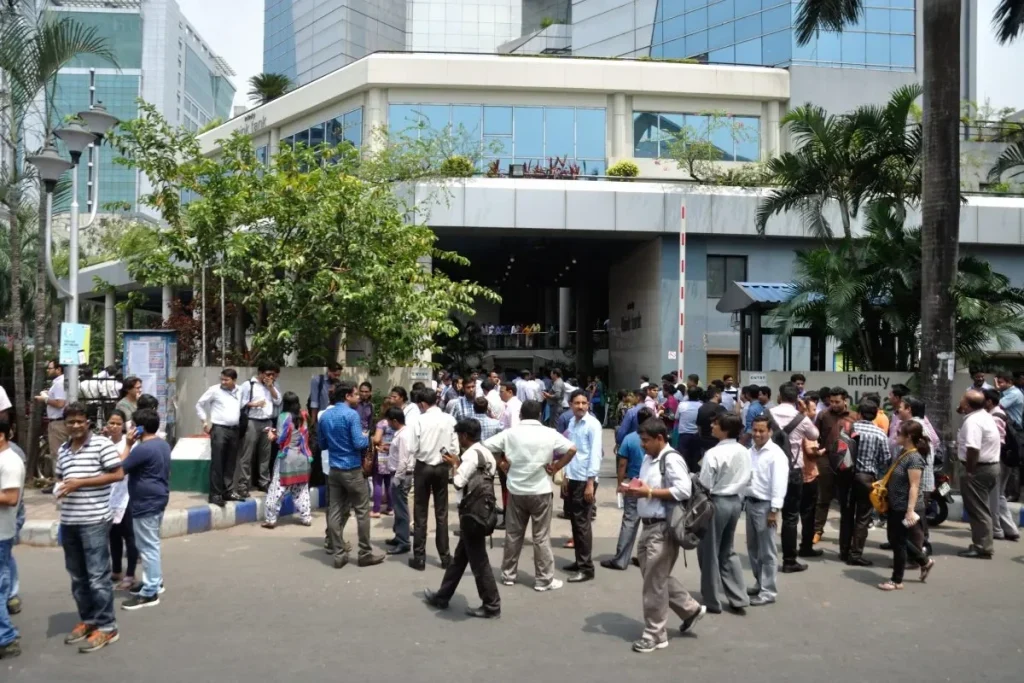
The earthquake’s origin was deep beneath Colombia, registering a staggering magnitude of 7.4, but Panama felt it in ways that veteran geologists immediately labeled atypical. Rather than a sharp, fleeting tremor, the seismic waves rolled through the country for 40 seconds and in some regions close to a full minute. Homes swayed, high-rises evacuated, and the familiar panic of not knowing how long the shaking would last gripped communities from Bocas del Toro to Colón and across the Azuero Peninsula.
No structural collapses were reported inside Panama, yet the psychological impact was swift. The event exposed a glaring information gap during those critical seconds when people scrambled for answers. Néstor Luque, director of the University of Panama’s Institute of Geosciences, said the phenomenon had little to do with luck and everything to do with the anatomy of the quake itself. He and his colleagues quickly moved to explain why the shaking felt so different this time.
The Tectonic Recipe for a Long-Lasting Shake
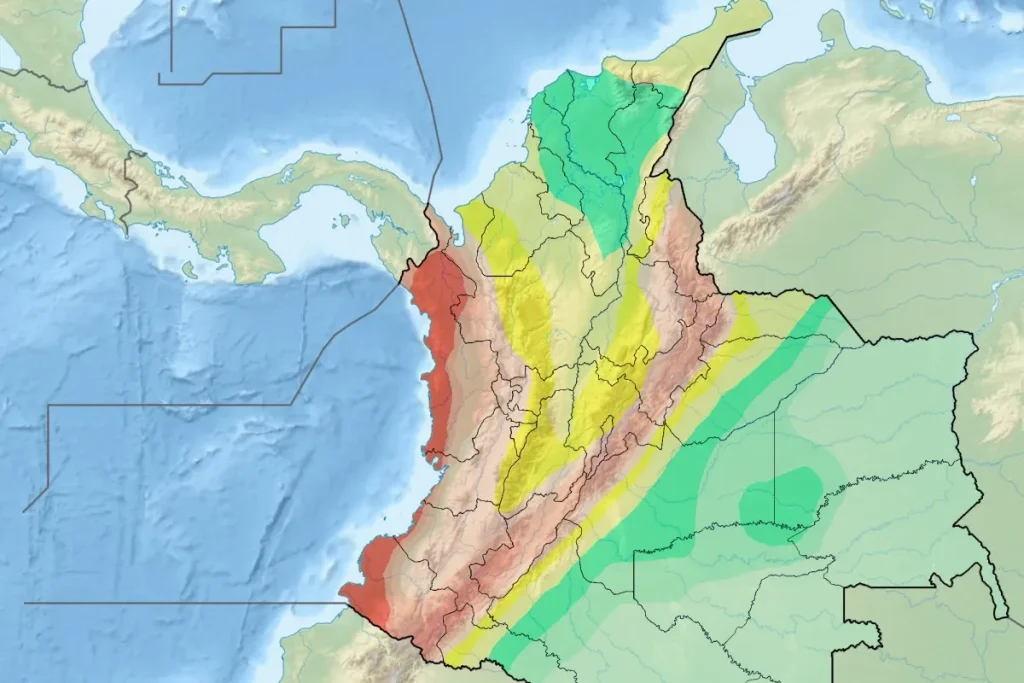
Unlike the quick, jolting temblors that often strike near the surface, this one was born inside the upper plate itself, classified as an intraplate earthquake within a subduction zone. Under Colombia, the Nazca Plate dives beneath the South American Plate in a slow, grinding collision. But the rupture happened away from that direct interface, within the overriding crust. That placement allowed the seismic energy to shoot through the slab with minimal energy loss, broadcasting a wide range of frequencies over a vast area.
Luque described the mechanics in practical terms.
“We are in the zone of greatest seismicity on the planet, where the Ring of Fire exerts its force and where it makes contact with other plates. Statistically we are not outside of normal, it has been coincidence that there has been a sequence from another, but the contact of these plates in the case of Venezuela was the Caribbean Plate against the South American Plate,” [Translated from Spanish]
he explained. That direct transmission path meant Panama received an unfiltered, sustained rumble, a physical reminder that the country cannot treat seismic calm as a permanent condition.
Why Seconds Matter When Prediction Remains Impossible
For all the global advances in seismology, Luque was categorical that no scientist can forecast the day, hour, or precise coordinates of the next major rupture. The seismic cycle offers broad clues, hinting at recurrence intervals of 100 to 200 years for the largest events, but those windows come with enormous margins of error. Theories about atmospheric changes, shifts in electromagnetic fields, or odd animal behavior remain just that, tantalizing but unproven precursor hypotheses.
Yet the inability to predict does not doom a country to helplessness. An earthquake early warning network operates on a different principle entirely. Instead of foreseeing an event, it detects the first, harmless compressional waves that race ahead of the destructive shear waves and sends automated alerts to smartphones, hospitals, schools, and transport systems. Even a few seconds of warning can halt surgeries, stop trains, open emergency doors, and allow millions to drop, cover, and hold on. Google’s Android Earthquake Alerts system already harnesses the tiny accelerometers inside millions of phones to crowdsource detection, creating a free, scalable safety net that does not require a sprawling ground sensor network.
Panamanian officials have activated a dedicated committee to negotiate bringing that capability to the country. Luque confirmed the Institute of Geosciences is leading talks with Google, aiming to make alerts a native feature for Android users. The committee is also mapping out how to weave the alerts into civil defense protocols and public education, transforming that short burst of warning into a mass reflex that saves lives.
Bridging the Gaps in the Ground Network for Earthquake Early Warning
A software-based alert system stands on the shoulders of a country’s physical monitoring backbone. Here, Panama’s infrastructure tells a story of ambition hobbled by budget constraints. The Institute of Geosciences manages 63 seismographs scattered across the territory, but chronic funding shortfalls mean only about 50 of those stations are transmitting reliable data. The dense jungles of the Darién province, a region where seismic silence is a dangerous illusion, remain especially underserved, with only a handful of instruments capable of providing meaningful measurements.
Closing those blind spots is non-negotiable if an earthquake early warning framework is to function accurately. Too few sensors can lead to false alerts or, worse, late warnings that erode public trust. Luque has been candid that strengthening the monitoring grid is a parallel priority alongside the Google collaboration, because every additional seismograph that feeds real-time data into the network shaves precious milliseconds off detection times and refines the location and magnitude calculations. The goal is a layered defense: a revamped ground network feeding automated algorithms that then push lifesaving notifications through the ubiquitous mobile phones in people’s pockets.
Living With a Restless Geography
The recent Colombian quake and a separate strong tremor in Venezuela did not wound Panama’s buildings, but they cracked open a public conversation that had long been dormant. Luque frames the push for an alert system not as a matter of panic, but as a mature adaptation to an unchanging geographic reality. The same subduction zone that gifted Panama its breathtaking landscapes and rich volcanic soils also placed it perpetually in the crosshairs of tectonic fury.
Ultimately, the pursuit of a nationwide earthquake early warning capability reflects a sober acceptance that the ground will shake again, and likely when the country least expects it. By integrating smartphone technology, shoring up the half-functioning seismograph network, and preparing communities to react in the gap between a phone’s chime and the first violent sway, Panama is betting that a few seconds of science can mean the difference between chaos and orderly survival. The tectonic plates will keep moving, but the country is finally moving in lockstep to meet them.