


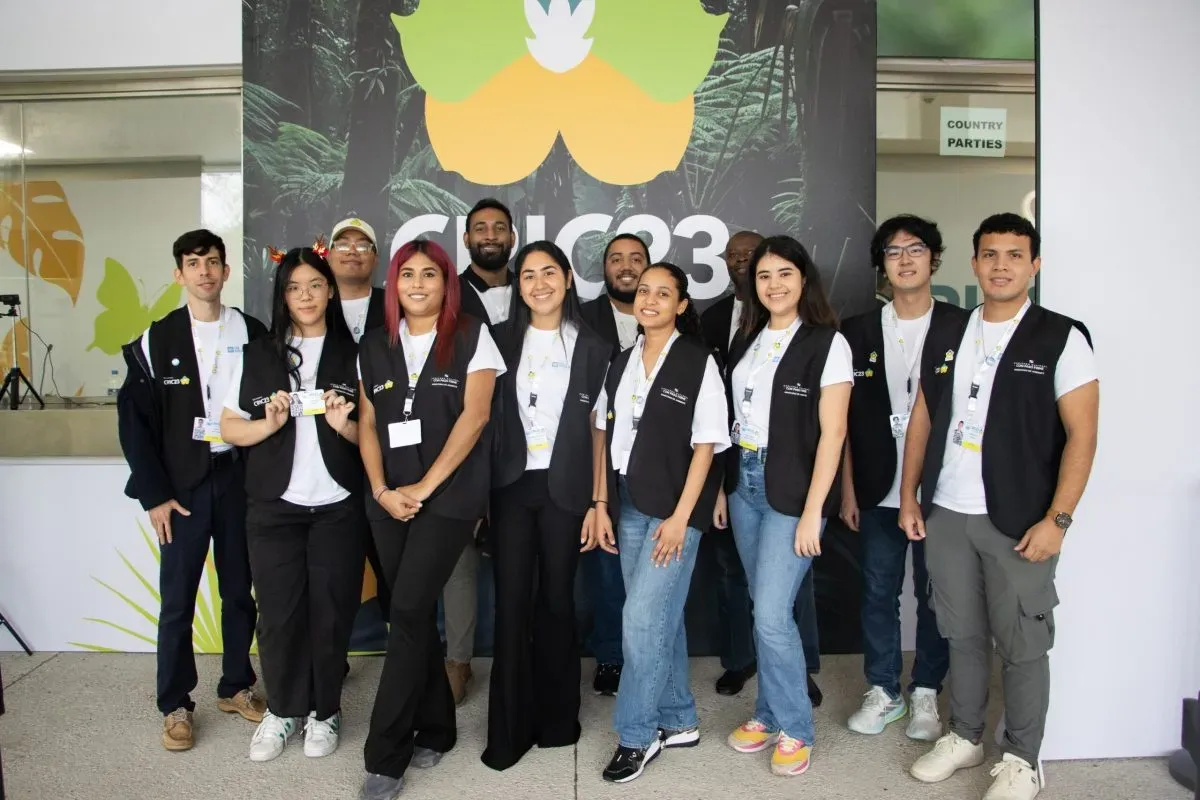
More than 500 delegates from 196 countries gathered in Panama City last week for a major United Nations environmental conference. The event relied on the logistical support of 112 Panamanian volunteers, highlighting a national culture of service as the world looks toward the International Year of Volunteers in 2026.
The 23rd session of the Committee for the Review of the Implementation of the Convention (CRIC23) ran from December 1 to 5. It is a key oversight body of the United Nations Convention to Combat Desertification (UNCCD). The session focused on reviewing global progress against land degradation, desertification, and drought.
Volunteers Provide Essential Support for Global Forum
Managed jointly by Panama’s Ministry of Environment (MiAMBIENTE) and the United Nations Volunteers (UNV) programme, the 112 volunteers worked in morning and afternoon shifts. They provided critical hospitality and logistical support to ensure the event’s smooth operation. These volunteers, of various ages and from across Panama, represented the country’s commitment to the global environmental cause.
Their service coincided with the celebration of International Volunteer Day on December 5. UNCCD Executive Secretary Yasmine Fouad directly thanked the volunteer team. She framed their work as a precursor to the upcoming International Year of Volunteers.
“The year 2026 will be an opportunity for global leaders to promote new volunteer opportunities and ensure the necessary conditions for those who serve to perform their work safely and effectively.” [Translated from Spanish]
Juan Carlos Monterrey-Gómez, Panama’s Special Representative for Climate Change, also praised the group. He serves as the Climate Change Director at MiAMBIENTE. On first reference, officials’ full titles and names are used for clarity and sourcing.
“They were the first face, the welcoming face of Panama for the international delegations, and an example of public service from the citizenry.” [Translated from Spanish]
National Volunteer Spirit Aligns With Global Environmental Goals
The volunteer effort reflects a broader trend within Panama. Recent national data shows three out of every ten Panamanians engage in volunteer work. This existing culture of service provides a strong foundation for mobilizing public participation in environmental action. Officials argue that citizen involvement is a fundamental pathway to achieving real and sustainable change.
The successful integration of local volunteers into a high-level UN meeting offers a practical model. It demonstrates how host nations can leverage civic engagement to support global forums. This aligns with Panama’s growing role in international diplomacy and environmental governance, a role seen in other areas like its recent United Nations related arbitration victory.
As the international community prepares for the 2026 International Year of Volunteers, the CRIC23 example in Panama stands out. It proves that local action can directly facilitate global cooperation. The volunteers did not just assist with directions and registration. They personified their country’s commitment to a critical planetary challenge.
Their work last week served as a powerful reminder. Every individual can contribute to a cause that inspires them. That collective action, starting with a simple act of service, holds genuinely transformative power for communities and global goals alike.