


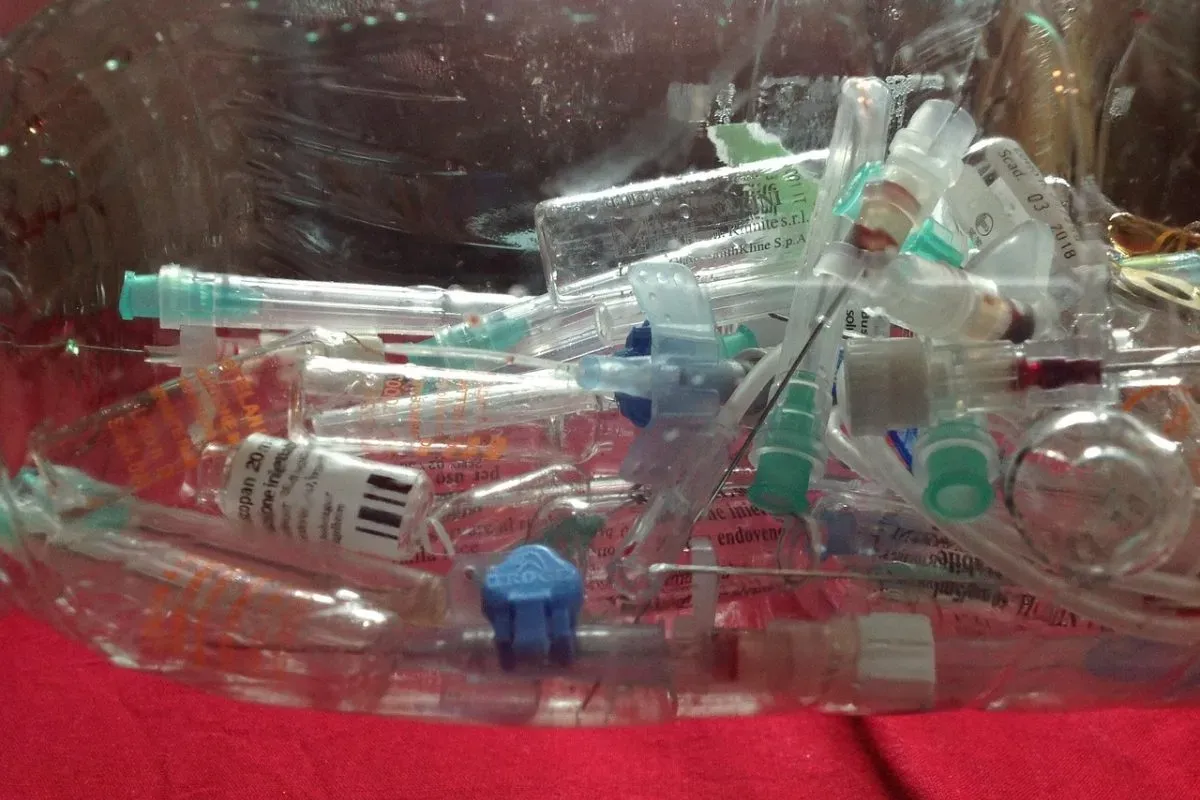
Panama’s Ministry of Health has taken emergency action to address a dangerous national crisis in medical waste management. The country’s Ministry of Health (Panama) secured a $20.4 million contract in November 2025 to overhaul a system where hazardous hospital waste was being handled by unqualified individuals, leading to widespread environmental contamination. Health Minister Fernando Boyd Galindo revealed the alarming practices that necessitated the urgent, no-bid contract approved by the Cabinet of Panama.
The one-year contract with the company Construcciones, Limpiezas y Equipo, S.A. was authorized under a special procedure reserved for public benefit and sanitary emergencies. It mandates the complete management of biomedical waste, the supply of certified materials, and the remodeling of sanitary infrastructure in health facilities across the entire nation. This includes remote provinces and indigenous regions historically underserved by proper waste disposal systems.
Minister Boyd Galindo provided a stark assessment of the previous, failed system in an interview. He described a pattern of improvisation that created severe public health risks. “The previous management of hospital waste was done in an improvised and dangerous way,” Boyd Galindo stated.
“Bags of waste were given to acquaintances, who transported and buried them without any control. This contaminated rivers, beaches, and soils, directly affecting entire communities.” [Translated from Spanish]
The immediate impact of the new contract is a halt to these informal and hazardous disposal methods. The government is now tasked with rigorous oversight of the private company to ensure national coverage and compliance with strict safety protocols. Technical reports had documented critical failures, including inadequate storage, a lack of specialized infrastructure, and environmental dangers deemed too urgent to endure a traditional, lengthy public bidding process.
Legal Justification and a History of Systemic Failure
Officials defended the decision to bypass standard procurement, citing Article 79 of Panama’s procurement law. This statute permits direct contracts for social benefit during public health emergencies. The goal was to guarantee immediate protection for the population and the environment. The historical context shows Panama has long struggled with insufficient capacity for treating hazardous medical waste.
The country lacks certified treatment plants in many regions. Its transport fleet is limited, and a uniform system for tracking waste from origin to final disposal simply did not exist. Consequently, the Ministry of Health relied on third parties for collection and disposal, a patchwork solution that generated grave risks. The inequality in existing infrastructure made the problem worse, as some areas were better equipped than others, creating significant gaps in service coverage and quality.
Minister Fernando Boyd Galindo emphasized that the direct hiring of a specialized firm was a responsible and urgent measure. It was the only viable path to safeguarding patients, healthcare workers, and the general public. The selection process, while expedited, was not arbitrary. Boyd Galindo asserted that the choice of Construcciones, Limpiezas y Equipo, S.A. resulted from an exhaustive analysis of technical, operational, legal, and financial criteria.
Rigorous Selection Process Amidst Sanitary Emergency
Five companies participated in the accelerated evaluation process. The winning firm was selected because it was the only one that comprehensively met all mandatory requirements. Other companies failed to fully satisfy the technical, operational, or infrastructure demands. These shortcomings would have limited their ability to deliver a safe and efficient national service according to the ministry.
From a technical standpoint, the contractor needed valid permits for handling dangerous waste. It also required a certified fleet for secure transport and authorized treatment plants. Demonstrable operational capacity to guarantee national coverage was a non-negotiable condition. Financially, the company presented solid financial statements and a financing letter to back the project’s total execution. Its proposal also represented the lowest offer among those received.
Boyd Galindo highlighted this point, noting the state achieved significant economic savings without compromising service quality. The contract’s full scope is extensive. It includes collection with validated weighing, specialized transportation, controlled thermal treatment, supply of all necessary medical waste management inputs, and the adaptation of infrastructure at health facilities. This integrated process is designed to ensure traceability, efficiency, and safety, thereby reducing community and worker exposure to hazardous materials.
To organize the massive operation logistically, Panama has been divided into two operational zones. One covers areas near the capital, including Panama, San Miguelito, and Colon. The other encompasses the more distant provinces and the comarcas. This geographical segmentation is not for administrative purposes but for operational efficiency. It aims to optimize collection routes, logistics, the distribution of supplies, and final treatment. The model accounts for geographic particularities and the volume of waste generated in each region.
Authorities express confidence this new structure will provide efficiency, control, and national service traceability. The promise is that all health facilities, regardless of location, will receive timely and professional attention for their hazardous waste. The success of this emergency contract now hinges on flawless execution and stringent government supervision to prevent a return to the dangerous practices of the past.