


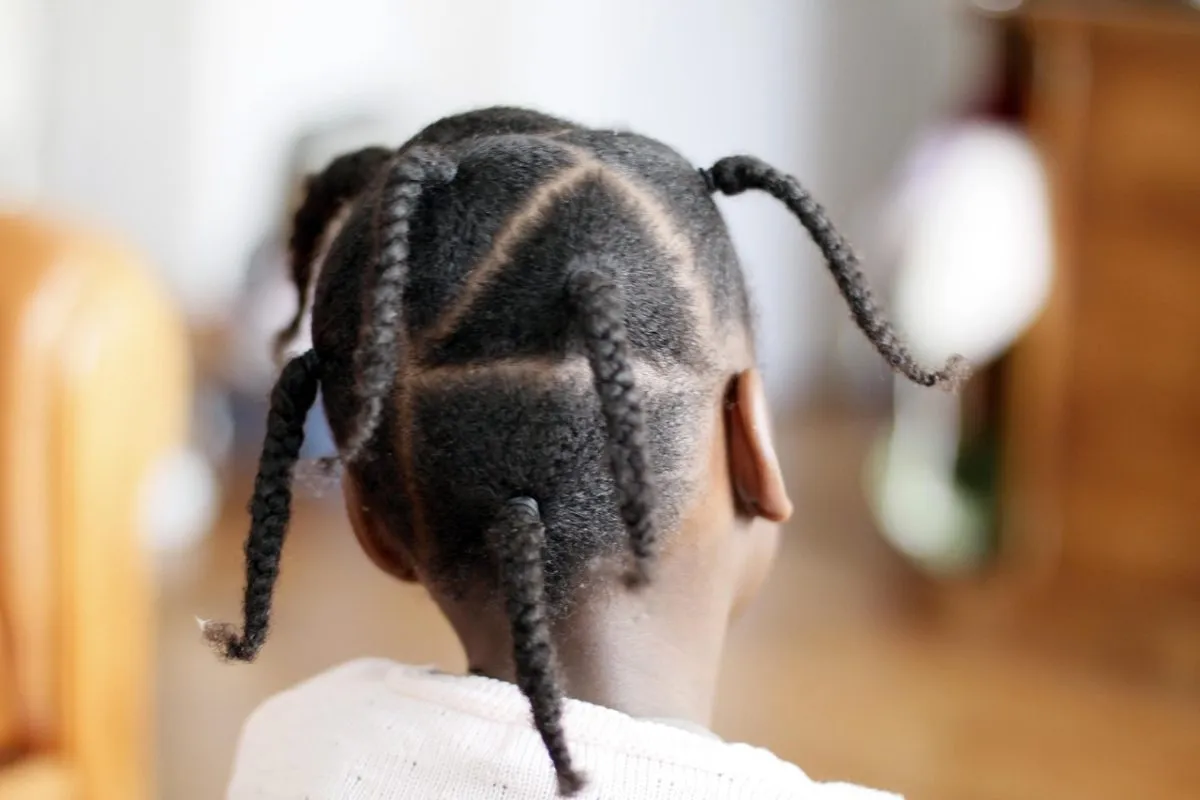
The 2026 academic year in Panama has started with a contentious national debate. Multiple civil rights organizations have filed formal complaints with the Ministry of Education, alleging several schools are conditioning the enrollment of Afro-Panamanian students on changes to their natural hair.
Activists report at least four documented cases across three schools where students or their parents faced these demands. They argue the internal school regulations enforcing these rules are arbitrary and lack any legal foundation, directly contradicting national anti-discrimination resolutions.
“They are told that, if they do not make the changes demanded by the internal hair regulations, they cannot enroll or they will not be allowed to enter on the first day of class,” said Ninna Ottey of the Organization Hijas de Alkebulan during a press conference. [Translated from Spanish]
The complaints emerged during the recent enrollment period and have continued into the first week of classes. Organizations are now mobilizing a public awareness campaign to inform families of their rights and provide support against what they label discriminatory practices.
Internal School Rules Clash with National Policy
Ottey clarified that the national Ministry of Education (Panama) has issued no directive requiring any form of “Afro certification.” She stated the practice appears to have arisen arbitrarily within the internal handbooks of individual schools, both public and private. The ministry’s own Resolution No. 887-AL from March 23, 2023, explicitly prohibits discrimination on ethnic or cultural grounds in all educational centers.
That resolution specifically forbids restricting the use of natural hair, Afro styles, braids, twists, or buns. There is no official process or certificate in Panama to validate a person’s Afro descent, a fact activists stress makes the demands both illogical and unlawful. “In Panama, there is no procedure, no certificate that validates Afro descent. You cannot process a human right or a person’s self-identification,” Ottey emphasized. [Translated from Spanish]
Among the recent cases highlighted are two students from Colegio Abel Bravo in Colon province. Additional complaints have been registered at the Colegio de Artes y Oficios and a school in the Las Mañanitas area. The reported demands from school administrators include cutting hair, removing braids, or avoiding Afro-protective styles entirely.
Students and Activists Decry Absurd Certification Demand
The controversy has sparked the campaign “My Afro Hair Is Not Certified.” It aims to guide Afro-descendant youth and their families while encouraging students to wear their natural hair with pride as a legitimate expression of identity and history. For many, the very request for certification feels insulting and rooted in ignorance.
“Frankly, it seems silly to me,” said Alice, a tenth-grade student at the Rubiano Institute who preferred to use a pseudonym. She shared that a previous school she attended in San Miguelito required some form of documentation to support Afro-descent identity, despite no such certificate existing. [Translated from Spanish]
Alice, who wears her naturally curly hair without issue at her current school, called the practice unjust. She noted that even classmates with clearly Afro-descendant features faced this request. “If a person says they are of a certain ethnicity, they should not be bothered for expressing their hair naturally. It is part of their race and their genes,” she stated. [Translated from Spanish]
Ligia Grenard, a representative of the National Coordinator of Black Organizations, expanded on the fundamental flaw in the certification concept. She explained the Black population in Panama encompasses a vast diversity of skin tones and physical features, dismantling the idea that identity can be defined by color alone. Grenard asserted the Panamanian population results from centuries of complex historical mixing, including African, Indigenous, and European heritages.
Issuing a document to validate such a multifaceted identity is absurd, she argued. Afro-descent is not determined by geography or isolated physical traits but by personal history, family lineage, self-identification, and cultural belonging. “It is your history, your family, and your identity that defines who you are,” Grenard said. [Translated from Spanish]
Legal and Constitutional Challenges Loom
Activists are preparing to challenge the school policies on constitutional grounds. They point to Article 19 of the Panamanian Constitution, which prohibits discrimination. Demanding a special certificate for Afro-descendant students to exercise a right already guaranteed by national education resolution could be deemed unconstitutional. This creates a potential legal battleground between autonomous school regulations and federal anti-discrimination law.
The situation reveals a significant gap between high-level ministry policy and its implementation at the individual school level. While the Meduca has progressive rules on paper, enforcement and awareness at the administrative level appear inconsistent. This discrepancy leaves students vulnerable to the interpretations of local principals and disciplinary boards.
Organizations are now collecting formal testimonies and evidence from affected families. Their goal is to present a consolidated case to the Ministry of Education, urging not just intervention in specific incidents but a nationwide clarification sent directly to all school administrators. They want the ministry to explicitly nullify any internal rule that contradicts Resolution 887-AL.
The campaign’s immediate focus remains on student support. They are providing guidance to parents on how to formally contest these demands and assuring students they have the right to wear their hair naturally. The broader hope is that this controversy sparks a necessary national conversation about racial identity, cultural expression, and the practical application of anti-discrimination law in everyday school life. The first week of classes in 2026, therefore, begins not just with lessons from textbooks but with a critical societal lesson playing out in school corridors and administrative offices across the country.