


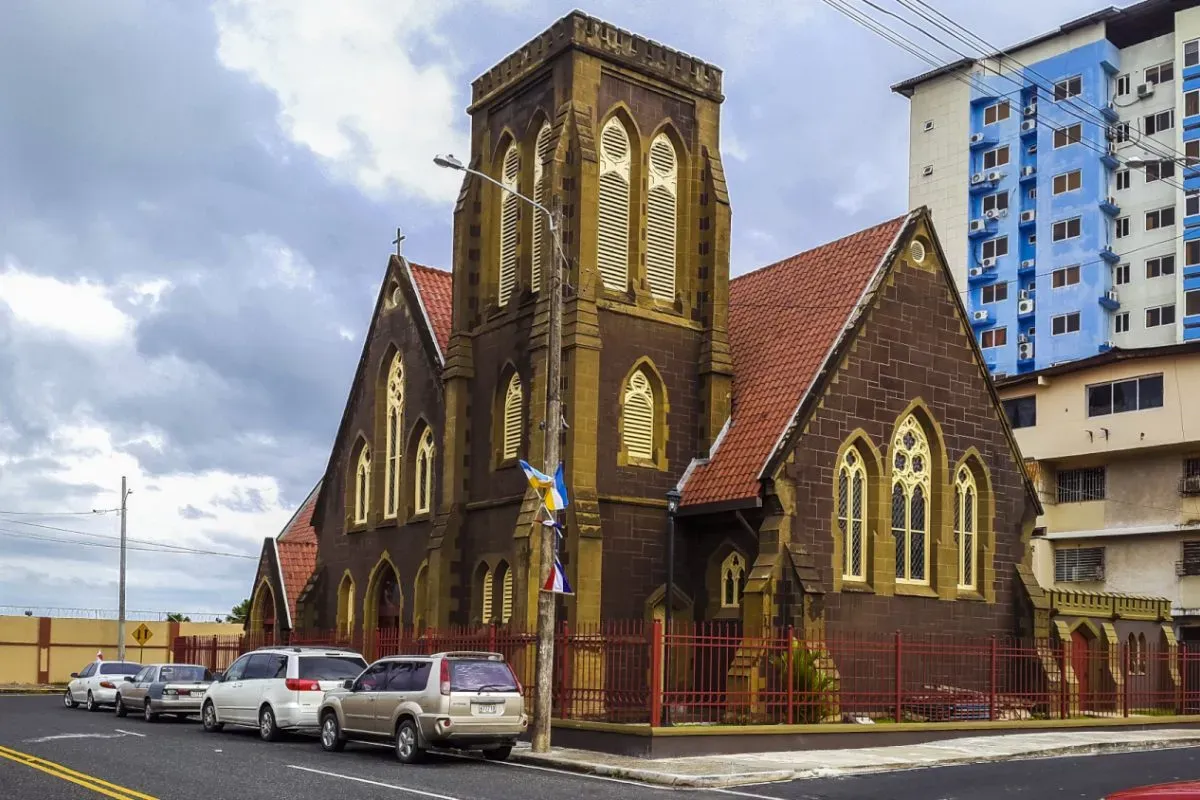
Colon’s iconic Christ Church by the Sea (Iglesia Episcopal de Cristo a Orillas del Mar), known locally as the Stone Church, approaches its 161st anniversary as a catalyst for urban heritage restoration. The historic Episcopal church, the city’s oldest building, stands as a physical anchor for broader efforts to reclaim the architectural legacy of this pivotal Panamanian port city. Officials from the Panama Ministry of Culture confirm the structure is central to a coordinated strategy for cultural revitalization.
Constructed less than a decade after Colon’s founding, the church is a rare example of stone construction in the city. Its distinctive Neo-Gothic architecture was designed by a noted American architect of the period. Joel Ceras, director of the Colon Historic Center, explained the building’s unique status and layered history in an interview this week.
A Monument With a Multifaceted Past
The church’s significance extends far beyond its religious function. It has witnessed and shaped key moments in the province’s narrative. Following a great fire in 1885, the building temporarily served as a barracks and prison. Ceras noted it once held Pedro Prestan, a controversial historical figure, before his execution. This event cemented the site’s place in the collective memory of Colon.
“This was the first building declared a historical monument in Colon, even before the national heritage protection law of 2002,” Ceras said. [Translated from Spanish]
A major 2013 restoration invested approximately four million dollars into the church’s preservation. That project remains one of the most significant heritage recoveries undertaken in Colon in recent decades. The building continues to operate as an active worship site for the Episcopal Church (United States) and is one of 29 officially recognized historical monuments in the city.
Broader Urban Restoration Gains Momentum
Christ Church is not alone in its renewal. The regional headquarters of Panama’s Electoral Tribunal now occupies the restored old Cristobal Colon School, a Neoclassical Palladian building revived in 2016. Another key structure, the Colon Governor’s Office building, has also been reclaimed. Constructed between 1904 and 1906 by Panamanian hands after independence, it sat abandoned for decades before being rehabilitated for its original institutional use.
To manage this growing effort, the Ministry of Culture established the Colon Historic Center Office. This body develops overarching plans and advises owners of heritage properties. Ceras, who also serves as an architect for the office, detailed the collaborative nature of the work.
“We are working hand-in-hand with the Municipality on issues like public lighting and the condition of public spaces. They develop projects through decentralization, and we complement those efforts with elements their projects might miss,” Ceras stated. [Translated from Spanish]
This partnership aims to systematically improve the historic center district’s infrastructure and livability. The goal is making preservation sustainable for the community.
Authorities highlight Colon’s interreligious coexistence as a cornerstone of its cultural identity. Catholic, Episcopal, and Methodist communities share the urban landscape with Hindu temples and Muslim mosques. This pluralism, they argue, strengthens social dialogue and defines the province’s multicultural character. Leveraging its historic role as an international port and connection point, Colon now bets on its rescued patrimony as an engine for lasting urban and cultural revival.