


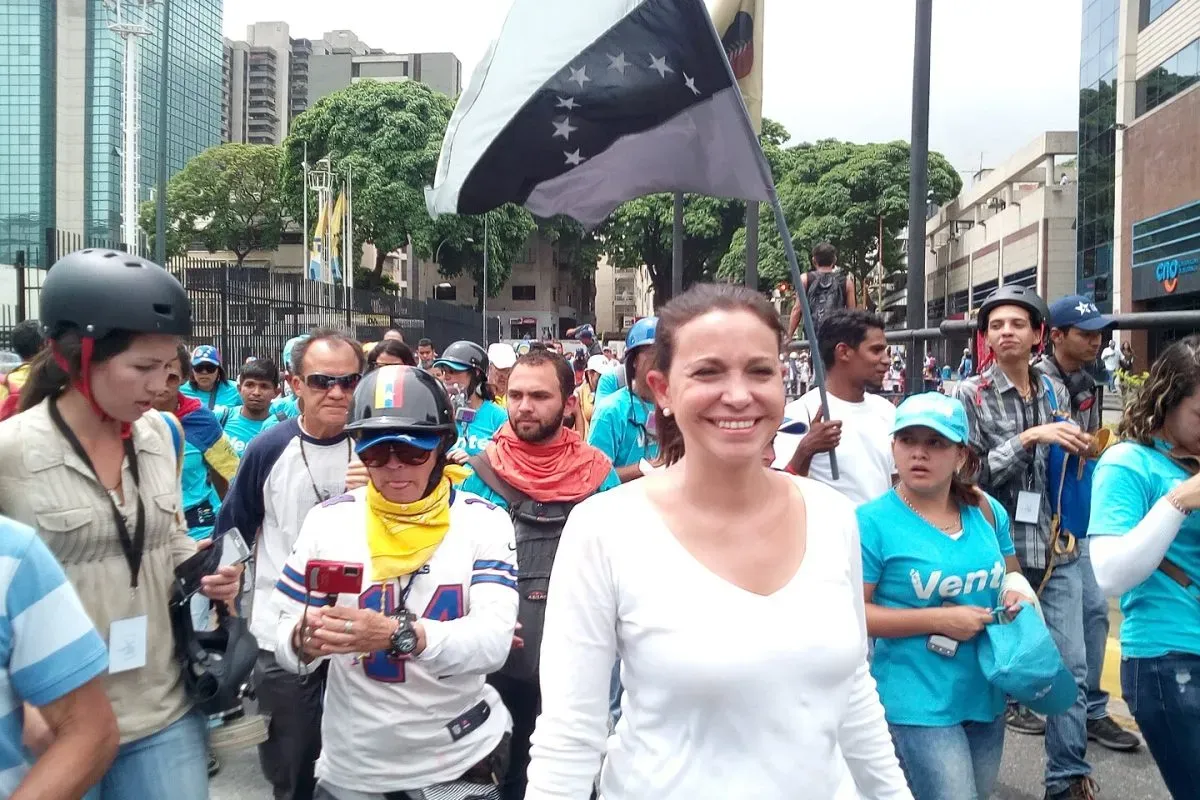
In the hushed solemnity of Panama City’s historic Casco Antiguo district, a different kind of tremor shook the congregation. Venezuelan opposition leader Maria Corina Machado stood before the altar of the Panama Cathedral Santa Maria la Antigua, her voice cracking with emotion. She had come to pray for the dead, but she left with a promise that echoed through the marble columns.
“Venezuela will rise with more force than ever,” she declared, her words a mixture of grief and defiance. [Translated from Spanish]
The Sunday mass was a memorial for the victims of the devastating June 24 earthquakes that shattered Venezuela’s northern coast. But for Machado, it became something far more political. She described the gathering as a meeting point for the diaspora, a place where exiled citizens could share their anguish and their hope. The crowd, a mix of Venezuelan refugees and Panamanian supporters, hung on every syllable. Machado’s message was clear: the disaster had not broken the opposition’s spirit, it had forged it into something stronger.
A State Unable to Respond
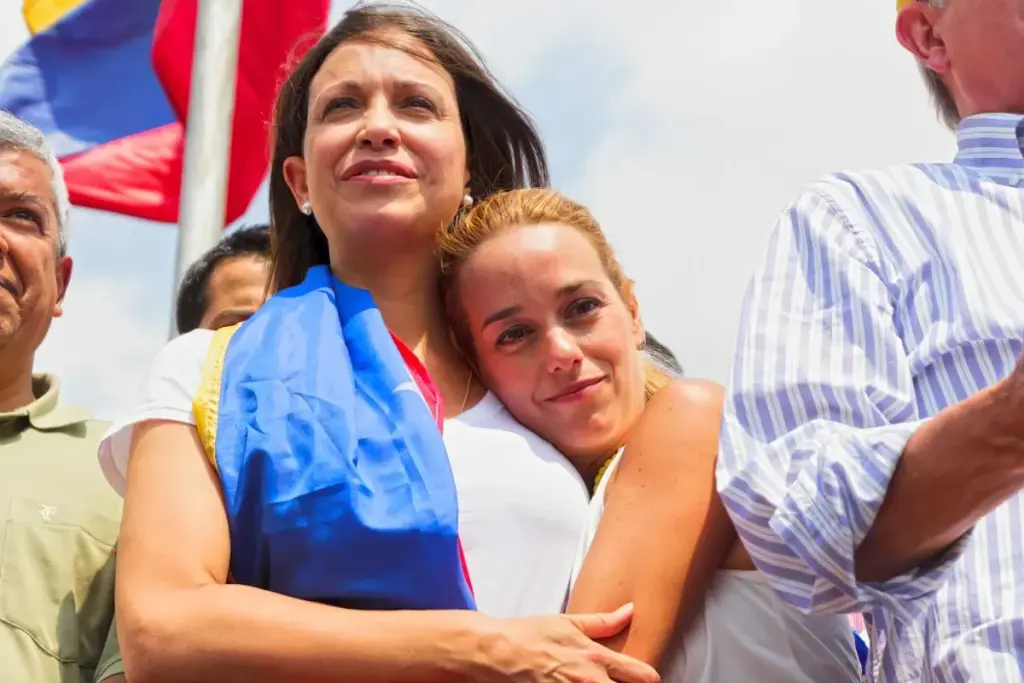
Machado did not mince words when describing the Venezuelan government’s response to the catastrophe. She labeled the situation a textbook case of a Venezuela failed state, arguing that the administration of interim President Delcy Rodríguez had demonstrated a complete inability to manage the crisis.
“This tragedy showed what we all knew,” Machado told foreign correspondents during a virtual briefing. “Venezuela became a failed state with an absolute, total absence of damage management capabilities.” [Translated from Spanish]
The numbers paint a grim picture. Official reports from the double earthquake, registering magnitudes of 7.5 and 7.2, list nearly 3,000 dead and more than 12,400 injured. The worst-hit areas include the northern coastal zone, the state of La Guaira, and the metropolitan area of Caracas. Machado argued that her presence in the country would provide stability and organizational force that the current authorities cannot offer. She insisted that her return is “non-negotiable” and that she plans to join citizen assistance committees operating in the streets.
The Battle for Information
Beyond the physical destruction, Machado highlighted a second disaster unfolding in real time. She accused the government of imposing severe restrictions on independent media and local news channels operating in the disaster zones.
“Blocking information and manipulating it in these situations produces even more victims,” she stated bluntly. [Translated from Spanish]
According to her analysis, the communications blackout is a deliberate strategy from Miraflores Palace. The goal, she claimed, is to “bury the truth while Venezuelans want to bury their dead with dignity.” This censorship, she argued, makes an already catastrophic humanitarian situation far worse. Families cannot locate loved ones. Rescue coordinators cannot share critical data. The information vacuum, she said, is as deadly as the aftershocks.
A Defiant Promise and International Support
Machado’s journey to Panama was itself a story of survival. She left Venezuela clandestinely in December for a regional tour, escaping what she described as a repressive regime. Now, she faces a new obstacle. She publicly denounced that the Rodríguez administration arbitrarily closed the country’s airspace to prevent her from returning.
“The regime closed the airspace of our country to try to stop me,” she wrote on social media. “I want to return to Venezuela to be with you in these heartbreaking hours.” [Translated from Spanish]
Despite the blockade, her commitment remains absolute. She expressed deep gratitude to the United States government for its logistical efforts to channel emergency humanitarian aid to affected families. She also acknowledged the historical role Washington has played in pushing for a democratic transition in Caracas. But her focus remains fixed on the ground in Venezuela.
“I will be in Venezuela to cry together for our losses, to pray together, to embrace each other, to organize ourselves,” she said in a recorded message. “Because from this, we will also rise.” [Translated from Spanish]
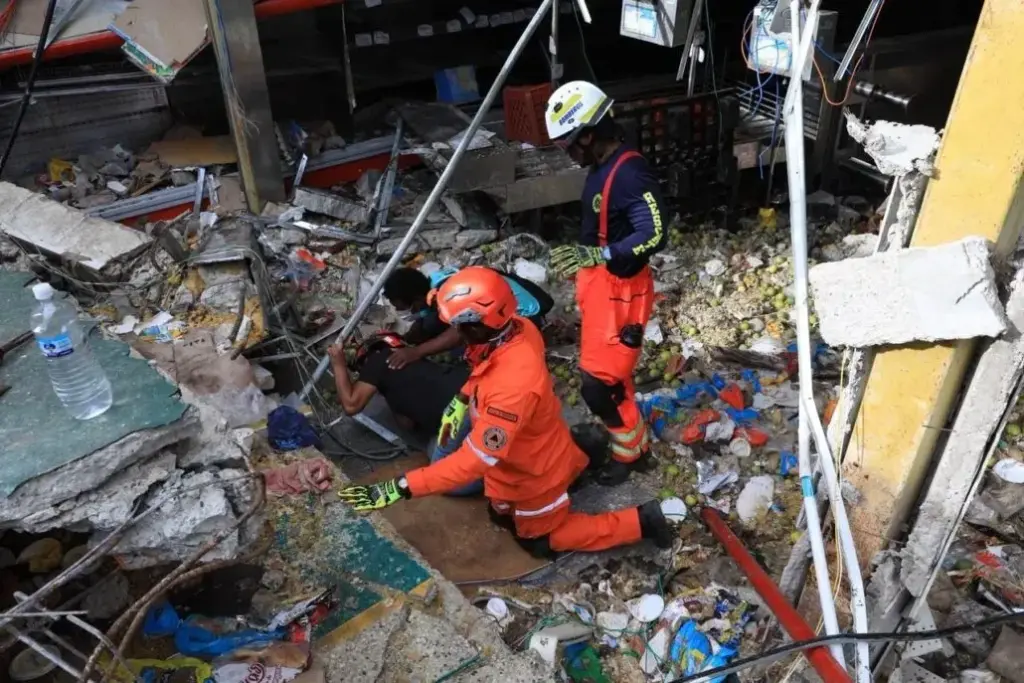
The earthquake may have crumbled buildings and broken families, but for Machado and her supporters, it has also exposed the cracks in the government’s foundation. As she left the Panama Cathedral, the faithful did not just see a politician. They saw a woman who, despite the distance and the danger, refuses to let her country be buried in silence.