


By Manuel Espinosa-Gillis
There are laws that age without us even noticing. They remain in force, they continue to appear in contracts, and they are still relied upon by institutions, yet the country they were built to regulate no longer exists in the same way. That appears to be one of the central challenges Panama faces regarding its rental legislation.
First, however, a necessary clarification is in order. When people speak of the so-called “1973 rental law,” they are actually referring to a regulatory framework whose core foundations stretch back even further. Law 93 was approved on October 4, 1973, establishing the General Directorate of Rentals under the then-Ministry of Housing, and was followed in 1978 by supplemental regulations governing rental rates and deposits.

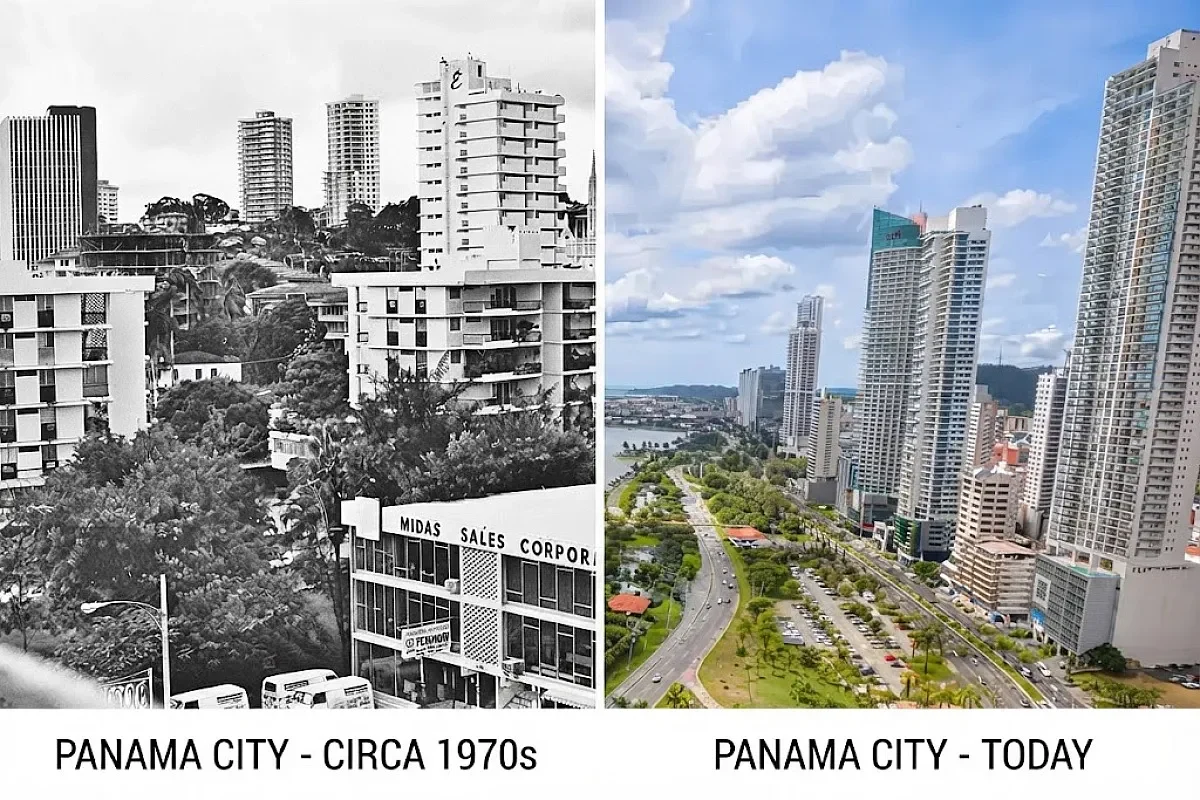
More than fifty years have passed since then. In that time, Panama has undergone a profound transformation: the architectural landscape and construction methods have shifted, property values have evolved, the real estate sector has matured completely, and the entire process of renting a home looks entirely different.
Today, a prospective tenant can search for an apartment from abroad, sign legal documents remotely, execute payments via international wire transfer, and manage all ongoing communication with their landlord through a messaging app. Yet, a significant portion of the legal architecture governing that modern relationship was born in an era when none of those technologies existed.

Between What the Law Says and What Happens in Practice
Real estate expert Luis Alberto Mon, from Expat-Tations, believes that one of the core problems lies precisely in the widening gap between antiquated legislation and the fast-paced reality of modern contracts. In his view, many agreements ultimately end up operating under unrestricted free-contracting schemes, leaving tenants at a severe disadvantage—particularly when they are entirely unaware of their legal rights and the strict boundaries of what a landlord can or cannot legally demand.
The issue, however, is not necessarily the mere existence of a private contract. The Ministry of Housing and Territorial Ordering (Miviot) has repeatedly clarified that a private contract is not illegal in its own right. The critical requirement is that these agreements must undergo an administrative phase and be officially registered—a process that Miviot continues to oversee actively in 2026. This oversight is precisely where one of the most intriguing structural contradictions arises.
Decades ago, Law 93 already mandated that contracts be formalized in writing and that landlords submit a physical copy to the General Directorate of Rentals, alongside strict rules governing the security deposit. Consequently, some of the friction points currently framed as legislative failures do not happen because the law completely lacks protective mechanisms. Instead, the root of the problem often stems from the massive chasm between what the written rule dictates and what actually occurs on the ground in everyday practice.
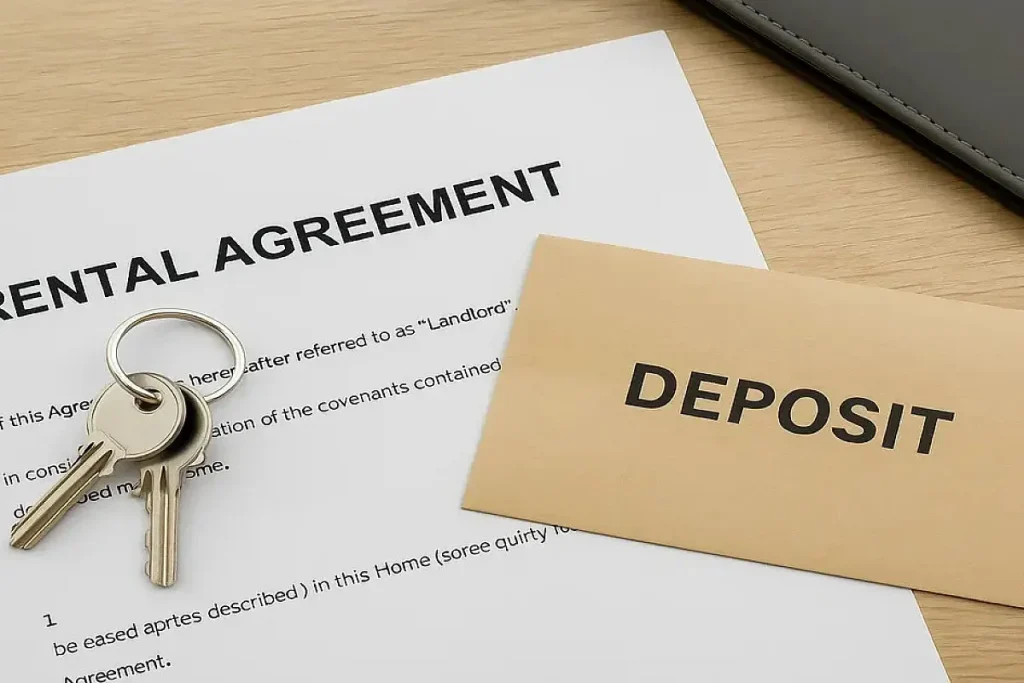
the deposit must equal one month’s rent, while also establishing guidelines for its management and refund.
The Deposit: A Debate That Is Still Ongoing
The security deposit serves as a prime example of this legal friction. Original legislation mandated that a tenant deposit a sum equivalent to one month’s rent. Subsequently, Law 259 of 2021 amended Article 13 of Law 93, re-affirming that—barring specific exceptions determined by Miviot—the deposit must equal one month’s rent, while also establishing guidelines for its management and refund.
However, modern market contractual practices frequently stretch far beyond this rigid framework, often requiring extra financial guarantees or additional sums when securing a property. This creates an even greater hurdle for international expats arriving in the country who are entirely unfamiliar with local Panamanian legislation. It is far from a minor issue: a newcomer may encounter a dense, multi-page contract drafted in complex legal jargon, signing it under the assumption that every clause is fully enforceable simply because it is on paper.
Yet, Law 93 itself explicitly establishes strict limits on what can be legally stipulated in these agreements. Among other restrictions, it prohibits forcing a tenant to pay excessive rent in advance, demanding unauthorized extra sums beyond the official rate, or compelling individuals to waive rights legally granted to them. Furthermore, the statute dictates that any contractual clauses designed to diminish a tenant’s statutory rights are legally null and void.

A Law That Could Not Imagine the Modern Contract
This brings us to another critical issue: the modern lease contract has become far more complex than anything the original legislation ever envisioned. Today’s agreements routinely incorporate clauses covering air conditioning maintenance, minor repairs, professional painting, appliances, monthly maintenance fees, pet policies, designated parking spaces, early termination penalties, and other nuances that define the daily reality of contemporary renting.
Law 93 does attempt to establish a basic framework, noting that the landlord is obligated to carry out necessary repairs to maintain the property and its facilities, while the tenant remains responsible for damages resulting directly from their own fault or negligence. To illustrate this division, consider a straightforward example: if a tenant receives a home that was not freshly painted at move-in, it makes little sense to demand that they return it in pristine condition at the end of the term. The same principle applies when major equipment breaks down due to normal wear and tear rather than any misuse by the occupant.
The core question, therefore, extends far beyond whether the law merely protects the tenant. Ultimately, the real issue is whether the legislation is adequately designed to govern the dynamic, high-stakes real estate market that exists in Panama today.

The Miviot Itself Acknowledges the Gap
And at this point, something particularly striking stands out: the Miviot itself acknowledges the problem. In its 2024–2029 Strategic Plan, the institution expressly notes that Law 93 of 1973 presents a significant gap when facing the reality of the current real estate market. The document argues that the regime created decades ago can generate friction for both tenants and landlords, and proposes an amendment aimed at striking a fair balance between both parties.
Therefore, this is not merely an opinion held by lawyers, landlords, or frustrated tenants. The very institution responsible for administering this system recognizes that there is an ongoing, urgent debate about how to update it, making that discussion more necessary than ever before.
Panama has changed dramatically, yet the law remains the same. Today’s nation is entirely different from the country it was in 1973, boasting a heavily developed real estate market, a significant presence of international expats, modern rental arrangements, fully furnished properties, and high-rise buildings equipped with multiple complex services.
Technology has also fundamentally transformed the relationship between the parties involved. Contracts can now be signed remotely via email, payments are executed instantly from mobile phones, and daily communication between landlords and tenants is routinely managed and recorded through digital applications.
The State is also trying to adapt
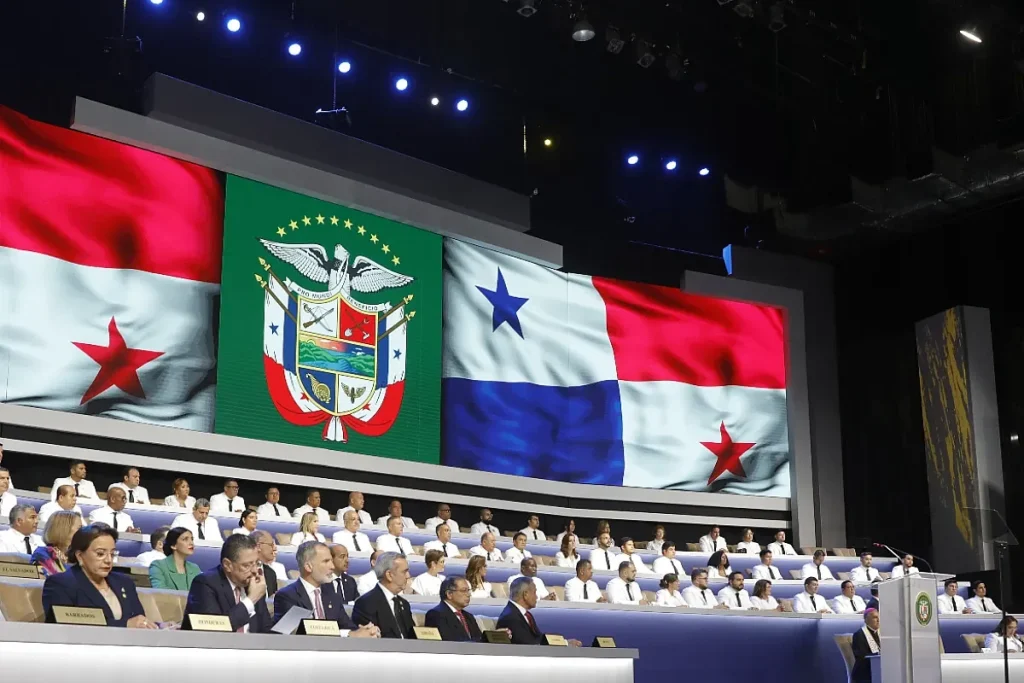
In September 2026, the General Directorate of Rentals of Miviot presented advancements to the real estate sector regarding the digitalization of contract registration processes and security deposits. The Ministry pointed out that these procedures can currently be managed through digital tools, and noted that work is underway on mechanisms to expedite the refund of deposits. This signals that the State understands the problem is no longer just the existence of an old law, but also the need for its enforcement to adapt to current technological and economic realities.
However, modernizing procedures does not necessarily mean modernizing the law, which is arguably where the core discussion lies. Rental legislation must protect the tenant against potential abuses, while simultaneously allowing the landlord to manage their assets reasonably. To achieve this, it must establish clear rules for deposits, repairs, contract terminations, rent increases, responsibilities, and effective mechanisms to resolve conflicts.
Above all, the legal framework must be clear and accessible enough so that a person who is not a lawyer can easily understand their rights and obligations. If after more than fifty years, doubts still persist regarding what must be registered, how much can be demanded at the time of renting, who is responsible for a specific repair, or what happens to a security deposit, perhaps the problem is not merely that some people do not know the law.
The current legal reality demonstrates that the legislation was written for a Panama that no longer exists. It urgently needs to adapt and evolve to meet the challenges and demands of the Panama of today.
If you have any questions regarding the laws governing your property, or if you need guidance on this or any other topics related to real estate in Panama, reach out to Expat-Tations.