


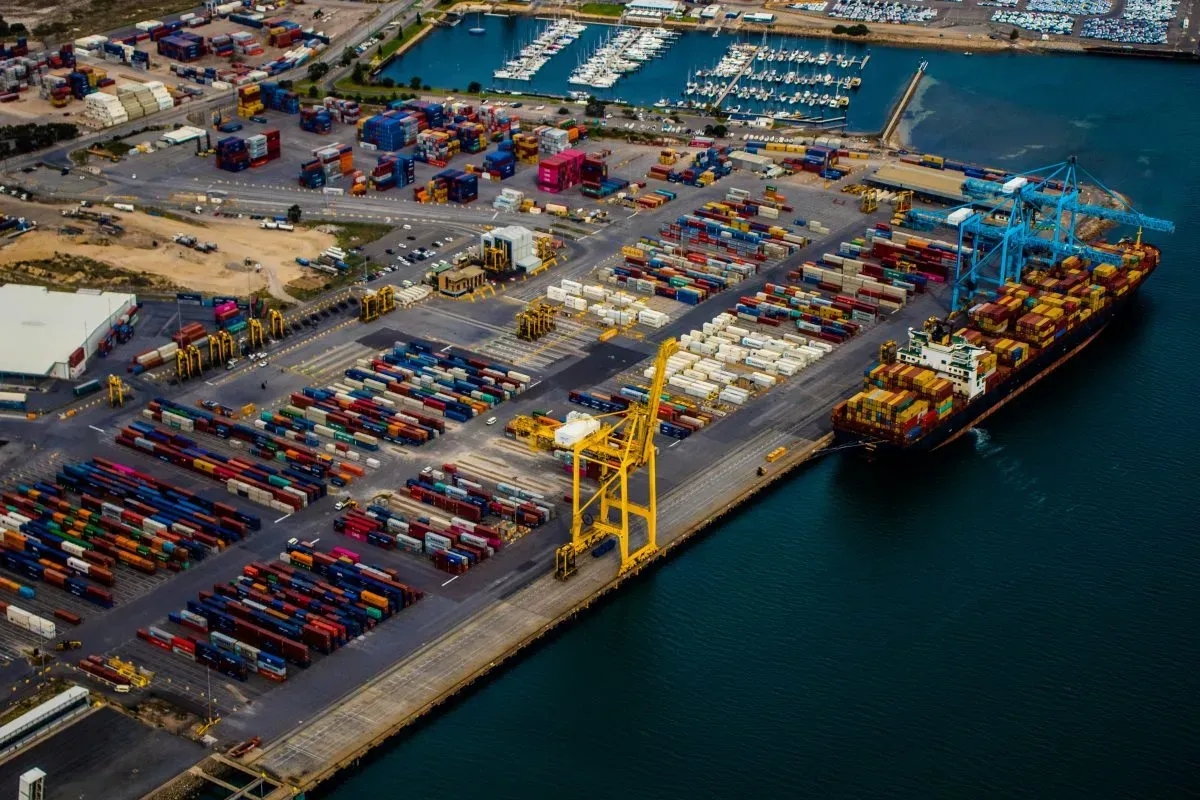
The Constitutional Court of Panama has declared a major port concession extension unconstitutional. This landmark decision forces the Panamanian government to fundamentally reassess how it negotiates and oversees strategic contracts with private companies. Legal experts say the ruling exposes critical flaws in state supervision and sets strict new limits on future agreements.
In a unanimous verdict on January 29, 2026, the court struck down the 1997 concession law for the Panama Ports Company. The ruling specifically invalidated a 2021 extension that would have granted the operator control over the Balboa and Cristobal terminals until 2041. This action has reopened a fierce debate about sovereignty, public benefit, and legal security in Panama’s key economic sectors.
Three prominent Panamanian jurists analyzed the verdict’s wider implications. They agree the court has sent an unmistakable message to both the state and foreign investors. “This is not an isolated event,” said lawyer Rodrigo Noriega. “It is the consolidation of a doctrine the court has upheld since December 2017, when it declared the first mining contract unconstitutional.” He noted the same constitutional principles are reiterated in four major rulings since that time.
“It would be very healthy for his administration to sit down with the companies, renegotiate those contracts, and maintain them in a more balanced relationship for the State,” Noriega said regarding President José Raúl Mulino’s government. [Translated from Spanish]
Failure to proactively renegotiate problematic contracts will lead to more legal chaos, Noriega warned. Any lawyer could then file an unconstitutionality lawsuit, creating sector-wide crises as agreements lose their legal foundation overnight. The ruling compels the state to act.
Core Legal Principles Redefined
The court’s decision rests on three non-negotiable pillars. These principles now form a binding framework for all future strategic agreements. First, the state cannot negotiate from a position of equality with a private company. Noriega explained that public rights and the interests of all Panamanians demand the government hold a privileged position in such deals.
Respect for national sovereignty forms the second axis. “You cannot grant rights equivalent to sovereign exercises to the company,” Noriega stated. “The company cannot be more sovereign than the Panamanian State.” [Translated from Spanish] The third principle mandates a significant, demonstrable benefit for the public interest. Profit for a private operator is not enough. The state must receive fair compensation for the use of national assets.
The court also censured the flawed process behind the ports extension. It highlighted a lack of transparency and public consultation. The Panama Maritime Authority’s board approved the extension in June 2021 without a broad, open debate. The court rejected the very notion of an “automatic renewal” for contracts of this magnitude. Certain requirements, like the Comptroller General’s endorsement and a state-beneficial renegotiation, are mandatory.
Clear Lessons for Public Servants
Former Attorney General and congresswoman Ana Matilde Gómez said the ruling delivers clear lessons on official responsibility. Every public servant negotiating for the nation must prioritize the interests of the majority, including future generations. These decisions cannot be based on short-term political or economic circumstances alone. Their long-term impact on collective goods and rights is paramount.
“We are terrible at exercising control and adequate supervision functions to monitor performance,” Gómez stated, criticizing the state’s chronic weaknesses in oversight. [Translated from Spanish]
Gómez also argued the ruling reignites discussion on the rigidity of contract-laws. These agreements, once thought to be nearly untouchable after legislative approval, have now been shown as fully susceptible to constitutional review. This precedent empowers the Constitutional Court of Panama to scrutinize any deal it deems harmful to national interests.
The legal uncertainty created by this and similar rulings affects Panama’s investment climate. The recent nullification of the Supreme Court mining contract already raised doubts about the state’s capacity to uphold commitments made through its official organs.
A Stern Warning to All Parties
Former Supreme Court Magistrate Edgardo Molino Mola views these rulings as more than legal decisions. They are stark warnings for both companies and the state itself. The annulment of contracts previously approved by presidents, ministers, legislators, and comptrollers creates a complex dilemma. Those officials validated the deals’ legality and feasibility at the time.
Molino Mola pointed out the resulting environment of uncertainty harms not just the involved companies but Panama’s image as a secure destination for investment. The government now faces the dual challenge of enforcing court mandates while restoring investor confidence. This balancing act will define the Mulino administration’s approach to existing Public-Private Partnership models.
Analysts suggest the state must urgently strengthen its technical and legal teams. Negotiating complex, multi-decade concessions requires expertise often outmatched by sophisticated corporate legal departments. The ruling implies that superficial oversight and rubber-stamp approvals will no longer survive judicial review.
The immediate impact is a pressing need for the government to inventory other strategic contracts. Sectors like energy, logistics, and infrastructure may contain similar clauses or extensions vulnerable to challenge. Proactive review and renegotiation could prevent a cascade of legal battles. The alternative is a reactive posture, waiting for the next lawsuit to dismantle another critical agreement.
For the panama ports sector specifically, the path forward remains unclear. The panama ports company concession is now operating on shaky legal ground. This likely triggers provisions for international arbitration, potentially leading to costly claims against the state.
Ultimately, the court has drawn a line in the sand. Its unanimous decision reflects a deep institutional concern over the erosion of state authority in vital economic areas. The ruling empowers civil society and opposition lawmakers to challenge deals perceived as unbalanced. It signals a judicial branch willing to act as a final check on executive and legislative power, especially concerning national assets.
Panama now enters a period of necessary recalibration. The rules for engaging with global capital have been rewritten by the gavel. How the government, the private sector, and the public adapt will determine the country’s economic stability for years to come. The lesson is unambiguous. Contracts must serve Panama first, or they will not stand.