


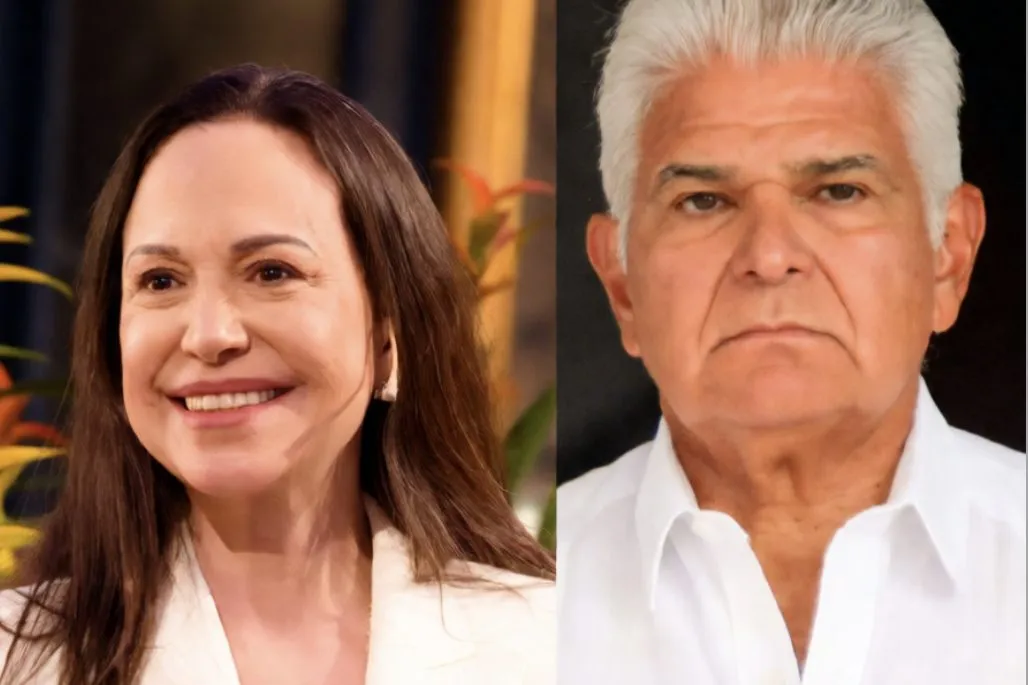
Panamanian President José Raúl Mulino has publicly advised Venezuelan opposition figure María Corina Machado against negotiating the results of her country’s 2024 presidential election. Mulino revealed the private conversation during a press briefing in Panama City on Tuesday, January 6, 2026, framing his counsel as a lesson from Panama’s own democratic history.
The president’s statement represents a significant and public alignment of Panama’s foreign policy with the Venezuelan opposition’s claim to power. It comes amid an ongoing regional crisis following the political collapse of Nicolás Maduro’s government earlier this month. Mulino emphasized that his advice was given as a friend and based on Panama’s direct experience with defending electoral mandates.
“I told her to be intransigent with respect for the popular will. There is no going back on that, and you will not be wrong,” Mulino said. [Translated from Spanish]
He was referring to the July 28, 2024, Venezuelan election where candidate Edmundo González Urrutia was declared the winner. The result was never recognized by Maduro’s administration, creating a prolonged political stalemate. Mulino argued that negotiating an electoral mandate only perpetuates the same power structures that led Venezuela to institutional collapse.
A Warning Against Political Negotiations
President Mulino warned that political agreements not rooted in respect for the vote do not resolve conflict. He suggested they merely delay a true democratic transition. His position rejects any form of power-sharing deal that would undermine the opposition’s claimed victory.
To illustrate his point, Mulino recalled Panama’s critical juncture in 1989. The country faced intense international pressure to negotiate after its elections. The winning ticket of Guillermo Endara, Ricardo Arias Calderón and Guillermo Ford ultimately saw its mandate respected without political transaction. “Either the election was respected, or no deal was possible,” Mulino stated, highlighting that firmness was key to restoring Panamanian democracy.
The Panamanian leader sees clear parallels between that moment and Venezuela’s current crisis. He asserted that only the Venezuelan people can renounce the choice they expressed at the polls, not political actors or international bodies. This principle guides his administration’s stance.
Directing Panama’s Diplomacy
Mulino issued a specific directive to Panama’s ambassador at the Organization of American States. He instructed the diplomat to remind the regional body of its past failures regarding Panama during the OAS meeting on Venezuela scheduled for that same Tuesday. The president’s message underscores a deep skepticism of negotiated settlements facilitated by international forums.
“Under my government, we cannot assume any other position. Sovereignty belongs to the people, not to governments,” Mulino reiterated. [Translated from Spanish]
He expressed hope that other regional leaders would adopt equally firm positions to contribute to democracy’s restoration in Venezuela. The advice to María Corina Machado solidifies Panama as a vocal advocate for the Venezuelan opposition’s uncompromising line. This move by José Raúl Mulino is consistent with his earlier statements on supporting democratic processes in the region.
Analysts view this as a strategic effort to leverage Panama’s moral authority from its own transition. The country’s experience is now presented as a model for Venezuela. Mulino’s public counsel to a key opposition leader like Corina Machado also raises his profile on the regional stage. It positions him as a defender of electoral integrity.
The immediate impact is a strengthening of the opposition’s bargaining position. They can now cite Panama’s historical precedent and presidential backing to resist calls for concession. This development complicates diplomatic efforts seeking a middle-ground solution. It signals to other nations that Panama will reject any OAS resolution it views as undermining the 2024 vote.
For the Venezuelan people, Mulino’s message is one of external validation. His stance provides international support for the argument that their vote must be the sole foundation for any new government. The president’s focus on historical parallels suggests his administration believes only unwavering pressure will lead to a full democratic transition in Venezuela.
This episode further cements the foreign policy direction of the Mulino administration regarding Venezuela. As detailed in previous analyses of his stance, the president’s commitment to this principle appears absolute. The regional response to Panama’s firm position, and its invocation of history as a guide, will now be closely watched.