


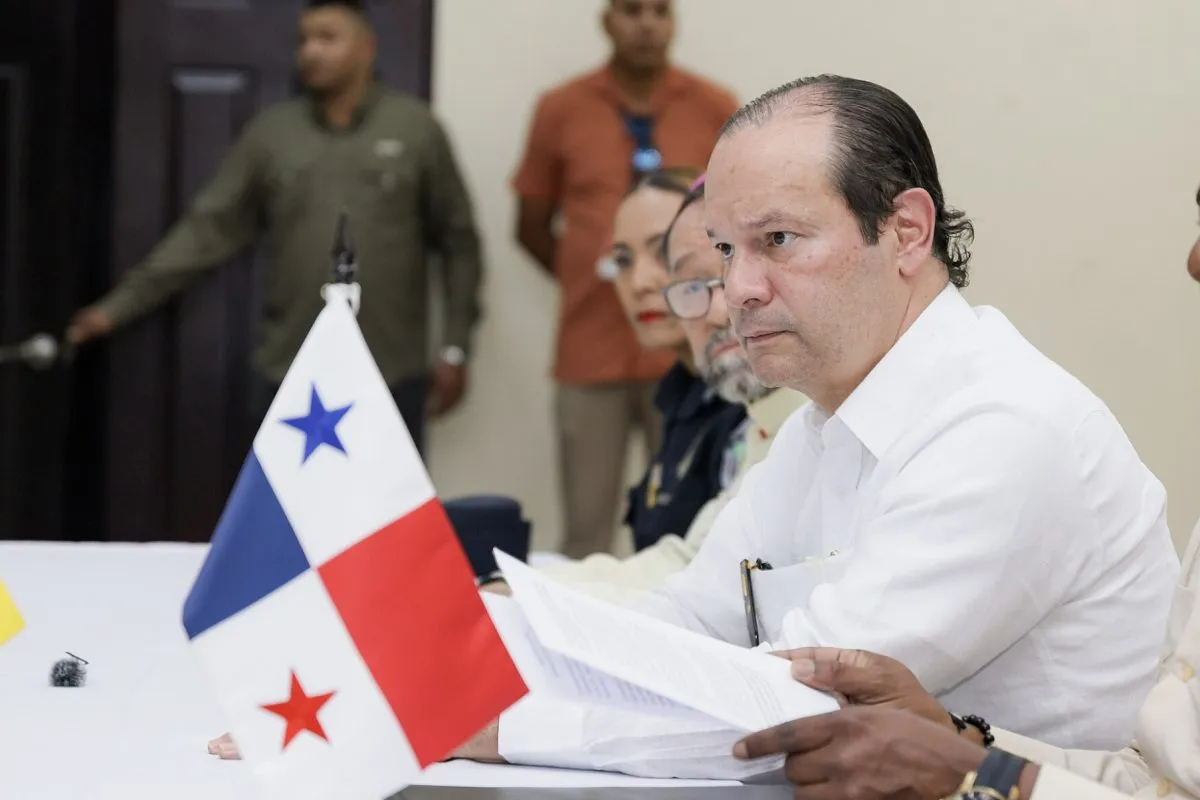
Panamanian Foreign Minister Javier Martínez-Acha will travel to Washington, D.C. this weekend for high-level meetings with United States officials. His visit, confirmed on Thursday, focuses on bilateral cooperation and regional security challenges, explicitly excluding discussions on the Panama Canal or trade agreements from the agenda.
The minister’s primary engagement will be with the newly appointed United States Secretary of State, Marco Rubio. He is also scheduled to meet other figures within the administration of President Donald Trump. Martínez-Acha framed the trip as a routine diplomatic effort to strengthen an already fluid partnership.
Addressing speculation about tensions, the Foreign Minister was unequivocal. He sought to dispel any notion of discord between the two nations, particularly regarding the strategic waterway.
“There is no type of friction with the government of the United States,” Martínez-Acha stated. [Translated from Spanish] He emphasized that the relationship remains strong and respectful, built on shared interests.
Security Cooperation Takes Center Stage
The minister identified transnational organized crime as the principal threat to Panama and the wider region. This common challenge forms the core of the security partnership with Washington. He described the United States as one of Panama’s most important allies in this fight, a collaboration he called essential for national and hemispheric stability.
His comments extended the security imperative directly to global trade routes. Martínez-Acha argued that international cooperation is not a bilateral concern but a multinational necessity.
“A safe, open, efficient, and neutral canal benefits the United States, the United Kingdom, Japan, South Korea, Ecuador, Chile, France, Italy, many democracies, many allied countries,” he said. [Translated from Spanish]
This framing positions Panama’s stewardship of the canal as a service to a broad coalition of nations, indirectly reinforcing its sovereignty over the asset. The statement aligns with Panama’s longstanding diplomatic efforts to maintain the canal’s neutrality.
Defining the Agenda and Its Limits
Officials have carefully outlined what will not be discussed during the Washington meetings. The Foreign Minister explicitly ruled out any talks about the Panama Canal’s management or control. He also deferred commercial matters, including the Free Trade Agreement, to Panama’s Minister of Commerce and Industries, Julio Moltó.
This narrows the official focus to regional diplomacy and security coordination. The approach allows javier martinez-Acha to concentrate on strategic dialogues without entering complex technical or economic negotiations.
Regional politics, particularly concerning Venezuela, will likely be a significant topic. The minister commented on the possibility of a meeting between President Trump and Venezuelan opposition leader María Corina Machado. He expressed respect for the decisions of Venezuelan leaders while reiterating Panama’s recognition of Edmundo González Urrutia as the country’s elected president.
Martínez-Acha considered a potential Trump-Machado encounter opportune. He cautioned, however, that the international community must wait to see any concrete outcomes from such a discussion. This measured response reflects Panama’s careful navigation of the volatile washington paradigm in Latin America.
The trip follows a period of significant political transition in the United States. Meeting with marco rubio so soon after his appointment signals Panama’s intent to establish a direct line with the new Secretary of State. For Panama, maintaining a predictable and cooperative relationship with the U.S. is a permanent foreign policy priority, regardless of administrative changes in Washington.
Minister Martínez-Acha’s mission appears designed to reaffirm that stability. By proactively scheduling talks and publicly defining a constructive agenda, Panamanian diplomacy aims to solidify its most critical bilateral partnership for the coming years.