


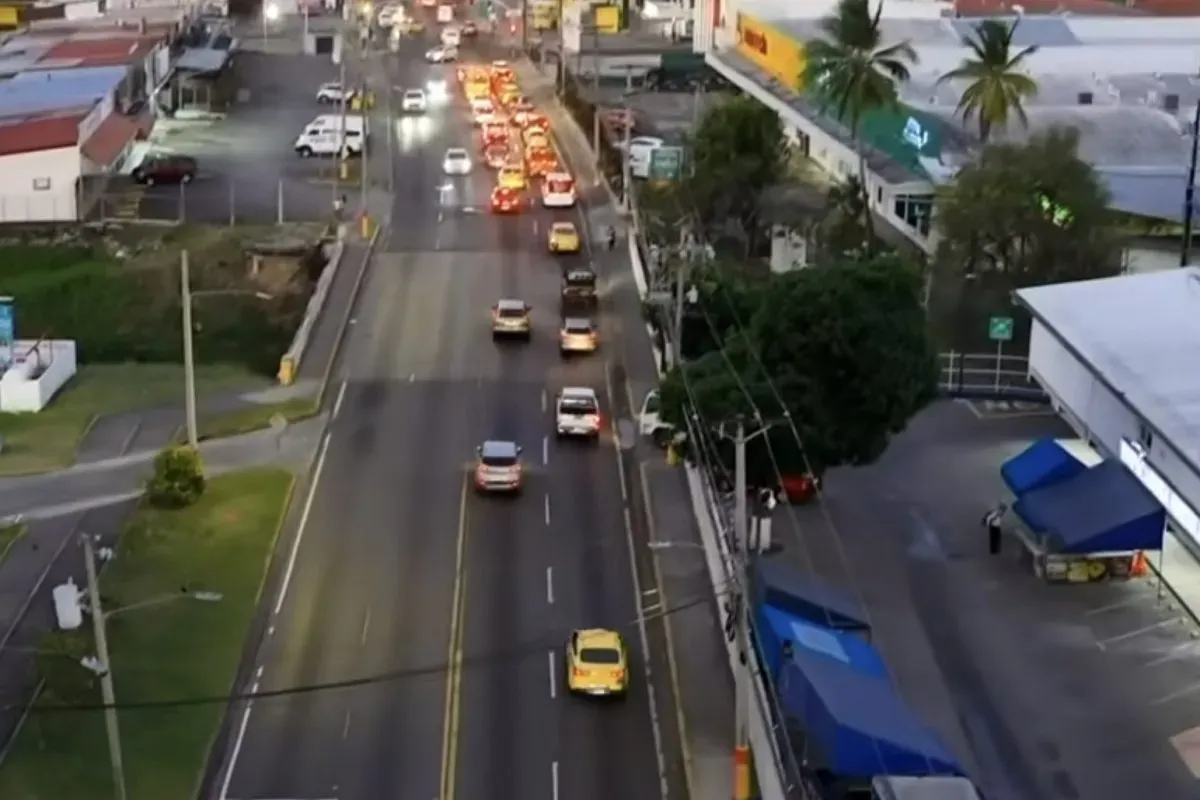
Business owners along Panama City’s Spain Avenue are preparing for relocation as a major $80.1 million road widening project moves forward. Merchants in the Río Abajo district await final notification from authorities but have already begun adapting their shops. The project aims to modernize infrastructure in an area many describe as long overlooked.
📑 Table of Contents
Franklin Robinson, one of the affected business owners, confirmed that many merchants are proactively making changes despite waiting for official word from the Ministry of Public Works (Panama). He explained that initial communication from the ministry helped clarify the project’s impact zones, allowing some planning to begin. The final go-ahead now depends on approval from the Comptroller General of the Republic.
Investing Amid Uncertainty
Robinson has already invested in remodeling his business, adding a new front terrace, a rear car wash, and air-conditioned areas. He acknowledges the financial strain this impending move creates. “Removing all this is not cheap, you have to pay for it,” Robinson said. He took out a loan to fund the current improvements, knowing a full relocation costs even more.
“We are not leaving on March 30, but we will leave, because they are waiting for the project’s green light. In two weeks, if the project arrives, they come to notify you that you have to vacate,” Franklin Robinson stated. [Translated from Spanish]
The merchant made a direct appeal for logistical support from the ministry and the construction consortium. He requested assistance with moving heavy items, like containers, to reduce the burden on small businesses facing demolition and rebuild costs. This need for practical help highlights a gap between large-scale public works and the reality for small entrepreneurs.
A Vision for a Walkable Community
Despite the personal and financial challenges, Robinson strongly supports the Spain Avenue expansion. He envisions a transformed Río Abajo with wider sidewalks, trees, and improved walkability similar to the nearby Via Argentina district. His support is rooted in a desire for community improvement, particularly for pedestrians, children, and elderly residents.
“Río Abajo looks like a photograph from 1970. This project will help pedestrians, the elderly. We deserve quality of life, wide sidewalks, trees, for it to be walkable like Via Argentina,” Robinson expressed with enthusiasm. [Translated from Spanish]
He emphasized that clear, timely communication from officials is critical for a smooth transition. Robinson urged the ministry to provide formal, written notices with specific dates once the project is approved so all affected neighbors can organize effectively. The famous Afro-Antillean Walkway will not be removed but will be redeveloped in its current location. Only establishments located directly on the road’s public easement must fully relocate.
For business owners, the situation requires a difficult balance. They must invest in their current locations to remain operational while simultaneously preparing to dismantle and move everything. The physical logistics of relocation, including finding equipment to move heavy infrastructure, present a significant hurdle.
Franklin Robinson concludes with a hopeful outlook for his neighborhood’s future. He sees the temporary disruption as a worthy sacrifice for lasting community gain. His sentiment reflects a broader acceptance of the project’s goals, paired with a urgent request for a fair and transparent process from groundbreaking authorities.