


Panamanian migration authorities arrested Richard Werstine, a 56-year-old American fugitive, on Wednesday in Panama City. The US Marshals Service had sought him for over three decades in connection with a 1993 murder in Detroit.
Werstine was enjoying a quiet afternoon at Urracá Park on Avenida Balboa, wearing sneakers, shorts and a sporty sweater. He looked like any other tourist. But a joint operation between the US Marshals Service and Panamanian authorities ended his life on the run.
Officers from the Panama National Migration Service approached Werstine during a routine patrol in the pet area of the park. He carried no identification and admitted he had no legal documents. That admission triggered a chain of events that unraveled his carefully constructed false identity.
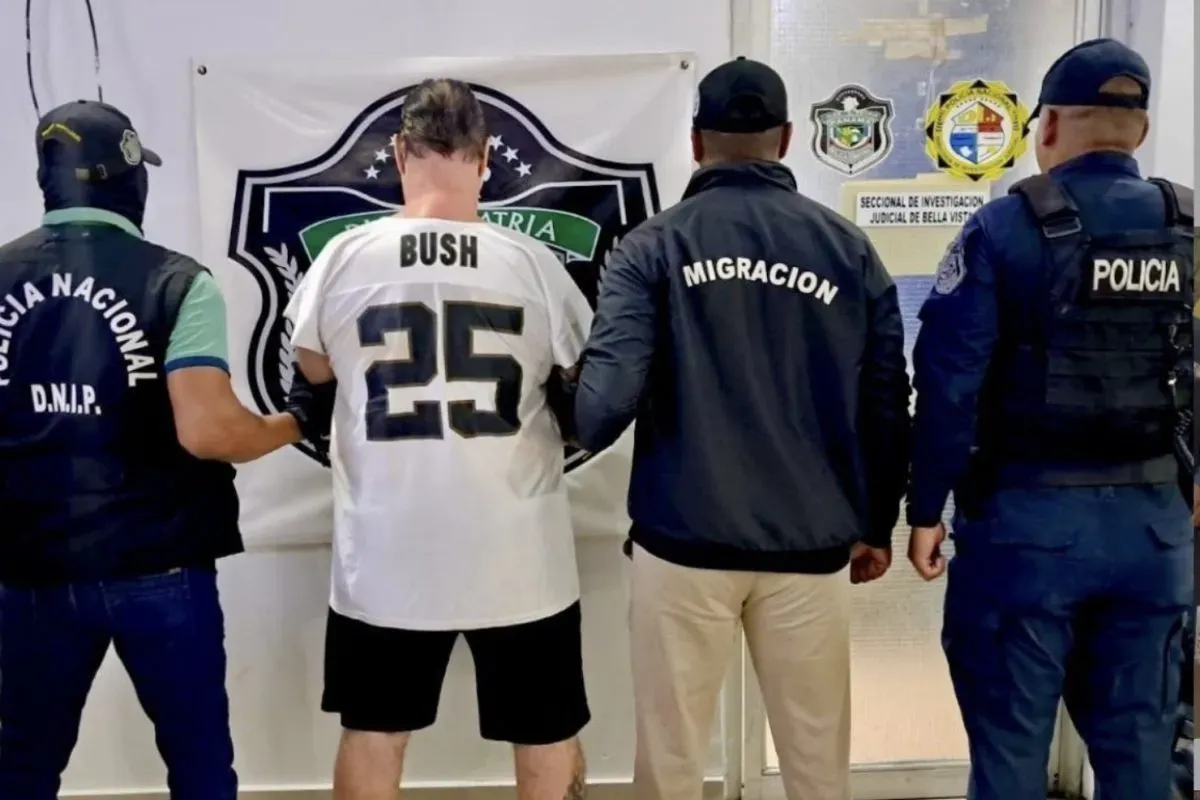
Biometric Technology Exposed a Ghost
Migration officials transferred Werstine to a nearby police station in Bella Vista. Specialists there used biometric identification to scan his fingerprints. The results shattered the facade of a man labeled a “ghost” for his ability to disappear for more than 30 years.
The data cross-check revealed two active arrest warrants in the United States. Werstine’s criminal record in his home country included charges of homicide, assault with a dangerous weapon, illegal firearm possession, property damage and malicious destruction.
Werstine confessed to investigators that he entered Panama illegally in 2005. He lived in the country for 21 years without ever obtaining legal status. He used multiple aliases, including Joseph Alan Stavros, to blend into the population. The lack of global digital interconnection in past decades helped him remain hidden. [Translated from Spanish]
The murder that started the manhunt happened on September 15, 1993 in Detroit. Police records show Werstine allegedly shot 23-year-old Rodney Barger in the head while the victim slept in the home they shared. Barger performed as “Rawn Beauty” and sang for the hardcore punk band Cold as Life.

Detroit police arrested Werstine days after the homicide. He never showed up for trial. A formal arrest warrant was issued in June 1994. During his early years on the run inside the United States, Werstine accumulated a violent record under false identities. He even took a bullet to the arm during a shootout with police in Flagstaff, Arizona in 1999.
International Cooperation Cracked the Case
The case took a decisive turn in May 2022. The Detroit Fugitive Apprehension Team reopened the investigation using advanced tracking technologies. Direct coordination between the US Marshals International Operations Division and Panamanian security and intelligence agencies led authorities to the metropolitan area of Panama City.
Jimmy Allen, deputy chief of the US Marshals Service in Detroit, stated that tracking criminals in the 1990s was difficult due to the absence of the internet and shared databases. He emphasized that this arrest brings comfort to the victim’s family. It also sends a strong message that criminals cannot hide from justice forever.
Once Panamanian migration officials confirmed Werstine’s full identity, they completed the paperwork for his extradition to the United States. The fugitive now faces transport to American soil where the 1994 warrant still awaits him.
For 25 years, Richard Werstine walked the streets of Panama as a free man. A routine patrol and a fingerprint scan changed everything in a matter of hours.