


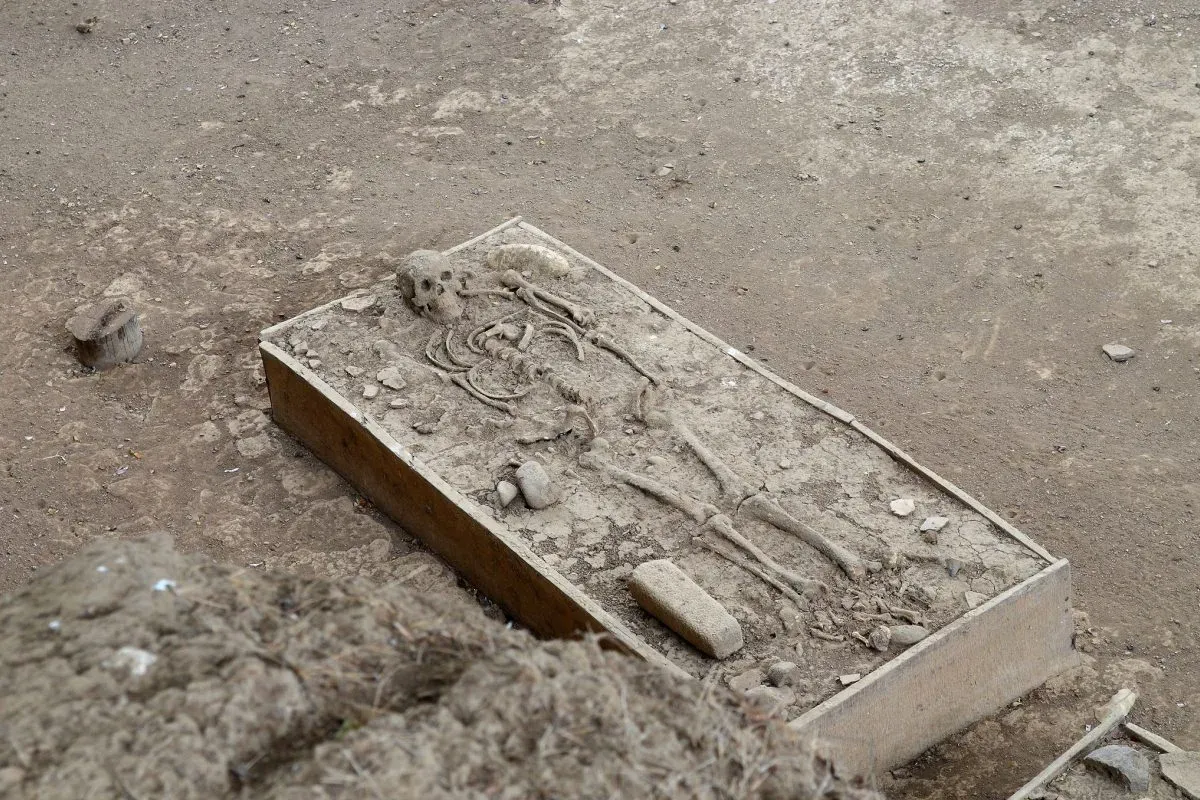
Panama’s El Caño archaeological site is rewriting history. Researchers have uncovered elite tombs and gold artifacts that disprove old assumptions about simple pre-Columbian societies. The findings point to complex social structures and extensive regional trade networks. The site sits on a seemingly innocent plain in Coclé province. But beneath the grass and dust lies an ancient order that still breathes in silence. Archaeologists have spent years digging into this ground, and what they found changes everything. Dr. Julia Mayo led the excavations. She remembers Tomb T7 from 2015 and the more recent T9 discovery not as scientific finds but as frozen moments in time. The gold was impressive, she said. But the real story was in the arrangement.
“We are not looking at wealth. We are looking at a staging of power,” Mayo explained. [Translated from Spanish]
Bodies were placed around a central figure. Death itself had been carefully organized. The tombs reveal societies built on lineage systems where power wasn’t just exercised but performed. It became visible in death, legitimized before both the living and the ancestors. Walking through the Past Walking through the grass today, it is hard to imagine the life that sustained this order. But it existed. Men and women farmed, fished and read river cycles like a calendar. They lived on an alluvial plain where water wasn’t scenery but destiny. Working here means facing relentless heat, invading humidity and sudden rains. Dr. Mayo said the biggest challenge isn’t the weather. It is the density of the past. Thousands of objects are compressed into tiny spaces. The work requires patience that borders on ritual. For years, scholars believed these societies were simple. Every excavated layer now disproves that idea with the force of buried truth. Exchange networks connected this site to regions like Costa Rica and Colombia. Some links even reached the Mesoamerican world. The isthmus wasn’t a margin. It was a transit point. Local Communities Demand Answers In nearby Natá de los Caballeros, people already know the site’s value. They also know its fragility. They ask a question that mixes pride with distrust: where is the gold that comes out of the ground? They dream of a museum that would not just preserve artifacts but return history to those who live on top of it.
“There is a growing demand from the inhabitants themselves for a museum to be built in the town. This is key not only for the academic, scientific and tourist impact of the findings but also for transparency. It is a legitimate question people ask: where is the gold that comes out of the archaeological site? A museum would preserve it, exhibit it and make it accessible to the community,” Dr. Mayo stated. [Translated from Spanish]
The ground keeps getting perforated in silence. On nearby farms, dozens of looting pits have opened fresh wounds in ancient memory. Every object ripped out without context is a story lost forever. The most troubling part is what remains missing. Only a fraction of the funerary area has been revealed. Dr. Mayo described the pressure around the site clearly.
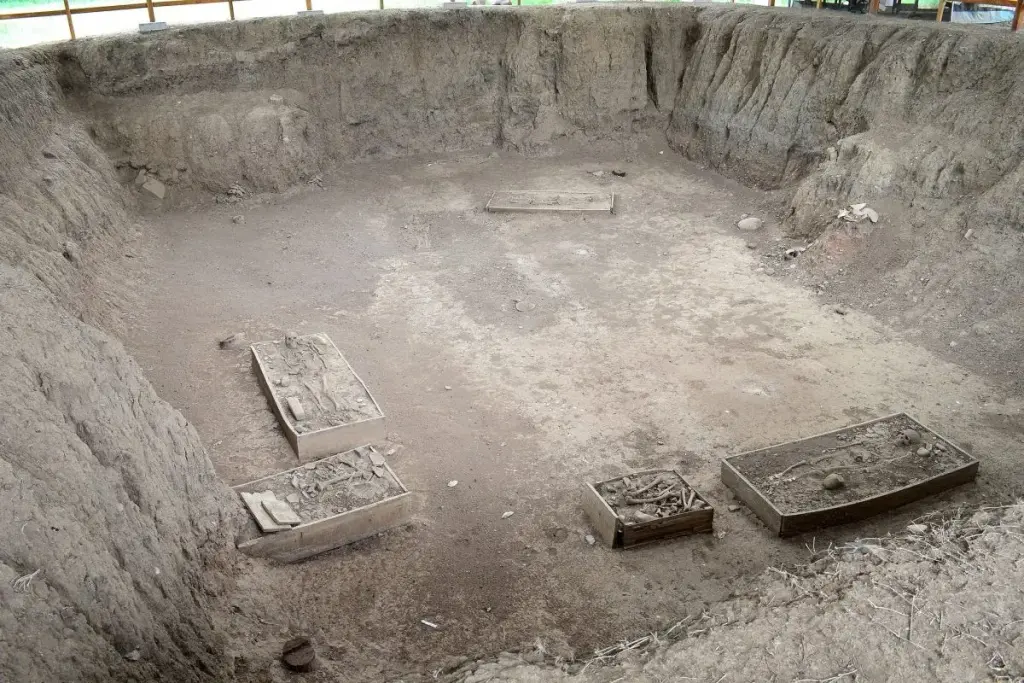
“This same year, Dr. Carlos Mayo Torné along with a group of collaborators conducted an inspection at the Don Gollo farm, a sugarcane field adjacent to the site. They identified 45 looting pits. This shows that looting remains an active problem,” she said. [Translated from Spanish]
Science Speaks from the Bones The quietest science is now starting to talk. DNA extracted from human remains is tracing invisible links. Researchers are finding kinships, lineages and family histories that survived time. The haplogroup A2af1a1 suggests connections with peoples like the Bribri. This extends the story far beyond the site itself. Scientists are waiting for answers from the Y chromosome. Meanwhile, questions grow like roots under the earth. The most important part of the narrative might still be hidden.
“The tombs allow us to reconstruct life stories, social relationships and even medical practices. For example, the highest status individual in Tomb T9 shows evidence of dental treatment in his teeth with fillings,” Mayo explained. [Translated from Spanish]
A New Understanding of Pre-Columbian Life The archaeology at El Caño is changing how experts view ancient Panama. The site covers about eight hectares. Monoliths emerge from the ground as the first visible signs. There are no grand walls or structures that challenge the sky. But a contained force exists in that discretion. The certainty that under every meter of soil rests a story that won’t show itself completely. The pre-Columbian goldworking found at the site demonstrates remarkable skill. Artisans created pieces that rival anything found in better-known regions. The gold objects were not just decorative. They carried deep social and religious meaning. Dr. Julia Mayo worked alongside Panama’s Minister of Culture, María Eugenia Herrera, during the latest excavations this year. Their collaboration highlights the growing official recognition of the site’s importance. What Comes Next The excavation team plans to continue working at El Caño. They want to uncover more tombs and expand their understanding of the ancient society. DNA analysis will continue, potentially revealing migration patterns and family connections across centuries. Local leaders are pushing for faster action on the museum project. They argue that preserving artifacts in the community would boost tourism and education. It would also answer that persistent question about where the gold goes. The site faces ongoing threats from looters and development. Researchers say protecting what remains is just as important as finding new treasures. Every intact tomb holds information that a looted grave can never provide. For now, El Caño keeps its deepest secrets underground. But each digging season brings new revelations. The elite dead of this ancient society are still speaking. Archaeologists are finally learning to listen.