


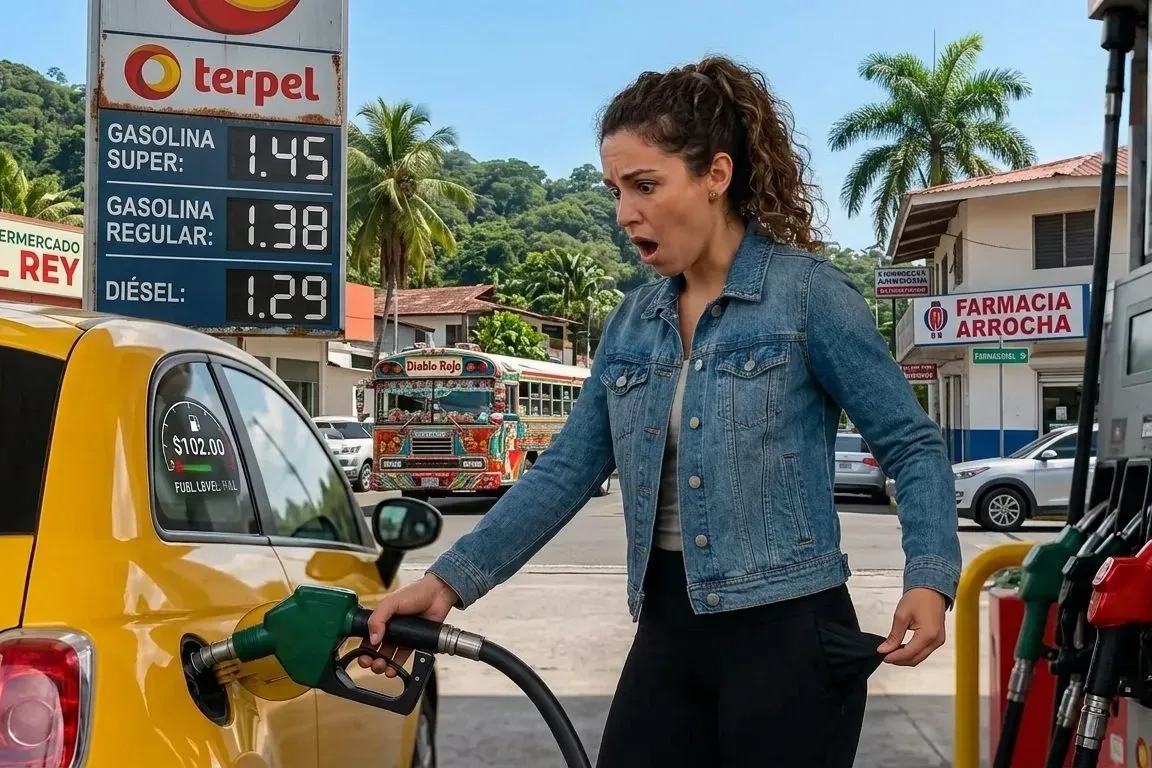
Drivers in Panama will pay more at the pump starting this Friday. The Secretariat of Energy Panama announced a new increase in fuel prices effective May 15. The adjustment hits all three major fuel grades across the country.
95-octane gasoline will rise by 9 cents per liter. That brings the price to $1.36 per liter. 91-octane gasoline also jumps 9 cents, settling at $1.28 per liter. Low-sulfur diesel increases by a smaller margin of 5 cents, reaching $1.32 per liter. [Translated from Spanish]
The increases push 95-octane gasoline past the $5 per gallon threshold. This creates a significant burden for Panamanian households and businesses alike.
Regional Price Variations Across Panama
Prices differ depending on location within the country. The western city of Changuinola now records the highest fuel costs nationwide. There, 95-octane gasoline sells for $1.41 per liter. 91-octane costs $1.32 per liter. Diesel reaches $1.37 per liter.
Panama City residents face slightly lower rates. The maximum prices per liter in the capital stand at $1.36 for 95-octane, $1.28 for 91-octane, and $1.32 for diesel. These figures represent the ceiling prices allowed under current regulations.
The government sets these caps through a formal resolution. Officials signed the document on May 13, 2026. It grants the National Energy Secretariat authority to adjust rates every two weeks.
The price adjustments reflect international market conditions for crude oil. Factors include reduced global supply and ongoing geopolitical volatility. These elements directly influence what Panamanians pay at the pump. [Translated from Spanish]
Fuel Price Regulation Mechanism
Panama operates a unique system for controlling Fuel prices. The Panama fuel price regulation framework allows updates every 14 days. Officials consider international crude benchmarks, shipping costs, and reasonable commercial margins.
These new rates will remain in effect until 5:59 a.m. on Friday, May 29. That is when the next scheduled price update occurs. The cycle repeats every two weeks without exception.
Global oil markets have shown persistent volatility in recent months. Production cuts from major exporters have tightened supply. Geopolitical tensions in key producing regions add further uncertainty. These pressures show no signs of easing soon.

Broader Economic Context
Panama faces additional challenges beyond fuel costs. The country is preparing for the arrival of the El Niño weather pattern. This phenomenon typically brings reduced rainfall and higher temperatures. The El Niño effects Panama could strain energy production and agricultural output.
Higher fuel prices ripple through the entire economy. Transportation costs rise. Food prices follow. Household budgets tighten. The current increases compound existing inflationary pressures.
Government officials monitor the situation closely. The biweekly adjustment system provides flexibility to respond to market changes. But it also means consumers face frequent price swings.
Drivers across Panama will feel Friday’s increase immediately. The 9-cent jump for gasoline represents a substantial hike in a single adjustment period. Diesel users face a smaller increase but still pay more than last month.
The next update on May 29 will reveal whether this trend continues. Much depends on international crude oil prices in the coming weeks. Analysts remain uncertain about the direction of global markets.
Panama’s fuel pricing system aims to balance consumer protection with market realities. The government caps prevent extreme price gouging. But they cannot shield consumers entirely from global forces.
For now, Panamanians must adjust their budgets once again. The $5 per gallon milestone for premium gasoline marks a psychological threshold. Many drivers may reconsider their travel habits or vehicle choices.