


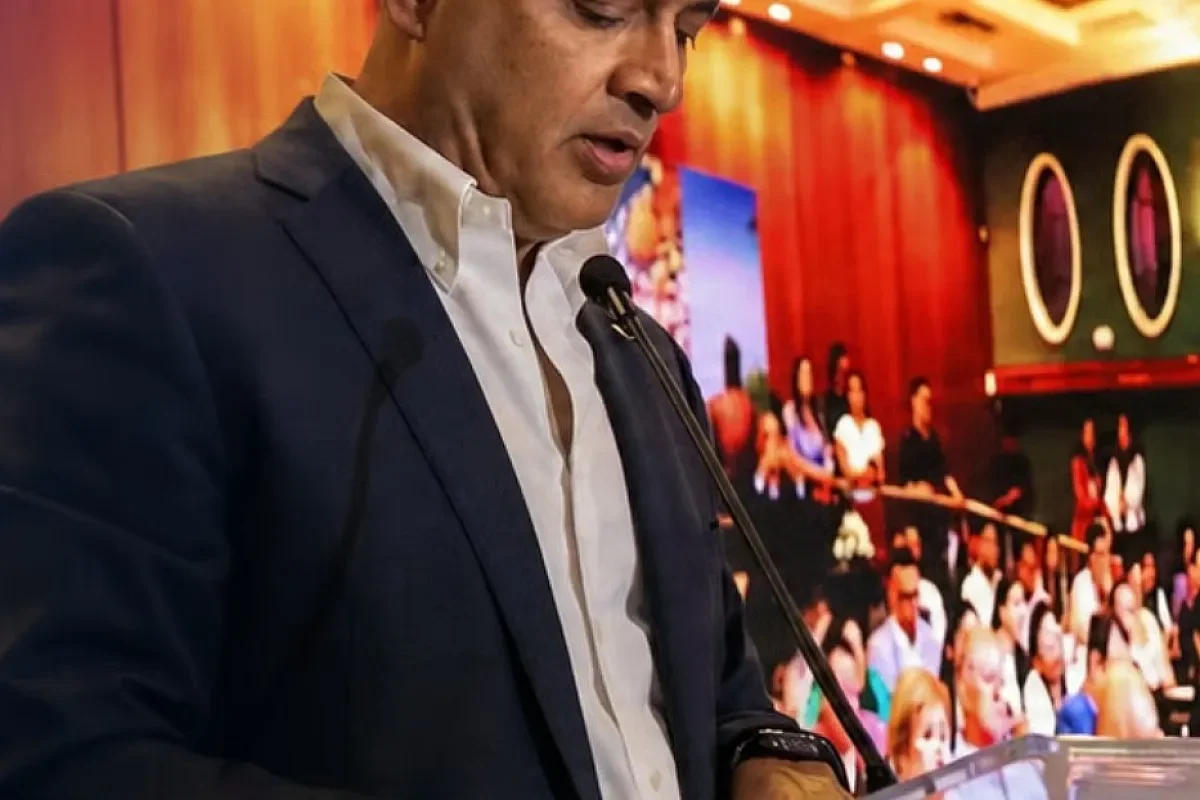
When María Teresa Santana discovered she was pregnant at 45, she never imagined the search for a home-based activity would blossom into a pastry business. On Tuesday, she stood among over 200 other dreamers at the Panama entrepreneurship congress, a full-day bootcamp designed to help people turn informal undertakings into established companies.
‘This program has been a huge help for entrepreneurs, and I hope to learn a lot,’ Santana said, adding that the hardest part for people like her is securing financing. [Translated from Spanish]
Her story echoes the reality of hundreds of thousands of Panamanians who start selling goods or services without a formal structure. The congress, officially the Fourth Congress of Entrepreneurship 2026 and organized by the Chamber of Commerce, Industries and Agriculture of Panama (CCIAP), brought together banking institutions, the Micro, Small and Medium Enterprise Authority (Ampyme), the National Authority for Government Innovation (AIG), and municipalities like San Miguelito and La Chorrera. Their common goal was straightforward: guide attendees through the maze of permits and formalization processes that often keep small ventures in the shadows.
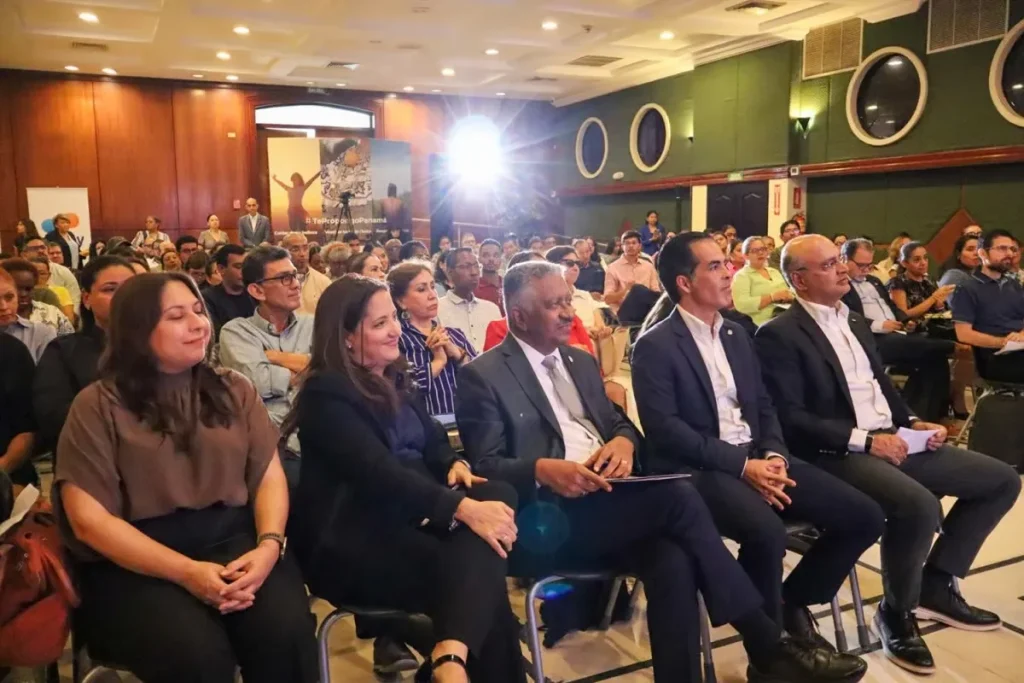
Panama Entrepreneurship Congress Targets Informal Business Formalization
According to Ampyme data shared during the event, Panama counts over 700,000 entrepreneurs, and nearly half operate informally. That statistic framed every workshop, from digital marketing and artificial intelligence applications to hands-on finance sessions. The CCIAP president, Juan Arias, drove the message home with a call to reshape the national mindset around work.
‘We don’t want Panamanians to just wait to be hired by a company, but also to create companies. All large companies started as a small venture,’ Arias said. [Translated from Spanish]
Behind those words sits a concrete support pipeline. The congress showcased Ampyme’s new simplified registration scheme for entrepreneurial companies, a mechanism that slashes red tape and lowers the cost of legally incorporating a business. Under the updated framework, micro-entrepreneurs can register a simplified stock corporation with minimal capital requirements and complete much of the process online, removing barriers that have historically pushed people to stay off the books. Municipal representatives walked participants through local licensing steps, and banks outlined microcredit options tailored to first-time business owners.
A Two-Phase Roadmap for Startups and Growing Ventures
The CCIAP structured its assistance in two distinct stages. The first phase, which kicked off at this Panama entrepreneurship congress, targets individuals who have a business idea but have not yet founded a company. Attendees received direct coaching on translating concepts into operational plans. A second phase, scheduled for April 2027, will focus on ventures that already generate income and are ready to scale, offering advanced modules on growth strategy, digital expansion, and access to larger financing rounds.
Maycol Duque, who manages a service platform, arrived at the congress looking for resources that could benefit both his personal projects and the network he runs.
‘I came seeking opportunities not just for myself, but for the service platform I manage,’ Duque said. [Translated from Spanish]
His dual-purpose attendance reflects a pattern organizers hope to see replicated across the country. The CCIAP confirmed it plans to take similar bootcamps to other provinces, and the Federation of Chambers of Commerce of Panama will hold a counterpart event in Santiago during August.
Simplified Registration and Financial Guidance Address Key Barriers
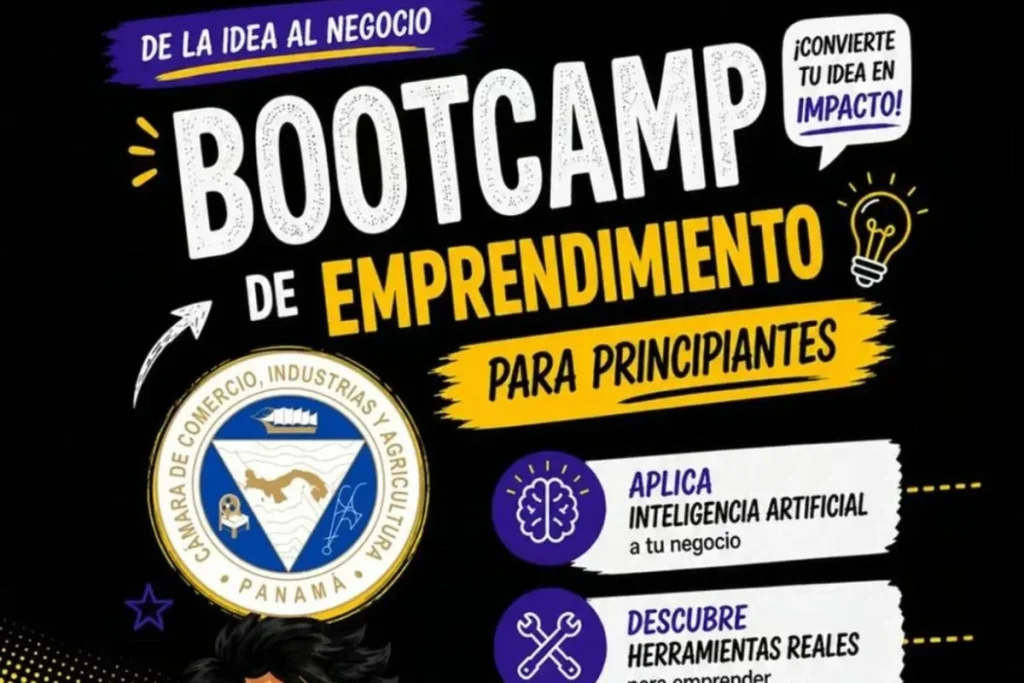
Under the bootcamp banner “From Idea to Business,” sessions tackled the practical obstacles that Santana and many like her face daily. Digital marketing experts demonstrated low-cost strategies to reach customers through social media and messaging apps. AI specialists showed how free or inexpensive tools can handle invoice generation, inventory tracking, and customer communication, effectively acting as a virtual assistant for a one-person operation. Finance coaches broke down cash-flow projections and the documentation required to open a business bank account, a step that often intimidates first-time applicants.
Access to credit remains a persistent bottleneck. Santana noted that finding financing was the hardest part of her journey, a sentiment echoed by others in the room. Ampyme representatives responded by detailing guarantee programs and matching funds available through the agency’s entrepreneurship promotion initiatives. The new simplified corporate vehicle, sometimes called the Entrepreneurship Company, also makes a business more legible to lenders, because a registered entity with a tax ID can build a credit history that an informal seller cannot.

Tax Hike Dispute in David Sparks Warning for Small Business Owners
Even as the congress pushed formalization, Arias addressed a brewing conflict that threatens to undercut those efforts. The municipality of David recently imposed steep tax increases, and some merchants have already received notifications and closure warnings over unpaid bills. Arias, speaking on behalf of the Chamber, described the hikes as unreasonable.
‘Tax increases of 100%, 200% or 300% are not reasonable given the country’s economic situation. The best thing is to seek understandings and avoid this conflict dragging on in the courts,’ he said. [Translated from Spanish]
The CCIAP has backed legal challenges against the new tariffs and called for direct dialogue between municipal authorities and the private sector. For entrepreneurs who take the leap from informality to a registered business, a sudden tripling of local taxes can wipe out the thin margins they hoped to build. The David case exposes a wider tension: national institutions like Ampyme are lowering the bar to entry, but local governments can raise it with one vote. Reconciling those pressures will determine whether the momentum from events like the Panama entrepreneurship congress translates into lasting, legal enterprises.
As the bootcamp wrapped up, the takeaway was both hopeful and sobering. Hundreds of Panamanians walked out with sharper business plans, knowledge of new digital tools, and a clearer path to formal registration. But for many, the journey from a home kitchen or a freelance service to a tax-paying company still runs through a thicket of unpredictable costs. Santana, for her part, planned to apply what she learned to grow her pastry brand. The real test will be whether the support system that surrounded her on Tuesday stays within reach long after the congress ends.