



For the first time in Panama’s history, a local government has taken the concrete step of quantifying its municipal carbon footprint, marking a turning point in how the country’s capital addresses climate accountability. The initiative, formally launched in early August 2026, positions Panama City as a trailblazer in the nationwide Reduce Your Footprint program, pushing the municipality beyond pledges and into verified emissions tracking across all 26 of its corregimientos.
A Historic First for Municipal Climate Reporting
The move shatters a long-standing barrier in Panama’s environmental governance. While national ministries have tracked greenhouse gas data for years, no municipality had ever compiled and officially reported its own carbon footprint through the state’s climate platform. Yarelys Gómez, the city’s Subdirector of Resilience and Climate Change, underlined the weight of the achievement, stating simply that
‘For the first time a municipality in the Republic of Panama registers and reports its GHG emissions’ [Translated from Spanish].
What makes the registry unique is its voluntary nature. The Mayor’s Office joined the Reduce Your Footprint Municipal-Carbon component, managed by the Ministry of Environment, without a legal obligation to do so. By choosing to participate, the city opened its operational and geographical boundaries to rigorous scrutiny, identifying, calculating, reporting, and verifying every major source of carbon dioxide and other greenhouse gases. This level of transparency is rare in the region, especially at the municipal level, and sets a benchmark others may soon follow.

Measuring Carbon Footprint Across 26 Neighborhoods
The technical backbone of the effort is a precise inventory tool provided by the Ministry of Environment. It allowed the Dirección de Gestión Ambiental to map emissions across everything from public building energy use to vehicle fleets and waste management. Rather than relying on rough estimates, officials said the system pinpoints exactly where the municipality’s carbon footprint is heaviest, making it possible to target reductions with surgical accuracy.
Authorities view the inventory as far more than an accounting exercise. By generating a clear picture of its carbon footprint, the city can now optimize public resources and uncover operational inefficiencies that have been draining budgets. Gómez explained that the registered data also secures something valuable beyond cost savings: state seals that validate the municipality’s early climate action for international recognition.
‘Registering the data, in addition to ensuring environmental accountability to citizens, will allow us to obtain state seals for international recognition of early climate action’ [Translated from Spanish].
Operational Savings and a Route to Carbon Neutrality
There is a practical economic argument embedded in the climate strategy. Reducing a municipality’s carbon footprint often means cutting back on electricity consumption, switching to efficient equipment, and streamlining fuel use, all of which translate directly into lower operational costs. The city intends to use the inventory as a baseline to design targeted mitigation strategies, a process that aligns squarely with Panama’s national commitment to reach carbon neutrality by 2050.
Officials from the Dirección de Gestión Ambiental stressed that the program follows a transparent path: identify emissions, calculate their impact, report findings, verify decarbonization progress, and compensate for any remaining carbon output. The compensation element involves purchasing verified carbon credits or implementing local projects that absorb CO2, such as reforestation within urban parks and protected areas. This approach not just chips away at the municipality’s carbon footprint but also reinforces ecosystem health in the capital’s green spaces.
Setting a Precedent for Regional Climate Governance
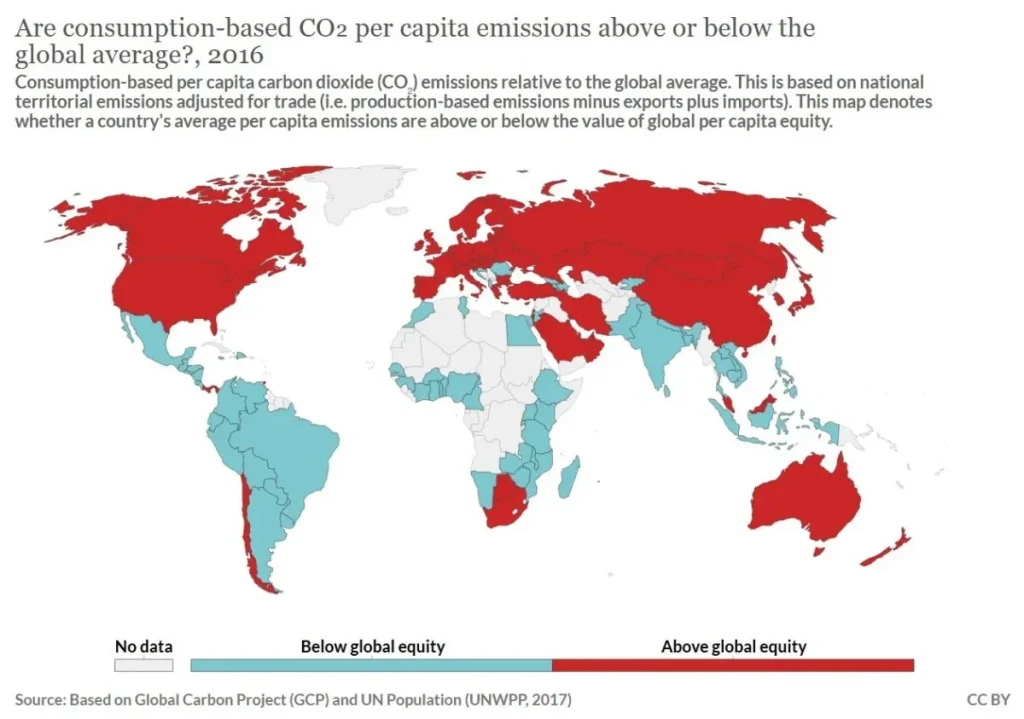
Panama’s capital is an economic hub that connects important trade routes, meaning its carbon footprint extends beyond local boundaries. By becoming the first municipality to enter the Reduce Your Footprint Municipal-Carbono program, the city is signaling to other urban centers across Latin America that municipal greenhouse gas inventories are achievable even in complex administrative environments. The voluntary step also strengthens Panama’s standing in global climate forums by demonstrating that subnational actors are not waiting for top-down mandates.
The eventual goal, as framed by the Ministry of Environment, is not just a symbolic registry but a permanent transformation of how cities manage their environmental liabilities. The 2050 neutrality target demands that every level of government move in lockstep, and the capital’s early adoption of rigorous carbon footprint measurement provides a replicable model. For residents, the promise is twofold: a more efficient, cost-effective local government and cleaner air in the neighborhoods they call home.
As the data rolls in and verification progresses, all eyes will be on whether the city’s initial figures translate into sustained emission drops. What began as a technical inventory of carbon footprint has already redefined the relationship between local governance and climate responsibility in Panama, proving that even a single municipality’s accounting can shift a nation’s environmental trajectory.