



The United States ambassador to Panama, Kevin Marino Cabrera, praised the newly installed Colombian government for moving aggressively against drug cartels, saying the shift will energize regional drug cooperation at a critical moment for hemispheric security. Speaking in Panama City, the diplomat framed Colombia’s willingness to join the Coalition against Cartels in the Americas as a major step toward disrupting trafficking networks that have long exploited fragmented enforcement efforts.
Cabrera noted that Washington had backed the new Colombian administration during the campaign and now sees an opening for more synchronized anti-narcotics work. His comments come as several countries in the hemisphere reassess how to confront organized crime groups that move cocaine, precursor chemicals, and illicit profits across borders with increasing sophistication.

A Political Shift Creates New Enforcement Opportunities
Colombia’s internal political transition has captured attention far beyond its borders. For years, the country’s approach to drug enforcement fluctuated with changing leadership priorities, at times frustrating partners who wanted more consistent cooperation on interdiction and criminal prosecutions. Cabrera suggested the current moment offers a reset.
“There is a new government in Colombia, which our president was supporting in his candidacy, and I think it is going to be a change for the betterment of the hemisphere. We are going to have another country added” [Translated from Spanish]
The ambassador’s remarks point to a broader recalibration in the region. By bringing Colombia formally into the coalition framework, officials hope to close coordination gaps that cartels exploit, particularly along the Pacific coast and through the dense jungle corridors connecting South America to Central America.
Panama’s Track Record in Regional Drug Cooperation
Panama occupies a central role in these efforts, a position Cabrera emphasized when discussing the coalition’s origins. The country joined the initiative at its inception and has consistently ranked among the most reliable partners in the fight against narcotics trafficking. That standing reflects both geography and political will.
“Panama also from the beginning was part of it and we are working on it. As I have said before, Panama has been our number one partner for more than five consecutive years” [Translated from Spanish]
The country’s strategic location makes it a natural choke point for illicit shipments moving north. Its ports, coastline, and border areas with Colombia require constant monitoring, and Panamanian security forces have built considerable operational experience in maritime interdiction and jungle patrols. Those capabilities make Panama an essential node in any regional strategy.
Interdiction Operations Define the Coalition’s Practical Work
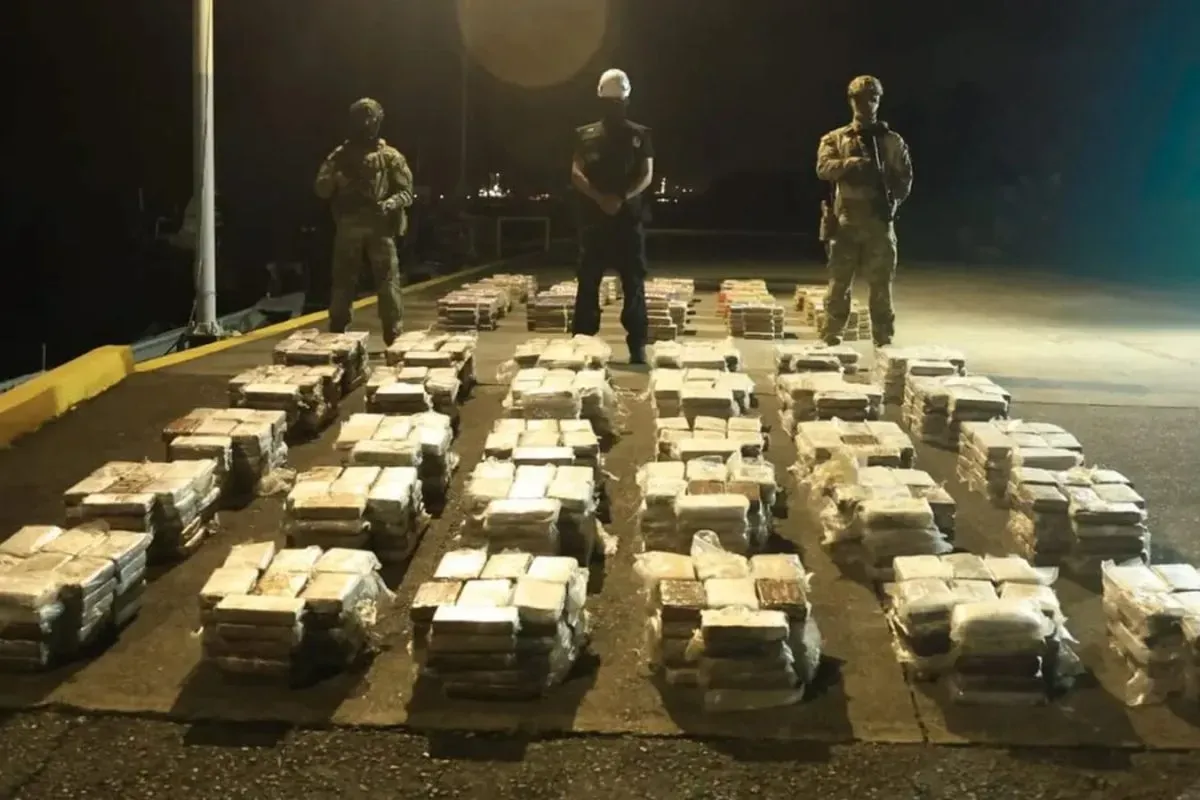
Cabrera connected the diplomatic momentum to concrete results on the ground, noting that steady interdiction operations and drug seizures serve as the coalition’s most visible measure of success. These missions aim not simply to capture smugglers but to degrade the financial and logistical infrastructure that allows trafficking organizations to function.
Regular operations in Panamanian waters and along its borders have yielded significant quantities of cocaine and other narcotics. Each seizure represents more than lost product for cartels. It forces them to reroute shipments, replace personnel, and absorb higher costs, all of which weaken their operational security over time.
The ambassador underscored that such work depends on trust between agencies in different countries. Intelligence sharing, joint patrols, and coordinated legal actions form the backbone of what he described as a maturing partnership. In this context, Colombia’s fuller participation adds another layer of pressure on trafficking routes that often begin in its territory.
What Stronger Regional Drug Cooperation Means for Hemispheric Security
Beyond individual seizures, the coalition’s broader purpose involves preventing criminal networks from embedding themselves in local economies and institutions. Cartels thrive where governance is weak, so a coordinated response that includes Colombia, Panama, and other partners can help deny these groups the space they need to operate.
Cabrera’s comments also reflect a diplomatic recognition that no single country can solve the trafficking problem alone. The flow of drugs from South America through Central America and into North America creates shared vulnerabilities. Regional drug cooperation, backed by sustained political commitment, offers a practical framework for addressing those vulnerabilities collectively.
As the coalition evolves, officials will likely focus on expanding intelligence exchanges and supporting local prosecutors who handle complex transnational cases. The ambassador’s upbeat assessment suggests Washington sees the current alignment as a rare opportunity to strengthen enforcement across the entire route, from Colombian coca fields to Panamanian ports and beyond.
For Panama, the deepening collaboration reinforces its long-standing security relationship with the United States while positioning the country as a pivotal partner in hemispheric efforts to dismantle drug trafficking networks. The coming months will test whether the political enthusiasm translates into measurable reductions in trafficking activity, but the groundwork for closer cooperation appears firmly in place.