


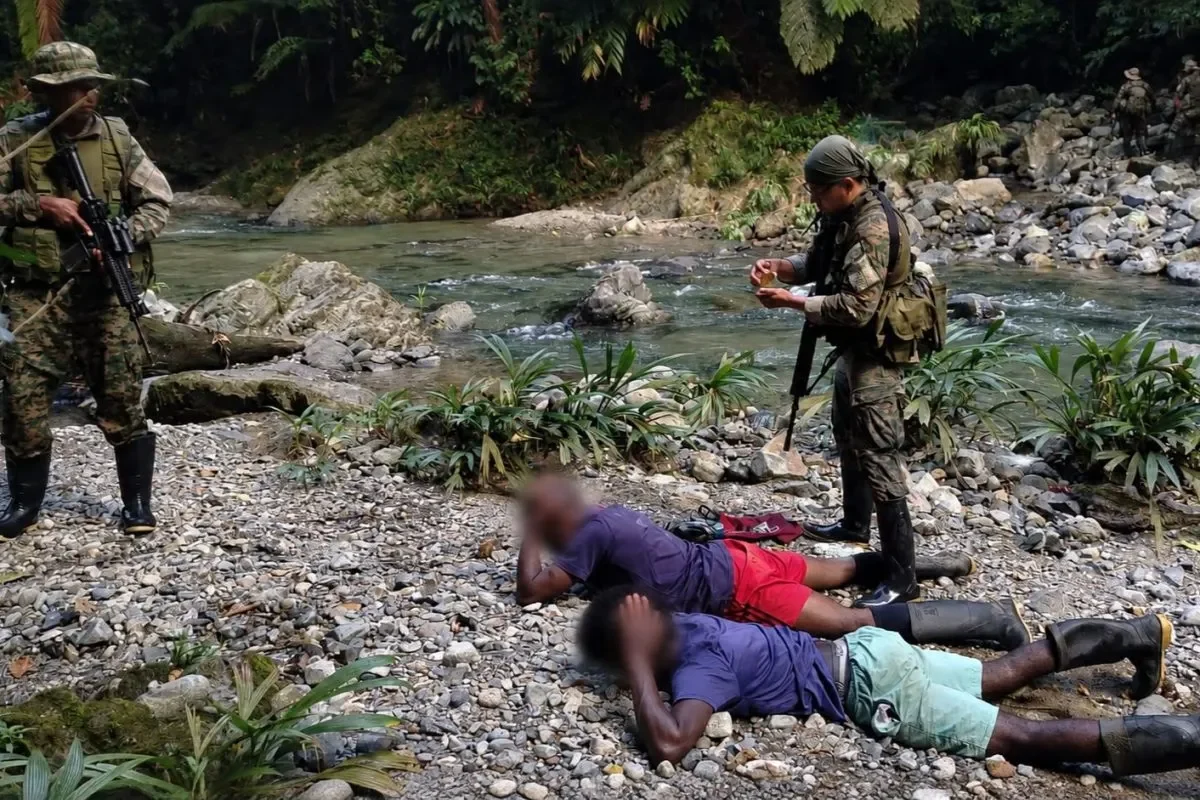
A border security operation in Panama’s remote Darién province has resulted in the apprehension of five Colombian miners detained in the Caña Blanca area of Cémaco district, according to the National Border Service, known as Senafront. The action took place as part of Plan Firmeza and Operation Escudo de Acero, which was carried out by units of the 1st Eastern Brigade.
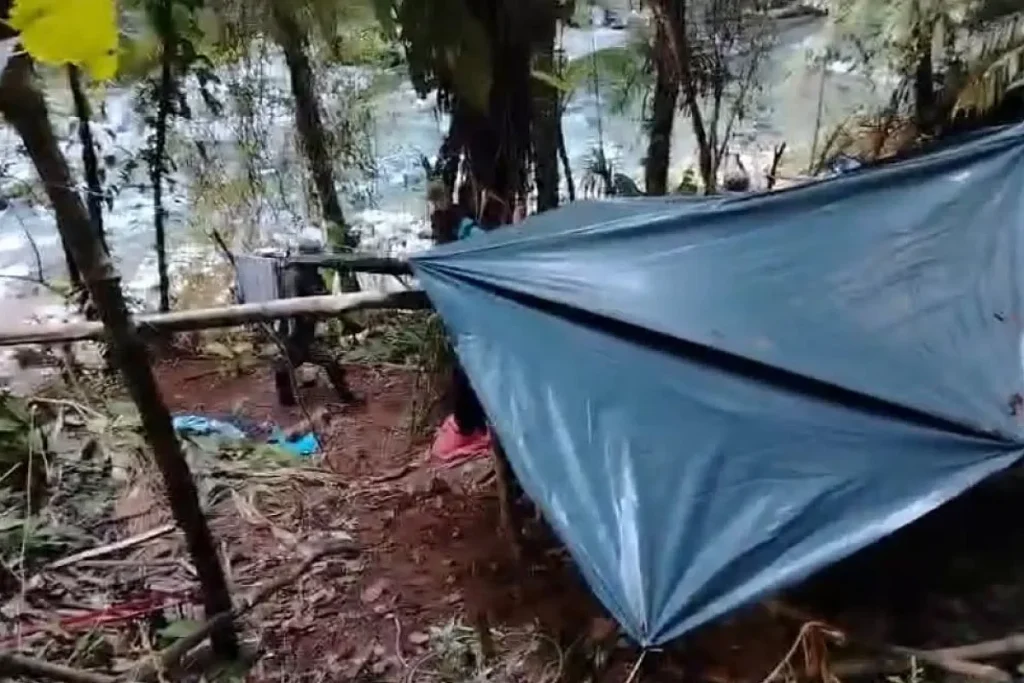
Authorities said the five individuals were allegedly linked to illegal mining activities in the region, a dense jungle corridor that borders Colombia and has become a hotspot for illicit extraction and transnational crime. The remote terrain and limited state presence make enforcement especially challenging.
Colombian Miners Detained During Operation Escudo de Acero
The operation unfolded in Caña Blanca, a sector of the Cémaco district in Darién province. Senafront’s 1st Eastern Brigade, which oversees border security in the area, led the intervention. The five Colombian citizens were taken into custody and later handed over to the competent authorities for further investigation.

Senafront has not released the names or ages of those apprehended. The border service said the operation is one of several recent efforts to dismantle illegal mining camps that operate in remote areas with little official oversight. The porous border with Colombia and the thick jungle canopy make it difficult to detect small-scale dredging operations from the ground or air.
Seized Evidence and Legal Proceedings
During the raid, agents confiscated what officials described as suspected marijuana, several grams of suspected gold mineral, and a digital scale. The combination of these items has raised questions about whether the group was involved in both drug activity and the weighing of illicit minerals, though authorities have not confirmed the exact purpose of the scale.
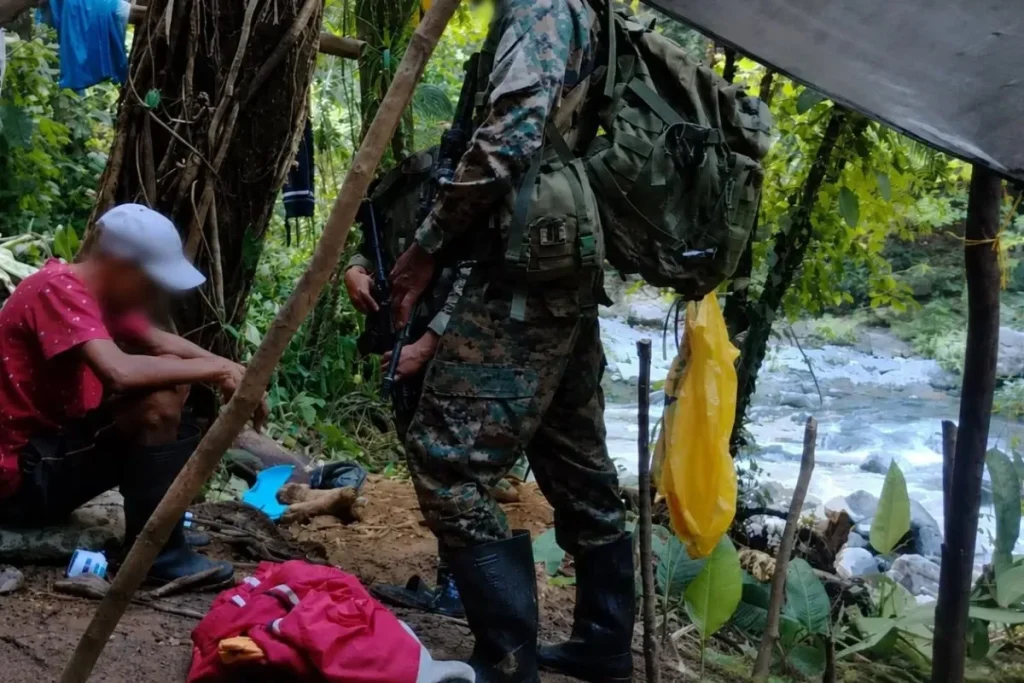
All evidence and the five suspects were placed at the disposal of judicial authorities. The next phase will involve formal proceedings to determine individual responsibilities. Senafront emphasized that it would continue to support investigations into illegal mining and offenses in Darién.
Broader Security Campaign Against Transnational Crime
Senafront indicated that it will keep reinforcing operations against illegal mining and other connected crimes as part of its mission to combat transnational criminal structures and protect Panama’s natural resources. The agency has framed Operation Escudo de Acero as a critical component of Plan Firmeza, a wider security strategy aimed at border stability.
The five Colombian miners detained in this latest action reflect a broader pattern of cross-border involvement in illicit mining. Criminal networks often move people, equipment, and gold across the Colombia-Panama border, blending illegal activities with local economies. The Darién region has also long served as a transit corridor for migrants heading north, and the same remote routes are exploited by smugglers and illegal miners.
Environmental Toll and Regional Security Outlook
Illegal mining in Darién is not just a law enforcement problem. It causes severe environmental damage, including deforestation and mercury contamination of rivers that indigenous communities rely on for drinking water and fishing. Miners often use heavy machinery and chemicals like mercury to separate gold from sediment, leaving behind barren landscapes and polluted waterways.
The province forms part of a critical biological corridor connecting Central and South America, making the ecological stakes especially high. Environmental groups have documented the loss of primary forest and the displacement of wildlife in mining zones across Darién. As Senafront continues its operations under Plan Firmeza, the detention of the Colombian miners detained in Caña Blanca sends a signal that Panama is intensifying its fight against illicit resource extraction.
The case remains under active investigation, and authorities have pledged to maintain pressure on the criminal networks that profit from illegal gold and drug trafficking in the region. For border communities, the hope is that sustained enforcement will eventually curb the environmental destruction and violence associated with these activities.