


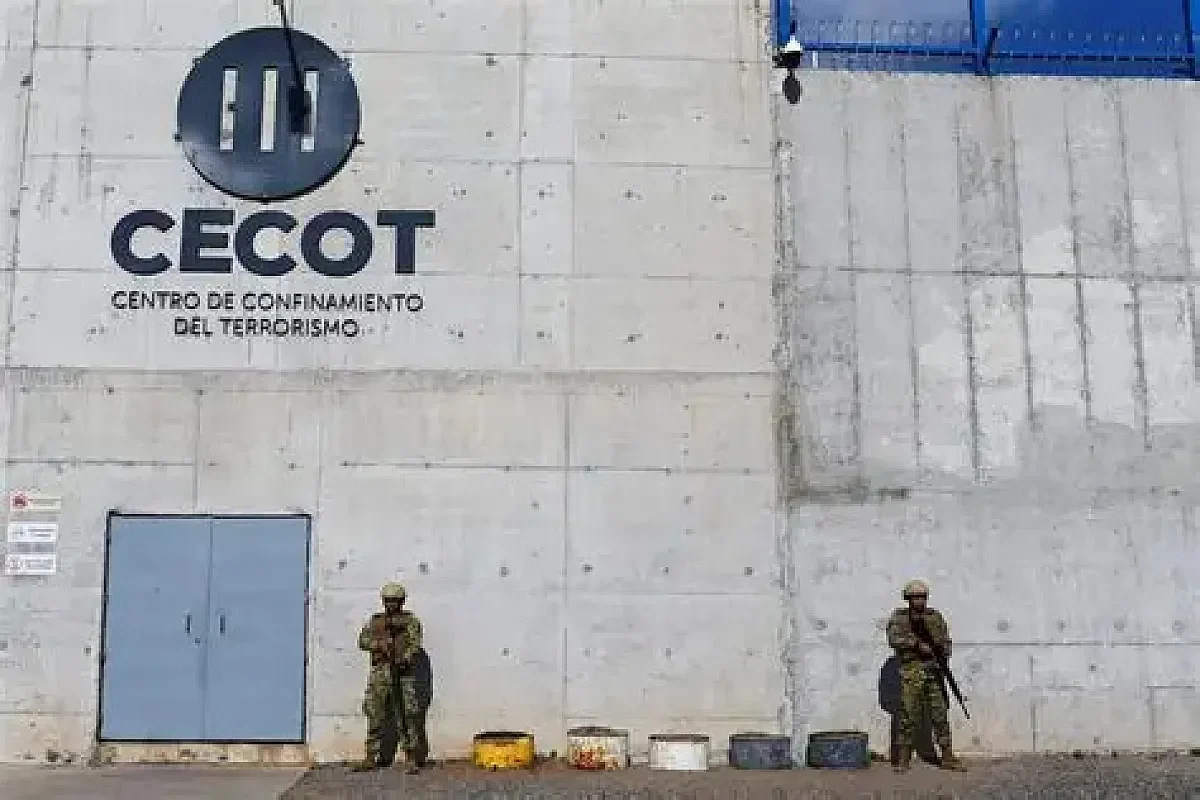
At least 16 megaprison projects have been proposed across Latin America since 2023, as governments from Costa Rica to Argentina rush to replicate the Bukele megaprison model made famous by El Salvador’s massive Cecot facility. The trend, documented by InSight Crime, shows how President Nayib Bukele’s hardline approach to organized crime has become a political template even as human rights groups question its effectiveness against transnational criminal networks.
The appeal is straightforward. Bukele’s crackdown on gangs produced a dramatic drop in homicide rates, and his administration marketed the results through carefully staged images of shackled prisoners in overcrowded cells. But the question now facing the region is whether a strategy built for El Salvador’s street gangs can work against far more sophisticated criminal organizations.
El ministro de Seguridad de Panamá, @MinSegPma, Frank Ábrego, visitó el Centro de Alta Contención de la Criminalidad Organizada en Costa Rica (Cacco), ubicado en San Rafael de Alajuela, junto con el ministro de Justicia y Paz costarricense, Gabriel Aguilar. Este centro tendrá una capacidad para albergar a más de 5,000 criminales de alta peligrosidad y su diseño y protocolos se basan en el modelo del Centro de Confinamiento del Terrorismo (Cecot) de El Salvador.
— Telemetro Reporta (@TReporta) October 1, 2026
Regional Rush to Build High-Security Prisons
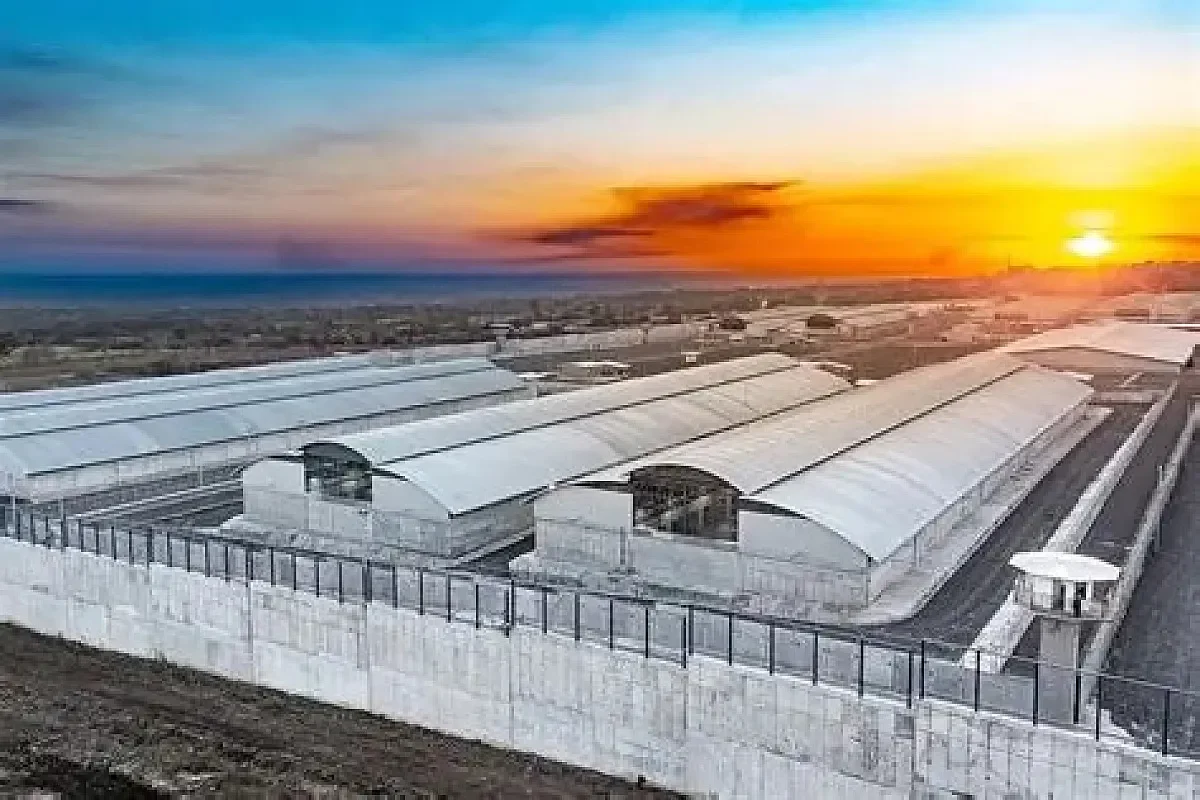
Costa Rica recently inaugurated the Centro de Alta Contención contra el Crimen Organizado, a 5,100-bed facility directly inspired by El Salvador’s Cecot. Ecuador began receiving inmates at its Cárcel del Encuentro in November 2025, with President Daniel Noboa announcing plans for an additional 15,000-bed complex. Paraguay activated the Centro de Reinserción Social de Minga Guazú for high-security detainees.
Argentina is constructing the Centro de Reclusión para Internos de Alto Perfil, known locally as “El Infierno.” Honduras, Peru, Colombia, Guatemala, and Panama have all announced or initiated similar projects, though many remain in early stages and function more as political gestures than substantive policy shifts, according to InSight Crime’s investigation.

Political Leaders Tour El Salvador’s Cecot Prison
The Bukele megaprison model has drawn regional leaders seeking firsthand exposure. Chilean President José Antonio Kast visited Cecot days before taking office, saying he wanted to “take ideas” while clarifying he might not replicate the system exactly. Peruvian President Keiko Fujimori toured the facility in October.
“Bukele offers something few governments can show, a drastic drop in violence in a short time,” said Juanita Goebertus, Americas director at Human Rights Watch. “He sells it with an extraordinarily effective propaganda machine that shows the megaprison, dehumanizes detainees, and hides the abuses. That’s why it attracts even countries whose criminal problems don’t resemble El Salvador’s at all.” [Translated from Spanish]
Effectiveness Gap and Criminal Network Adaptation
Goebertus argues that what has actually been copied is the aesthetic and narrative, harsher sentencing that is nothing new in Latin America, and megaprison construction. Ecuador combined these measures with militarization while Honduras added a state of exception. Neither approach appears to have reduced violence in those countries.
The prison expansion also fails to address how criminal organizations operate. InSight Crime warns that groups like Venezuela’s Tren de Aragua, Brazil’s Primeiro Comando Capital, and Ecuador’s Los Choneros either emerged or strengthened inside prisons, using them as operational hubs and recruitment centers. Building more prisons without reforming the systems that allow gangs to control them may simply create larger criminal headquarters.
The wave of projects represents a fundamental bet by Latin American governments that visible toughness can substitute for the slower work of institutional reform, judicial independence, and social investment. Whether that bet pays off remains uncertain as the region watches El Salvador’s experiment with both admiration and unease.